Sep 21 2011

A “Legal Lynching” in Georgia on the International Day of Peace

I spent a good part of last night re-reading speeches by Dr. Martin Luther King and Archbishop Desmond Tutu. I do that sometimes when I am trying to get my bearings. As the state of Georgia prepares to kill a man tonight on the International Day of Peace, it would seem that we all need to get our bearings.

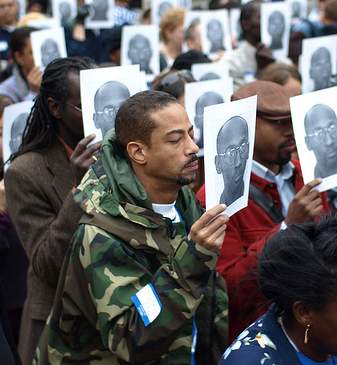
I am against the death penalty so for some I am disqualified from giving an opinion about Troy Davis’s impending execution. And yet it has been written that: “A time comes when silence is betrayal.” I cannot be silent in the face of this great injustice. Even ardent supporters of capital punishment must be troubled by the fact that a man will be murdered by the state based on doubtful evidence. I deeply believe this to be true. Anyone who is concerned with the sanctity of life cannot turn away from this case, cannot turn away from the vagaries of execution. In an editorial, the New York Times called the Georgia Parole Board’s denial of clemency for Troy Davis a “tragic miscarriage of justice.”

I have heard and read many references to Troy Davis’s execution being tantamount to a “legal lynching.” I want to recoil from this characterization. I want to protest, “no, this is wrong.” Then I remember a few lines from Ansel Elkins’s searing poem Reverse: A Lynching:

Return the tree, the moon, the naked man
Hanging from the indifferent branch
Return blood to his brain, breath to his heart
Reunite the neck with the bridge of his body
Untie the knot, undo the noose
Return the kicking feet to ground
Unwhisper the word jesus
Rejoin his penis with his loins
Resheathe the knife
Regird the calfskin belt through trouser loops
Refasten the brass buckle
Untangle the spitting men from the mob
Unsay the word nigger
Release the firer’s finger from its trigger
Return the revolver to its quiet holster

“Release the firer’s finger from its trigger, Return the revolver to its quiet holster.” Read the entire poem and think of Troy Davis today. We all want to release the guard’s finger from the syringe that will administer the lethal injection. We so desperately want to “Reverse: An Execution.”
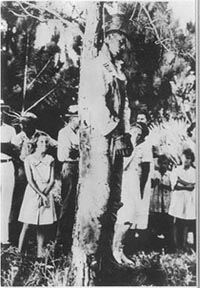
So while I want to reject the idea that Troy Davis is being “legally lynched”, I find that I cannot. I remember seeing images years ago from a searing book and online exhibition titled "Without Sanctuary." No matter how much I tried, years later I still could not erase the images of crowds of gleeful Americans watching black bodies hanging from poplar trees.

Then just recently I saw the same images of gleeful Americans cheering capital punishment. It was at a recent Presidential candidates debate. Brian Williams who was one of the debate moderators was so taken aback by the crowd reaction that he asked one of the candidates what he made of the cheering. Rick Perry responded: “I think Americans understand justice.” All I could think in that moment was: “Oh were that to be true!”

The reality is that it falls to the minority of us, to as Dr. King often said: “Save America’s Soul.” We need to remind everyone that without justice, there can be no peace. The death penalty is unjust and it cannot be reformed; it must be abolished.

In his Nobel Prize acceptance speech of 1964, Dr. King said: “I believe that wounded justice, lying prostrate on the blood-flowing streets of our nations, can be lifted from this dust of shame to reign supreme among the children of men.” I have to believe that this is possible. I have to believe that we can lift our wounded “justice” system; that we can create something better than our current oppressive system. On this International Day of Peace, I offer these words by Dr. King for Troy Davis and for all of us:

“For we must come to see that peace is not merely the absence of some negative force, it is the presence of a positive force. True peace is not merely the absence of tension, but it is the presence of justice and brotherhood.”

Over the past few years, so many of us have tried to be that positive force in advocating that the State spare Troy Davis’s life. We do and will continue to strive for “the presence of justice and brotherhood” (I would add sisterhood too) all across the world.

I will end with Troy Davis’s eloquent words from a letter that he wrote to his supporters last week:

So Thank you and remember I am in a place where execution can only destroy your physical form but because of my faith in God, my family and all of you I have been spiritually free for some time and no matter what happens in the days, weeks to come, this Movement to end the death penalty, to seek true justice, to expose a system that fails to protect the innocent must be accelerated. There are so many more Troy Davis’. This fight to end the death penalty is not won or lost through me but through our strength to move forward and save every innocent person in captivity around the globe. We need to dismantle this Unjust system city by city, state by state and country by country.

I can’t wait to Stand with you, no matter if that is in physical or spiritual form, I will one day be announcing,

“I AM TROY DAVIS, and I AM FREE!”

Never Stop Fighting for Justice and We will Win!

What else is there to say? Nothing except perhaps this…

Sep 20 2011

The State of Georgia is Intent on Killing Troy Davis…


I have to admit that I woke up this morning not feeling particularly confident that the Georgia Board of Parole and Pardon would give clemency to Troy Davis. I was hopeful but not confident. Then came the news that the Board has indeed denied clemency to Troy.

Blogger Emily Hauser wrote this in response to hearing the decision:

I’m beside myself, so full of shame of my country and my countrymen. That people engaged in the administration of justice, entrusted with upholding our laws and protecting our lives, could allow the death sentence to go forward in a case that is so thoroughly riddled with doubt is beyond me.

I feel such ache and horror for Mr. Davis’s family, and find I am suddenly glad that his mother died last spring, of a broken heart her daughters believe, because at least she won’t actually see her boy killed. I thought of this as I sent my boy to school today: Troy Davis was once a boy, on his way to school. And tomorrow, at 7:00 pm EST, he, too, will be a murder victim — only the murderers will be the people meant to protect him.

I am ashamed, ashamed, ashamed. What is wrong with this country? What is wrong with us?

Emily asks “What is wrong with us?” That is indeed the right question. James Baldwin wrote to his nephew: “…you will discover, people find it very difficult to act on what they know. To act is to be committed, and to be committed is to be in danger.” These words ring with so much truth. At every level of the Troy Davis case, people should have acted on what they know. They should act on the evidence that doesn’t support Troy’s guilt. But that would mean that they would have to be committed and therefore in danger. In this case, the danger in the minds of the Board must be their fear of being seen as “soft on crime.” Perhaps there is some other danger lurking for them that I can’t identify.

So we are left with two options: resignation or continued struggle. I always choose struggle over resignation. Troy Davis has reportedly rejected a “last meal.” As I see it, this is a sign that he hasn’t given up the fight. We shouldn’t either. Once again, James Baldwin provides us with the reason not to give up:

“If we know, then we must fight for your life as though it were our own – which it is – and render impassable with our bodies the corridor to the gas chamber. For, if they take you in the morning, they will be coming for us that night.”

My liberation is bound with yours. Troy’s liberation is bound with all of ours. So please move quickly from despair to action. You can still do something to help save Troy Davis’s life:

Please call or fax the Chatham County’s District Attorney’s office – phone: 912-652-7308 / fax: 912-652-7328 and demand that Chatham County (Savannah) District Attorney Larry Chisolm “seek a withdrawal of the death warrant and support clemency himself.”

Let’s also heed the words of JasiriX about this case:

Sep 19 2011

Everyone Should Visit A Juvenile Jail or Prison…

When I was much younger, I railed about prisons. I had never visited an actual jail or prison but I read a lot about the experience of incarceration. I thought that this made me an expert. I was afflicted by one of the maladies of youth – self-confidence based on little or no actual lived experience.

The first time I set foot in a jail was to visit a young man who had been one of my students. He was locked up for murder. He was at Rikers Island awaiting trial. He spent 11 months in jail before his trial began. He was eventually sentenced to 25 years to life. He was 17 years old. I was not prepared for my visit. I wasn’t prepared for the invasiveness of being searched, I was not prepared for the smells, I was not prepared for the attitudes of the guards who looked at me like I was dirt. I wasn’t prepared for any of it.

Later when I began to do some work inside jails and prisons with young people, I would actually see their cells. I would see the inside of a jail or prison. I still wasn’t prepared. It’s been many years since I first walked into a jail. Every time I go inside, I am still not prepared for the emotions that assault me.

So I say to everyone, you should visit a juvenile jail or prison. You should visit adult jail and prison too.

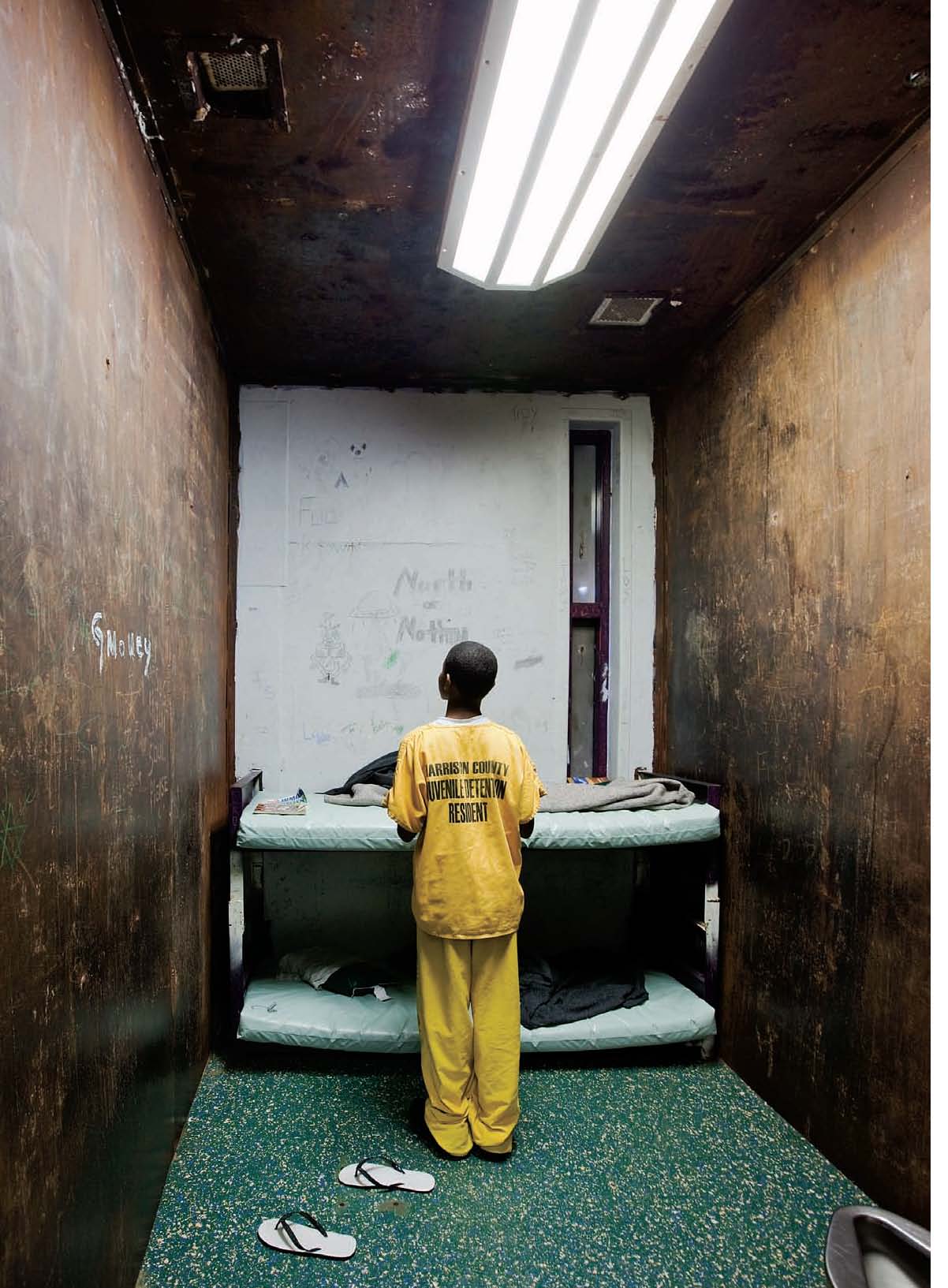
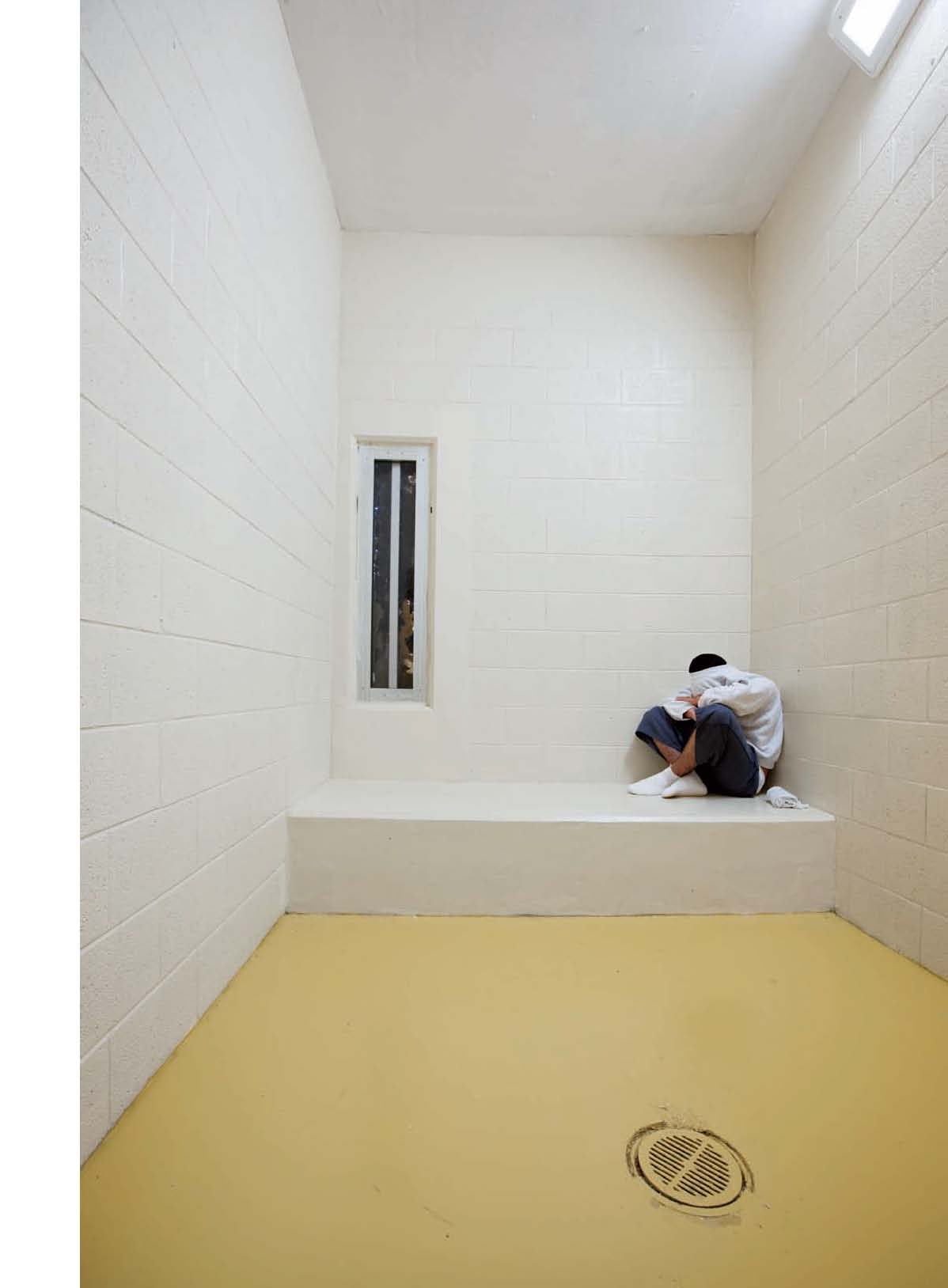
In the meatime, this month’s issue of Harper’s Magazine (PDF) features an arresting photo essay about juvenile detention across the U.S. by Richard Ross.

From Juvenile Injustice: A Photo Essay:

For the past five years, Richard Ross has interviewed and photographed more than 1,000 juvenile detainees, some as young as eight years old, in more than 350 detention facilities in thirty states. Of the series, Ross states: “In a country that incarcerates one out of every one hundred adults, the juveniles have the least voice and are the smallest victims of a system under stress.”

Below are a couple of photos from the essay:

by Richard Ross

By Richard Ross

Go visit a young person who is locked up. Let them know that they are not alone and that they remain part of the world.

Sep 18 2011

This is Prison… Wise Words From A Prisoner

One of my pen pals, Randy Miller, who is locked up at Indiana State Prison just wrote me a letter and enclosed an essay that he titled: “This is Prison.” In his letter to me, he explained why he wrote the essay:

This last week, for some reason I kept finding prison movies on television. After briefly watching those movies I got rather upset at the way they portrayed prison as humorous or a right of passage for some. I couldn’t help but feel like this contributes to the lack of fear some kids have about coming here and increases their risk of coming to prison.

Here’s an excerpt of what he wrote in “This is Prison:”

Life in prison starts in a room with 15 to 20 other men, where you are simultaneously stripped of all your personal belongings and searched. Guards look in our ears, mouth, through your hair, under your feet and between your toes. They tell you to lift your penis, then your sack and have you bend over and spread your cheeks and cough, to ensure you’re not hiding a weapon, drugs, or other contraband up your ass. You then shower with a special soap to stop the spread of lice and other critters, and then you get dressed in state clothing that is intentionally given to you a size too small to prevent sagging. You are then shackled and cuffed, one hand palm facing your head, the other palm facing your feet, with a box around the cuffs to keep you in this uncomfortable position (top hand palm up, bottom hand palm down), loaded on a bus and driven to whatever prison they decide to put you in. For me, this was a four-hour ride and I had cuff marks and bruises on my wrists for two days.

Once you get to your new home, you are stripped and searched again. You are issued your clothing, which consists of 3 shirts, 3 pants, 5 undershirts and 5 pairs of socks and boxers. Laundry is done once a week, if you’re lucky, so you have to find a way to stay clean. You are given one 2 by 2 inch square bar of soap, a three inch toothbrush (it’s travel sized), and two single blade razors, to last a MONTH! Once they run out, nobody cares. You’d better have people to send money to you. They give you two sheets, a blanket and a mat about two inches thick and take you to your cell.

There is not a more isolated, intimidating, lonely place on earth than a prison cell. The cell house is five tiers high, 50 cells per tier, with two sides, for a total of 500 prisoners. There are three guards per cell house. Three guards to control 500 men. I have gone hours without ever having seen or heard a guard anywhere near my cell. Each tier is 5 feet wide with a fence from top to bottom to prevent guys from being thrown off. It is impossible for guards to see down those tiers during chow times or recreation time. You are on your own with a cell house full of predators and prey.

The first thing you learn in the cell house are the sounds and screams. You learn to hear guards and shakedown crews coming in the building. You hear sneakers screeching on the floor and the thud of fists hitting face, as fights happen several times a day. You learn to tell the difference between screams. The screams of someone who has been stabbed or had boiling oil or water thrown on them. The haunting screams of a man being gang raped in the shower or trapped in a cell, begging for help and knowing there’s no help coming. Then there’s the yells and screams of the guards, as the discover men who have been stabbed, raped, or beaten and left in a pool of their own blood.

He wrote so much more in his essay. He shared stories of violence and torture and most importantly he wrote directly to some of the young men that I work with imploring them to stay out of prison. Here are some of his concluding words addressed directly to those young men:

You are all young enough, smart enough, and have the opportunity to correct any mistakes you’ve made, or take the steps necessary to prevent mistakes in the future. Whatever your situation is out there, trust me, it is better than any situation you will find yourself in here. I have an out date as of right now, but I would gladly spend the rest of my life in prison, if it meant just one of you would never have to see the inside of a cell. I mean that, but if you choose to ignore my warnings, if you choose to take the easy road and not take advantage of the opportunities you have, then I will see you soon, because this is prison, and there’s always an open cell.

I will share Randy’s words with the young men we work with. I will share his words as a way to open up communication between those on the inside and those on the outside. I will share his words as a warning. I will share his words as a gift.

Sep 15 2011

Closing Youth Prisons in Illinois: IYC-Murphysboro


If you know that incarceration makes youth worse

If you know that youth incarceration is ineffective, costly and counterproductive

If you know that there is a better way to address the needs of youth in trouble with the law…

Then now is the time to WAKE UP and SHARE WHAT YOU KNOW TO BE TRUE.

On September 8th, Governor Pat Quinn announced that he would recommend closing IYC-Murphysboro this fiscal year. This will save the state $3.1 million in just FY12. This is a good start and we believe that many more youth prisons can and should be closed too. For specific information about IYC-Murphysboro, click here.

We have the opportunity in Illinois to mobilize to educate the public and push our legislators to close youth prisons. Betsy Clarke, director of the Juvenile Justice Initiative, put it best in a recent column:

Illinois currently runs eight separate far-flung juvenile facilities to house an average of less than 1,200 youth. These eight facilities are costly. The average annual cost per bed has rapidly risen from $70,915 five years ago to an estimate of more than $90,000 this year. The per bed cost at the Murphysboro youth prison, which the governor plans to close, is far above average and climbed to $142,342 per bed in FY10. Operation of each facility entails significant administrative costs as does collective oversight and management of the eight separate facilities.

If each of the eight facilities ran quality programming with successful results, there might be justification for continuing their operation. The facts, however, are dismally opposite. Reports document a juvenile prison system that is ineffective, with over half the youth returning to juvenile prisons within three years. Most facilities struggle to maintain minimal educational programming, let alone adequate mental health treatment, recreation or vocational classes.

According to an analysis of state records by the Juvenile Justice Initiative the average daily population for youth prisons in the state was 1,113 in fiscal year 2011, down from 1,603 in fiscal year 2005 and 1,192 in fiscal year 2011. The same analysis estimates operation costs for the facilities as $92,257 per bed for fiscal year 2011.

This is where we are in Illinois. On both humanitarian and fiscal grounds, the status quo is unsustainable. Just today, I read that the forces of the opposition are mobilizing to resist closing IYC-Murphysboro. I am extremely sympathetic to those who would lose their jobs with the closing of this facility. However, I agree strongly with Betsy Clarke who is quoted as saying: “Funding for juvenile justice is a limited amount of money, and we want to use it in the best way possible. Your jobs should not be built on the back of human misery. That should not be our job development plan.”

Here’s what you can do to add your voice in support of the Governor’s decision to close IYC-Murphysboro if you live in Illinois:

1. Sign this Change.org Petition telling Governor Pat Quinn to stand firm in closing Murphysboro Youth Prison.

2. Call Governor Quinn’s office and let him know that you support his decision to close IYC-Murphysboro. Let him also know that Illinois can afford to close even more youth prisons and that you would support that too. Call the Governor at 217-782-0244 or 312-814-2121. Tell all of your friends and family to call too. Locking young people up does not make us safer and in fact make us all less safe.

3. You can also write letters to the Governor. If you work with youth, have them write letters to the Governor telling him that they support his decision:

Office of the Governor
207 State House
Springfield, IL 62706

or

Office of the Governor
James R. Thompson Center
100 W. Randolph, 16-100
Chicago, IL 60601

4. If you live in Illinois, attend a Teach-In on Closing Illinois Youth Prisons scheduled for October 29th from 1:30 to 4:30 p.m.

5. Visit the new "Closing Illinois Youth Prisons" which includes resources, information, and ways to take action.

Sep 15 2011

The New Scarlet Letter: Juvenile Criminal Records (Part 3)

Mariah and I arrived at juvenile court just before 11 am today. I had a meeting at 9 am so we couldn’t get there earlier. We walked right in to meet with Lizzie who is an attorney working for the Legal Assistance Foundation. Lizzie runs a juvenile expungement help desk at the Court on Tuesdays and Thursdays from 9 to noon. This service is invaluable as she screens Rap sheets and tell people whether their “offense” is eligible for expungement. She also helps folks to complete the multi-page petition as well as the application for a fee waiver.

Let’s talk about how much it costs in Illinois to expunge a juvenile criminal record – $124. It costs $64 per petition that you file and then $60 per court order for the state police. So if you are expunging more than one arrest or conviction, you need to pay $64 per “offense.” You must file a petition for EACH OFFENSE you want to expunge. So imagine is a young person in Chicago has five juvenile mere arrests (no convictions or perhaps even no petitions filed) on his or her record, it would cost $380 to expunge those arrests ($64 per petition and then a fee of $60 per court order). That is a lot of money for anyone in this economic climate. The $380 are only the fees associated with the actual expungement process. In many cases, lawyers charge up to $1000 to help a young person to expunge their record(s). My advice to anyone is DON’T PAY A LAWYER to do this. It is tedious but you can and should file PRO-SE (do it yourself). Look for the FREE RESOURCES that are available to help you through the process.

After Mariah completed the petition for expungement as well as the application for a fee waiver, Lizzie accompanied us to the Clerk of the Court’s office to submit the petition. If you have the cash, you can pay at the office. If you do not, you should hold on to your application for a fee waiver until your hearing in front of the judge. The young woman at the front desk checked to make sure that all relevant information was included on the petition and on the fee waiver. The Clerk’s office then assigns a hearing date. Initially, they said that Mariah could see a judge in 45 days (that would have been late October). I insisted that she needed an EXPEDITED hearing. They asked why and I told them. She was assigned a hearing date in two weeks – September 30th. It helps to have an advocate with you who knows the system and can push back.

I will update everyone about what happens at the Hearing on September 30th. In the meantime for more information about the Juvenile Expungement process in Illinois as well as a copy of the petition forms, you can click HERE. If you are a resident of Illinois, I encourage you to join our UN-marked Campaign which is an effort to change the juvenile expungement laws and practices in the state.

Sep 14 2011

The New Scarlet Letter: Juvenile Criminal Records (Part 2)


We walked into 3510 S. Michigan Avenue (which is our Chicago Police Headquarters) at around 10:50 am this morning. We walked through metal detectors over to the central information kiosk. We were greeted by a police officer. We told him that we needed to get a copy of Mariah’s juvenile RAP sheet. He asked her if she had been arrested before her 17th birthday and for her name. He asked if she had a government issued ID and she gave him her state ID card. He then called someone and passed the phone over to Mariah. She was asked again for her name and also for her date of birth. She was then told to have a seat in the lobby.

We were the only two people sitting in a large lobby area. It was empty. Mariah leaned over to me and said: “It’s a police station but I don’t feel safe here.” She was nervous. I passed her the journal that I was writing in and told her to jot down her thoughts. I said that it sometimes helps to write down how one feels as a way to move past those feelings. With her permission, I will share her stream of consciousness musings with you.

I didn’t really have a bad experience but of course it wasn’t a good one. They all seem so uptight. This is taking too long or maybe time is going really slow. What is a rap sheet anyway? The elevator dings but it’s still not for me. I’m feeling uneasy seeing all the folders and guns. Shorts? it’s pretty cold for that. I wonder what they’re doing. I’m the only one here waiting for my file. My stomach is feeling weird. I wonder if that’s an FBI agent with the microphone in his ear. It isn’t very discreet. There’s a police officer/soldier. Interesting. So does the army have their own police but they all have guns? At least 20 min! What are they really doing. It takes longer to get my rap sheet than for the guy to get his gun registered. I just knew MK was gonna get up. And I just knew that police officer at the front desk was going to say something. I hope they don’t take longer on purpose.

Mariah is referring to me when she mentions that she “just knew MK was gonna get up.” After 30 minutes without service, I went back to the information desk to ask if they could call upstairs to see what the hold up was. He dialed and handed me the phone. I was promptly told by the person handling juvenile investigations: “When we’re ready, we’ll bring it down.” It took us 45 minutes from the time we arrived until we got the rap sheet. If you’ve never seen a juvenile rap sheet, here’s a copy below:

The disposition listed for Mariah is “Informal Adjustment (Released to Parent).” That’s right boys and girls, the supposed incident that has led Mariah to receive a letter saying that she cannot practice nursing involves an informal station adjustment that she received at 13 years old.

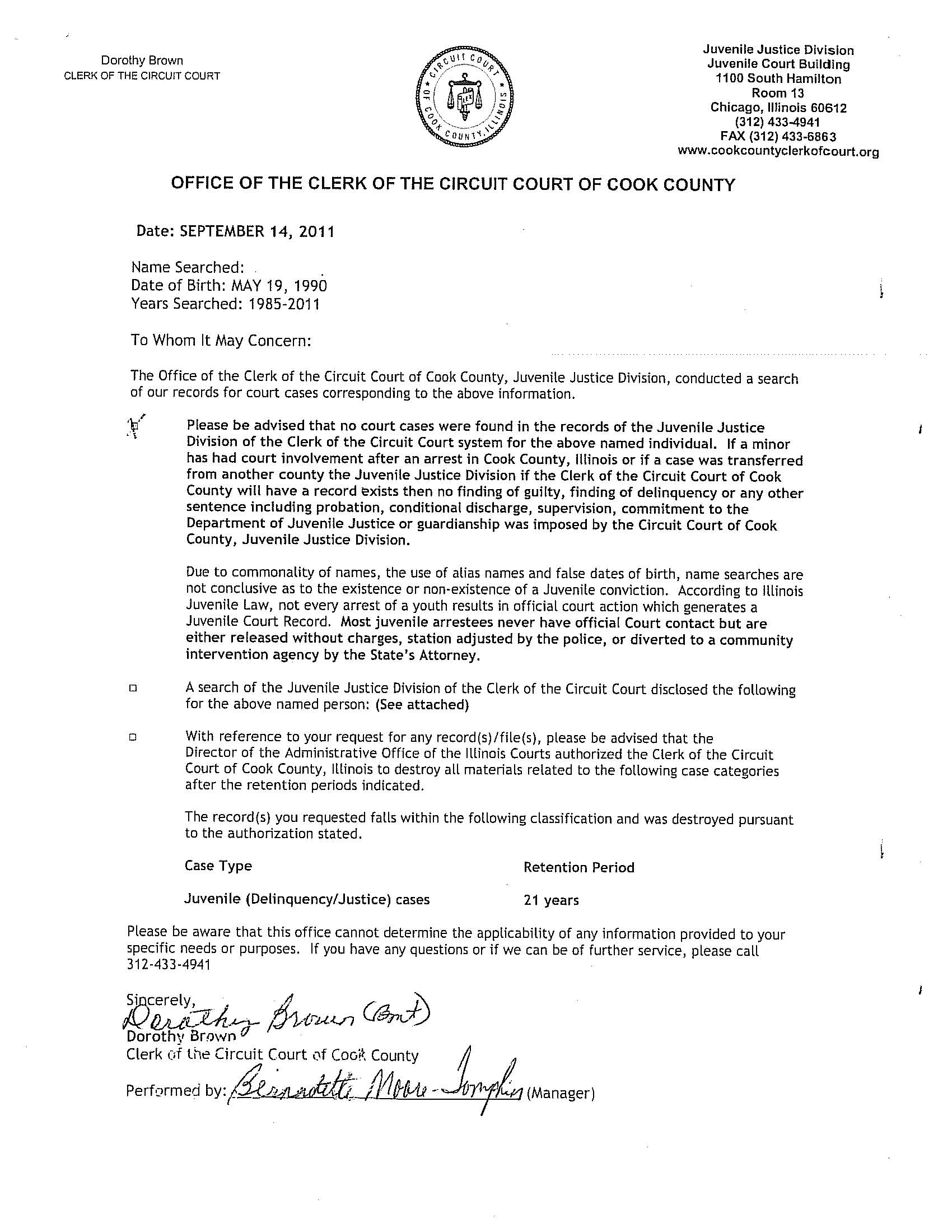
We weren’t done yet. We got into my car and drove over to juvenile court. Our goal there was to get the Clerk of the Court to write a letter stating that there was a negative record of court proceedings. When we arrived, Mariah explained what she needed. The young woman at the front desk was very pleasant and asked to see a government-issued ID. We sat and waited for about 20 minutes while the letter was being written. We were given juvenile expungement information packets and encouraged to have the record erased. I will have more more say about that process tomorrow. I will be accompanying Mariah back to court to talk with a pro-bono lawyer who will help her to file a petition to have her record expunged. Below is a copy of the letter that the Clerk of the Court provided:

All in all we spent 4.5 hours today getting the necessary paperwork to send a letter to the Department of Professional Regulation requesting that they proceed to reviewing Mariah’s application for licensure. Tomorrow, we will spend more hours beginning the costly and tedious process of expunging her juvenile “criminal” record. Stay tuned…

Sep 13 2011

The New Scarlet Letter: Juvenile Criminal Records (A Series)

I woke up this morning with a plan for how my day would go. Then as is often the case, my plans had to change. Let me tell you a story.

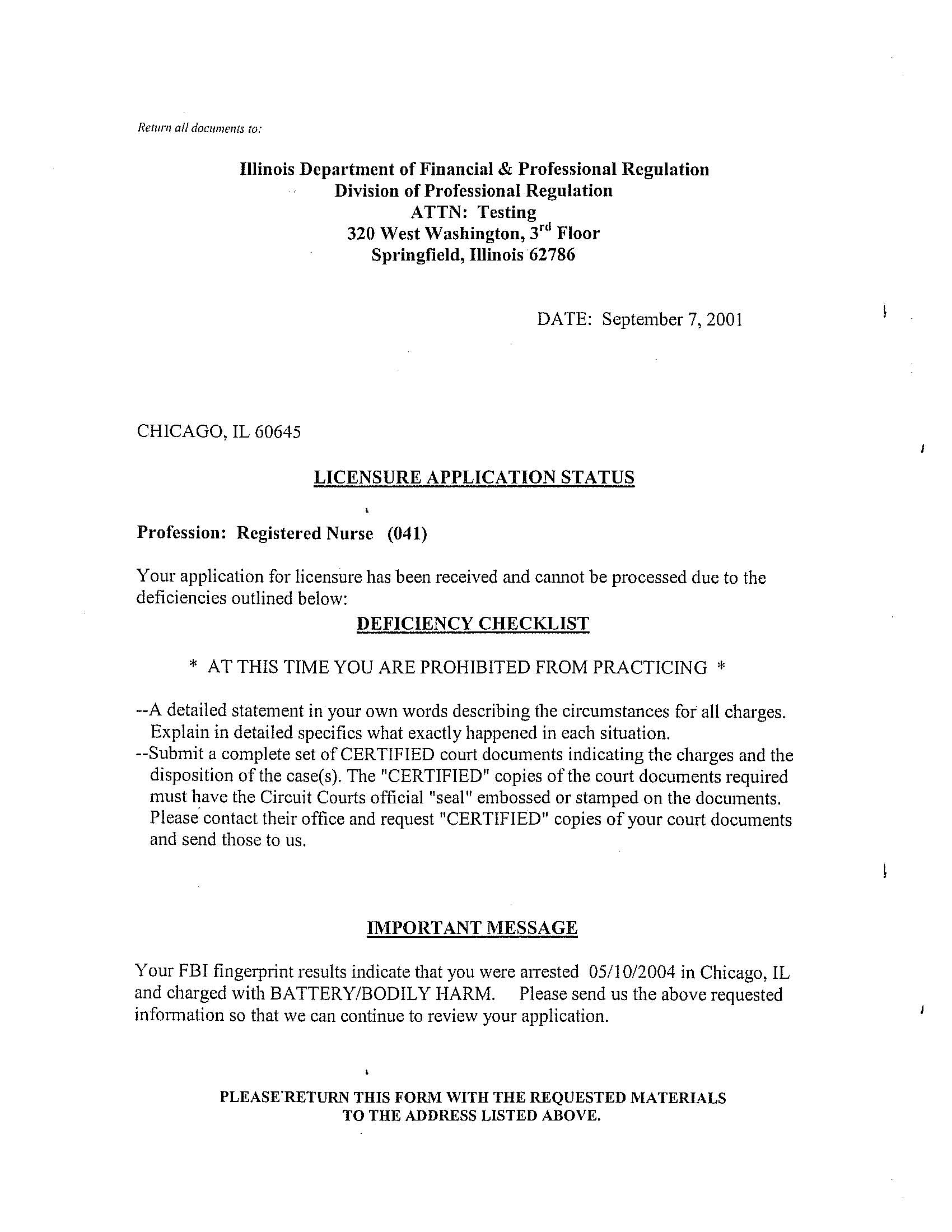
Early this morning, I got a call from a young woman who I have known since she was a freshman in high school. She was a member of a youth-led social change project that I co-founded with a group of young women of color. She has been an anti-violence activist and is a budding anti-prison organizer. The young woman who I will call Mariah just turned 21 in June. In that same month, she graduated as a registered nurse from a local community college. We were all so excited and are so proud of her accomplishment. This summer, Mariah successfully passed her nursing boards. She then officially applied for her nursing license. She needs a license in order to practice as a nurse in Illinois. This morning, she received this letter from the Illinois Department of Financial & Professional Regulation:

The key sections of the letter read:
AT THIS TIME YOU ARE PROHIBITED FROM PRACTICING.

Why you might ask?

Your FBI fingerprint results indicate that you were arrested 5/10/2004 in Chicago, IL and charged with BATTERY/BODILY HARM.

Mariah’s so-called arrest occurred when she was in the 8th grade. She and a friend got into a physical fight at school. The police were called and both young women were taken to the local precinct. They stayed there for less than an hour until their parents could pick them up. They were promptly released. Mariah had forgotten about this incident until she received the letter from the Department of Financial and Professional Regulation today. The case never went to juvenile court and Mariah didn’t even know that she had been actually arrested. Mariah’s situation is by no means unique. Thousands of young people in Chicago face a similar circumstance.

As a way to document the difficult, costly, and tedious process of expunging Mariah’s juvenile criminal record, I will be posting regular updates on this blog. Tomorrow, her journey to expunge her juvenile criminal record begins with a trip to 3510 S. Michigan Avenue to get a copy of her juvenile RAP sheet. I will be accompanying her and will report back on how it went.

When I write about the school to prison pipeline and other such issues, I worry that people think that it is just an abstraction. It isn’t. Real young people are being caught up in this process. Real young people’s lives are being impacted by juvenile criminal records that they don’t even know they have. This is not an abstraction.

Sep 12 2011

Urgent: Educators – “Teach Troy Davis” This Week…


Georgia Death Row prisoner Troy Davis is scheduled to be executed on Wednesday, September 21 despite overwhelming doubts about his guilt.

In light of this imminent execution date, Educators for Troy—a Chicago-based ad hoc group of educators, activists and artists—is calling on all educators to interrupt their regular teaching schedules this week to dedicate a class period to “Teach Troy.”

Please use this emergency “Teach Troy” curriculum to educate your students about the case of Troy Davis. We are providing links to readings and videos about Troy’s case and suggestions for student projects and assignments. We have also included a page that allows your students to take some simple independent actions to help save Troy’s life.

Important dates:
Friday, September 16 – International Day of Solidarity for Troy Davis

Monday, September 19 – Troy Davis’ clemency hearing before the Georgia Board of Pardons and Parole

Wednesday, September 21 – Troy Davis’ execution date

You can find the emergency curriculum “Teach Troy” HERE. Please interrupt your regular teaching schedule to take one class period to “Teach Troy” this week.

Sep 11 2011

Sunday Musical Interlude: Jailer

So you treat me like a modern slave, Mr. Jailer…
I’m in chains
You are in chains too!
I wear uniforms
You wear uniforms too!
I’m a prisoner
You’re a prisoner too, Mr. Jailer

Asa basically illustrates the truth that our liberation is bound together. It’s something to remember on this anniversary of September 11th and on the anniversary of the Attica rebellion.