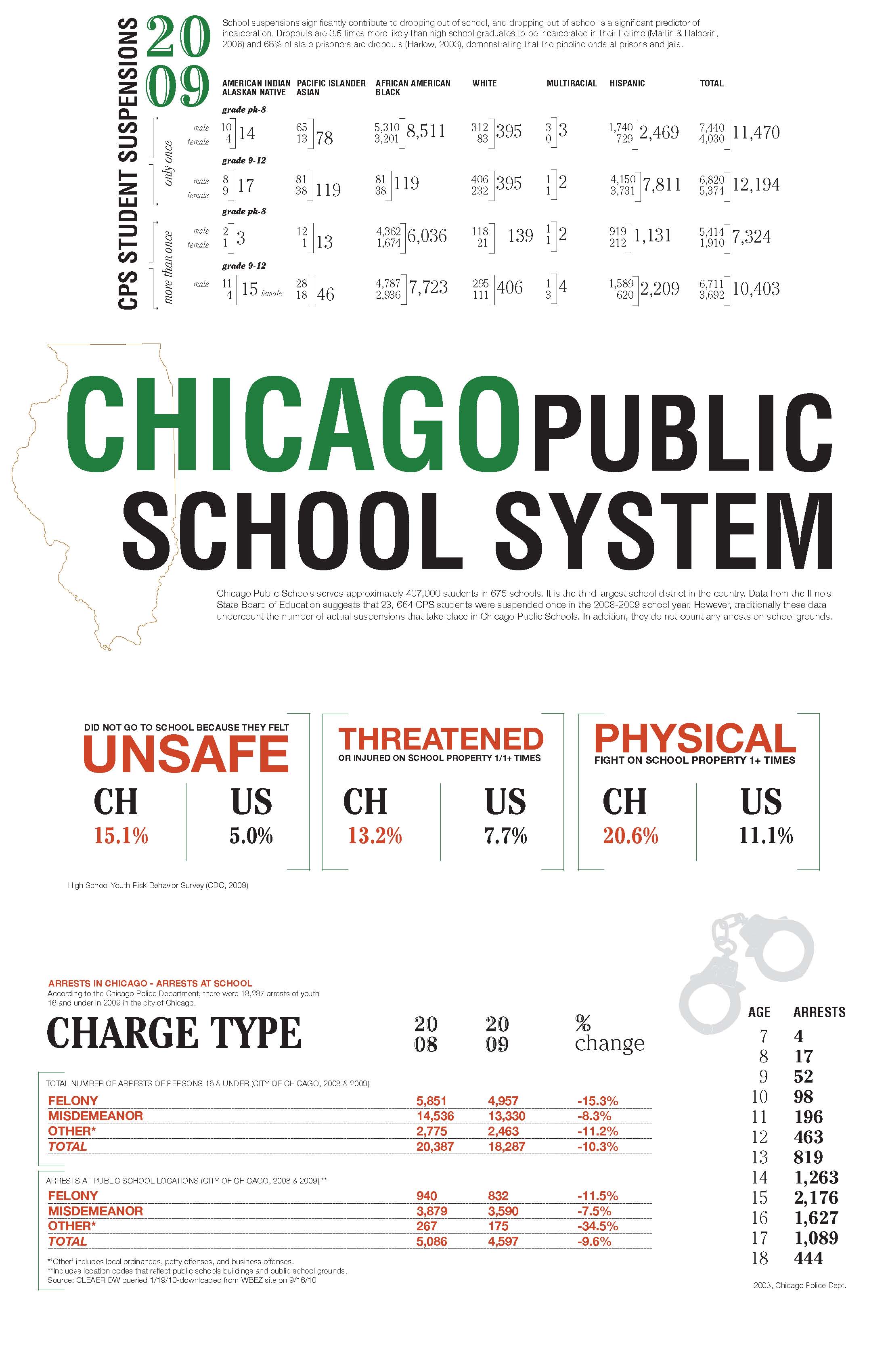
Special thanks to my friend Jennifer Wisniewski for her generosity in lending her talents to addressing various social justice issues. As part of a project that I am involved with, Jennifer created the following infographic depicting Chicago’s school to prison pipeline. This infographic will be used as part of a larger project to educate youth and adults about the connection between harsh school disciplinary policies and school pushout. I look forward to announcing the launch of that project in a couple of weeks. In the meantime, here is Jennifer’s contribution .
Uncategorized | prison culture | Comments Off on Infographic: Chicago’s School to Prison Pipeline
In 1964, a year after the March on Washington and four years before Dr. King was assassinated, there were 81,099 Americans in prison. 27,191 were black. In 2009, there were 1,613,656 prisoners in America. Over 600,000 were black. Over 2.3 million people are locked up in prisons and jails in the U.S. and over 850,000 of these are black. Sociologist Lawrence Bobo explains that “[t]he rise of mass incarceration has had a disproportionate effect on African-American communities, especially those that are low-income.” He adds that “[w]e are at a point where 1 in 15 black men is in jail or prison – and for those between the ages of 20-34, the rate is 1 in 9.”
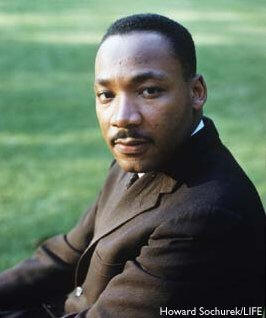
As one of the most important moral voices of last century, Dr. King spoke of racial and economic justice. He cared deeply about human rights. What would he have to say about America’s prison boom and particularly its destructive effects on poor people in general and poor blacks in particular?
I looked back at some of his words for guidance and offer the following excerpts from Why We Can’t Wait published in 1964 for your consideration:
“Jailing the Negro was once as much of a threat as the loss of a job. To any Negro who displayed a spark of manhood, a southern law-enforcement officer could say: “Nigger, watch your step, or I’ll put you in jail.” The Negro knew what going to jail meant. It meant not only confinement and isolation from his loved ones. It meant that at the jailhouse he could probably expect a severe beating. And it meant that his day in court, if he had it, would be a mockery of justice.”
This excerpt is incredibly rich and ripe for analysis. Dr. King links the jailing of black people in his era with the State’s abiding interest in emasculating black men.
What type of threat does incarceration pose for black people in 2011? Rose Brewer and Nancy Heitzeg (2008) make the case that “[t]he post-civil rights era explosion in criminalization and incarceration is fundamentally a project in racialization and macro injustice.” Michelle Alexander calls it the “New Jim Crow.” These writers and researchers suggest that hyper or mass incarceration has emerged in part as an “indirect mechanism for perpetuating systemic racism.” Recently Bill Quigley advanced fourteen examples of racism in the criminal justice system. These examples support the case made by scholars and social commentators that what we are currently experiencing in the 21st century is as Loic Wacquant has characterized it “a new fourth state of racial oppression.”
Even today there still exists in the South — and in certain areas of the North — the license that our society allows to unjust officials who implement their authority in the name of justice to practice injustice against minorities. Where, in the days of slavery, social license and custom placed the unbridled power of the whip in the hands of overseers and masters, today — especially in the southern half of the nation — armies of officials are clothed in uniform, invested with authority, armed with the instruments of violence and death and conditioned to believe that they can intimidate, maim or kill Negroes with the same recklessness that once motivated the slaveowner. If one doubts this conclusion, let him search the records and find how rarely in any southern state a police officer has been punished for abusing a Negro. (King, 1964)
Dr. King references the history of slavery and posits its critical import in understanding black people’s relationship to the criminal legal system. He explains black people’s inherent mistrust of law enforcement as having its roots in slavery and in Jim Crow. The words quoted above have as much relevance in 2011 as when they were first written by Dr. King in 1963. One only needs to think of Sean Bell, Oscar Grant, and the countless nameless and faceless young people of color who are subjected to the whims of the punishing state and its implementers (police, court personnel, etc…) to grasp the relevance for today.
Since nonviolent action has entered the scene, however, the white man has gasped at a new phenomenon. He has seen Negroes, by the hundreds and by the thousands, marching toward him, knowing they are going to jail, wanting to go to jail, willing to accept the confinement, willing to risk the beatings and the uncertain justice of the southern courts.
There were no more powerful moments in the Birmingham episode than during the closing days in the campaign, when Negro youngsters ran after white policemen, asking to be locked up. There was an element of unmalicious mischief in this. The Negro youngsters, although perfectly willing to submit to imprisonment, knew that we had already filled up the jails, and that the police had no place left to take them.
When, for decades, you have been able to make a man compromise his manhood by threatening him with a cruel and unjust punishment, and when suddenly he turns upon you and says: “Punish me. I do not deserve it. But because I do not deserve it, I will accept it so that the world will know that I am right and you are wrong,” you hardly know what to do. You feel defeated and secretly ashamed. You know that this man is as good a man as you are; that from some mysterious source he has found the courage and the conviction to meet physical force with soul force.(King, 1964)
It frankly seems quaint to recall how mass protests for racial and economic justice occurred not that long ago with people who were hoping to be arrested and locked up. Their level of commitment to the cause of social justice was that strong. It is difficult to believe that thousands of people in 2011 would mobilize in this same way to address the injustice of mass incarceration. Yet it is something to strive for.
So it was that, to the Negro, going to jail was no longer a disgrace but a badge of honor. The Revolution of the Negro not only attacked the external cause of his misery, but revealed him to himself. He was somebody. He had a sense of somebodiness. He was impatient to be free. (King, 1964, pp.26-30)
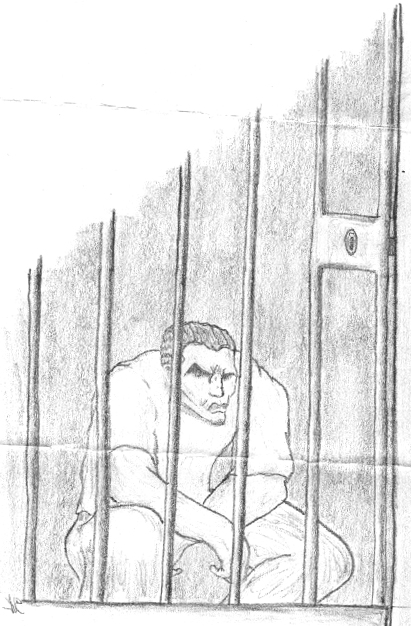
by Nicholas Ganz
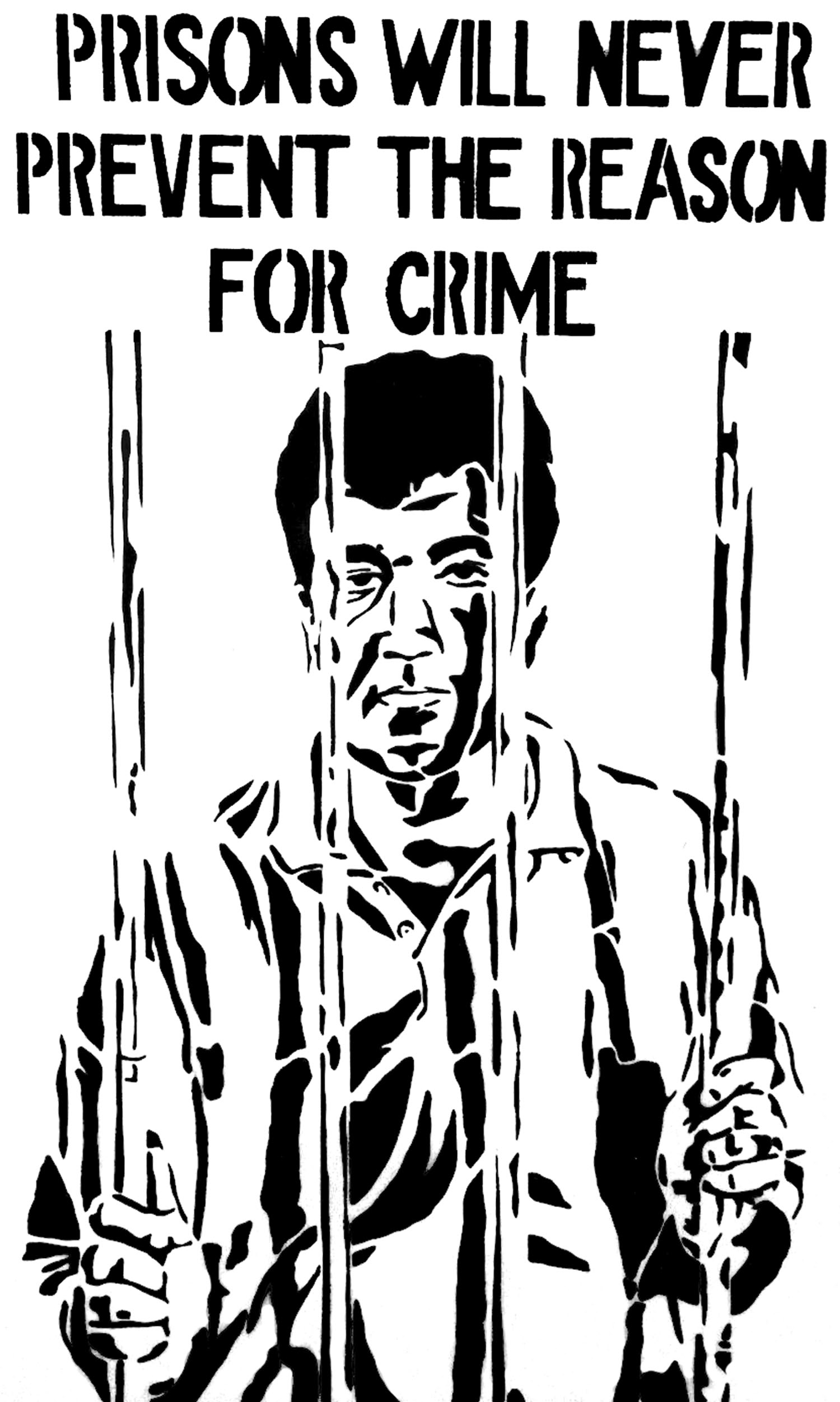
There is a certain perverseness to the words above as we consider them in 2011. What we know today is that for some young black boys in particular going to prison has become a more common experience than going to college, joining a union, or doing military service. These young people are not there as resisters in the classic sense. They are the unwilling fodder for an insatiable punishing state that is looking to disappear them. The outstanding question is whether people of color and in particular black people in 2011 are ready to organize a large-scale movement to dismantle the prison industrial complex. The jury is still out on this. It has been written that for Dr.King social justice would not “roll in on the wings of inevitability” but would come through struggle and sacrifice. One would imagine that he would exhort us all today to struggle and sacrifice in order to dismantle the unjust and destructive racial caste system that is a by-product of hyper or mass incarceration. Happy Birthday, Dr. King and thank you! I leave everyone with these powerful words by Dr. King.
Uncategorized | prison culture | Comments Off on What Would Dr. King Make Of Hyper-Incarcertion in the 21st Century?
I have previously written about a scene in the film “The Interpreter” where Nicole Kidman utters the words: “Vengence is a Lazy Form of Grief.”
I feel the need to resurrect this clip and the words again today.
Everyone who loses somebody wants revenge on someone, on God if they can’t find anyone else. But in Africa, in Matobo, the Ku believe that the only way to end grief is to save a life. If someone is murdered, a year of mourning ends with a ritual that we call the Drowning Man Trial. There’s an all-night party beside a river. At dawn, the killer is put in a boat. He’s taken out on the water and he’s dropped. He’s bound so that he can’t swim. The family of the dead then has to make a choice. They can let him drown or they can swim out and save him. The Ku believe that if the family lets the killer drown, they’ll have justice but spend the rest of their lives in mourning. But if they save him, if they admit that life isn’t always just… that very act can take away their sorrow.
When I was a teenager one of my best friends was killed in a car accident. He was hit head on by a drunk driver who survived. I date my introduction to the concept of restorative justice to that time. The grief was overwhelming. None of us who were his friends knew how to get past our anger or how to overcome the sense that we had been robbed. We were struck by the profound unfairness of a 16 year old losing his life.
My friend’s mother did something extraordinary however. She attended the trial of the drunk driver and asked to speak at his sentencing hearing. At that hearing, she asked the judge to show mercy to the man who had killed her son. She told the judge that she could not imagine how the defendant must be feeling for killing her son. She told the judge that she would miss her son forever but that she had already forgiven the defendant.
A few months later, she received a letter from the drunk driver. I never got to see the letter but she later told me that he expressed his profound grief and sorrow over what he had done. He told her a bit about his life and what had led him to drink and drive. He told her that he would do his utmost to live a life of service in the future. They continued to correspond while he was incarcerated and are currently still in touch all of these years later. I learned about compassion, forgiveness and grace from my friend’s mother and the drunk driver.
I am thinking about this episode today because I received a call from a friend last month asking if I would keep a peace circle. She explained that a young man in her neighborhood was shot non-lethally in late November. The shooter was arrested and will be tried later this year. The families of the shooting victim and of the shooter know each other. This incident has caused, as you can imagine, a great deal of anger and has elicited vows of revenge.
I spent part of this past week trying to arrange for a peace circle to take place involving some of the key family members and friends who have been impacted by this incident. Unfortunately, I encountered a great deal of resistance from all sides. Most of the people involved are currently mired in a place of rage and revenge. They expressed to me that they felt betrayed and violated. They thanked me for my willingness to keep a circle for them but told me that they “weren’t ready.” I said that I understood and assured them that I would make myself available whenever they were ready to sit in circle together.
A peace circle wasn’t going to necessarily “resolve” anything for these people. What my friend hoped to do was to lay a foundation or pave a road for the possibility of compassion and forgiveness in the future. She wanted to ensure that a space was opened for communication so as to minimize the possibility of future violence. I fear that these two families are going to embark in a vicious cycle of revenge which will leave only more victims in its wake. My prayer and deepest wish for the families is that they embrace the truth that “vengence is [in fact] a lazy form of grief” and will work to address their grief rather than focus on revenge.
There is nothing easy about these situations. They are messy and we fail. We can’t stay on the mat for too long though. Tomorrow is another day and another opportunity to create more peace in the world.
Uncategorized | prison culture | Comments Off on “Vengence is a Lazy Form of Grief” Redux
It’s been a rough week for many in the country. This is one of my favorite poems and it sums up so much about how many might be feeling this week. I share it here with my deepest compassion for everyone who was impacted by the tragic shootings in Arizona.
Unison Benediction
Return to the most human,
nothing less will nourish the torn spirit,
the bewildered heart,
the angry mind:
and from the ultimate duress,
pierced with the breath of anguish,
speak of love.
Return, return to the deep sources,
nothing less will teach the stiff hands a new way to serve,
to carve into our lives the forms of tenderness
and still that ancient necessary pain preserve.
Return to the most human,
nothing less will teach the angry spirit,
the bewildered heart;
the torn mind,
to accept the whole of its duress,
and pierced with anguish…
at last, act for love.
~ May Sarton ~
(Collected Poems 1930-1993)
Uncategorized | prison culture | Comments Off on Poem of the Day: Unison Benediction by May Sarton
I could not stop laughing at this dramatization of the way that the U.S. is criminalizing children in our schools even though this is a very serious topic… This needs to be required viewing by educators and parents across the U.S.
A recent article in the Dallas Morning News illustrates how schools in Texas are increasingly criminalizing students as young as 6 years old:
Students in Dallas and other urban school districts in Texas are increasingly being charged with Class C misdemeanors for less-serious infractions that used to be handled with a trip to the principal’s office, according to a new study.
The report from the nonprofit advocacy group Texas Appleseed examined student disciplinary data on 22 of the largest school districts in the state. It found that most have sharply increased the number of campus police officers – resulting in far more misdemeanor tickets being handed out to students.
“Disrupting class, using profanity, misbehaving on a school bus, student fights and truancy once meant a trip to the principal’s office. Today, such misbehavior results in a Class C misdemeanor ticket and a trip to court for thousands of Texas students and their families each year,” the group said in the report, Texas’ School-to-Prison Pipeline.
“Criminalization of student misbehavior extends to even the youngest students,” the report said. “In Texas, students as young as 6 have been ticketed at school in the past five years, and it is not uncommon for elementary school students to be ticketed by school-based law enforcement.”
Black students have been disproportionately ticketed. During a recent school year in the Dallas school district, 62 percent of misdemeanor tickets were issued to black students, even though they make up 30 percent of enrollment.
We really need to stop the madness…
Uncategorized | prison culture | Comments Off on The U.S. is Being Overrun by 6 Year Old Future Criminals…
I have previously written more generally about the history of punishing women in the 17th through 19th centuries. I received an e-mail from a reader asking if I had any information about the type of women who ended up as prisoners once gender-specific penal institutions were established in the 1870s. I looked through a couple of books in my home library and found some interesting facts about the population in women’s prisons from the 1870s to 1910. Specifically, I offer information here about the women’s prisons in Indiana, Massachusetts, and New York. I rely on the very good book Their Sisters’ Keepers: Women’s Prison Reform in America, 1830-1930 by Estelle B. Freedman for the bulk of the information in this post.
Please note that the information provided here focuses specifically on inmates in separate women’s prisons. Most women prisoners across the U.S. during this period (late nineteenth and early 20th century) were actually housed in male penal institutions or houses of refuges along with local jails. However Freedman (1981) suggests that there was a lot of similarity between the population of early women’s prisons and the general female inmate population. There were however also some differences between those populations that will not be addressed today. I hope to return to the topic in the near future and will expand on the differences then.
The majority of inmates in women’s prisons “were under age 25, white, and native-born, although often of immigrant parents. Nearly two-thirds had been married at some time in their lives, but half of these were widowed, divorced, or separated at the time of their incarceration…Most of the women had no prior convictions, and those who did usually had only one, often for drunkenness. The crimes for which they were serving in New York and Massachusetts were minor – under 20 percent had committed dangerous offenses against person or property. Drunkenness and prostitution alone accounted for about half of the commitments.”
Profiles of Inmates at Separate Women’s Prisons: Massachusetts, Indiana, and New York
Massachusetts
Indiana
New York (Albion)
%
%
%
Age
Under 25
50
50
95
Race
White
95
72
95
Religion
Protestant
51
Catholic
Not given
10
Not given
None
Nativity
U.S. born
90
American parents
17
Not given
42
Foreign Parents
41
42
Foreign Born
41
10
16
Marital Status
Married (at some time)
57
65
28
Widowed, divorced, separated
36
24
22
Single
42
35
72
First Offenders
61 to 75
89
80
Intemperate
78
30
Not given
Illiterate
20
25
15
Source: Freedman (1981) p.80
Types of Offenses Committed by Inmates of Separate Women’s Prisons: Massachusetts, Indiana, and New York
Massachusetts
Indiana
New York (Albion)
%
%
%
Public Order
Vagrancy
4
33
Drunkenness
38
8
Idle and disorderly
10
3
Stubborn (child)
4
1
Other
1
1
Total
57
46
Chastity
Prostitution
13
Lewd, wanton, and lascivious
7
Other
7
Total
27
36
Person or Property
Larceny
11
72
16
Assault
1
2
Murder
9
Arson
2
Other
4
15
1
Total
16
100
17
Source: Freedman (1981) p.81
Uncategorized | prison culture | Comments Off on Characteristics of Inmates in Women’s Prisons 1870s-1910
Over the holidays, I was able to see my goddaughter which was a treat. She is now in her teens and was excited to inform me that she was “an expert on prison life” because she had been watching episodes of OZ on DVD. I was struck dumb by her words and in the moment I could only respond with a tight smile and a nod of the head. Later we had a more in-depth conversation about OZ and about the differences between fiction and reality.
I read somewhere that there are more than 250 American films featuring men in prison and 100 focusing on women in prison. Let’s face it. Most people in America don’t know anyone who is currently or has been in prison since incarceration disproportionately impacts only certain groups. Most people have never set foot inside a prison either. As a result, popular culture images of prison fill this breach.
In the U.S., we learn about prison through books, music, movies, and television. These images greatly influence public perceptions. I think that they actually serve to reinforce unconscious racism which leads people to support more draconian measures to curtail what they perceive to be black and brown criminality.
Actual prisons do not resemble popular portrayals. Yet Americans’ views about prisons are shaped to a large extent by popular culture. On television and in films, people in prison are usually there for violent crimes, they are male and usually black. Some depictions feature wrongly accused prisoners often portrayed as white (think of Andy Dufrene in the Shawshank Redemption).
Prison stories in popular culture are framed in terms of personal responsibility and this obscures the structural factors and oppression that play a major role in landing people in prison in the first place. As such when asked why people are in prison, the public’s default response always focuses on personal failing. Popular culture depictions of prisoners feed into this narrative and I believe that this ultimately impacts public policy.
Imagined fears contribute to actual incarceration. As prison reformers and/or abolitionists, making the case for a dramatic reduction in the use of incarceration is made more difficult in the face of public fear and anxiety. Travis Dixon (2010) has written that Americans “have become so inundated by mass-mediated racial stereotypes that we are losing the ability to see past our racialized fears (p.107).” He goes on to argue that “unconscious racism underpins support for a punishing democracy that treats black men as criminals rather than as citizens (p.108).” I think that this is basically true and to be honest I don’t know how we even begin to address these ‘mass-mediated racialized fears.’ I came across an interesting initiative by the Open Society Institute called “Black Male: Re-Imagined” which aims to refashion the public image of young black men through the use of culture and media. I have no idea if this effort will succeed but I am rooting for it.
Uncategorized | prison culture | Comments Off on My goddaughter is an expert on prisons because she watches OZ…
A colleague uttered these words to me over a year ago as we were collaborating on an anti-violence curriculum project. It’s worth reflecting on his words at this time in our country. Currently, the news is saturated with reports about the Gabrielle Giffords assassination attempt and the massacre of other innocents in Tuscon. What happened is truly horrific and I offer my condolences to everyone impacted by this tragedy.
A few days ago, I received a phone call from the assistant to a famous filmmaker. This person was seeking data pertaining to “youth violence” in Chicago. ‘What specifically are you looking for?” I asked. Of course, she was looking for statistics about the number of youth homicides in the city. I once again found myself deflated at the end of the conversation.
For over two decades now, I have been working to reframe the conversation about the nature and impact of violence in the U.S. It’s been one step forward and three steps back. It is difficult not to feel discouraged in the face of a persistent insistence to define violence in America as homicide or as PHYSICAL assault.
It is certainly true that some young people in Chicago are being wounded and killed by guns. It is valuable and important to address this lethal form of violence. I recommend an upcoming film that I have been privileged to preview called the Interrupters for some ideas on how to stop the shooting. Below is a trailer for the upcoming film:
When tragedies like the Tuscon attack occur, I understand the human impulse to look for a “reason” for what happened. Was the killer mentally ill? What role does media play in the act? Should we have gun control? Should we be nicer to each other?
Yet what is always missed in the countless “national conversations” and recriminations that take place after such tragedies are perspective and honesty. The root cause of violence in the U.S. and across the world is oppression. Frederick Douglass famously wrote:
Where justice is denied, where poverty is enforced, where ignorance prevails, and where one class is made to feel that society is organized in a conspiracy to oppress, rob, and degrade them, neither persons nor property will be safe.
There it is. In one sentence. Clearly articulated. Eloquent. Easy to understand. And yet we ignore the truth and the wisdom of these words every day. We do so because it is easier to focus on quick fixes and band-aid solutions that will not disrupt the status quo and will not challenge the powerful. It is a sick game of willful ignorance.
If 50 youth under the age of 18 years old are killed by gun violence a year in Chicago, what about the 30% of youth under 18 who are living under the poverty line this year. Is poverty not violence?
What about the over 2200 youth in Illinois who are currently incarcerated in our juvenile prisons. Is youth incarceration not violence?
What about the thousands of youth in Chicago who drop out of school every year. Is educational malpractice not violence?
My friend’s suggestion that “the natural state of our society is violence” takes on real significance when we are clear in our definition of what constitutes violence. And yet, no one wants to hear this. It is too overwhelming and too dangerous to view the world through this lens. James Baldwin has written that: “To act is to be committed, and to be committed is to be in danger.” Too few of us are acting on the knowledge that we have. We KNOW that only a radical reallocation of resources will help us to end violence in our societies. We know that this is true and yet we tinker around the edges. Everyone wants me to talk about violence but no one actually wants to hear what I have to say.
Uncategorized | prison culture | Comments Off on Everyone Wants Me To Talk About Violence…But No One Wants to Hear What I Have to Say
The United States is the only country in the world to sentence youth to life in prison without the possibility of parole. Last year, the supreme court ruled that life without parole is unconstitutional for juveniles who have not committed murder. So a youth who was previously sentenced to life without parole for any crime other than homicide can appeal his/her sentence.
In Illinois for example, there are currently 103 people who are serving juvenile life without parole sentences. My fascination with history led me to ask whether there were some prominent cases of juvenile life without parole sentences in the American past.
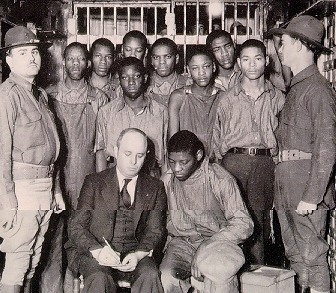
On March 25 1931, police arrested nine young black men at a railroad stop in Paint Rock Alabama after hearing of a fight between black and white youth on a freight train. In the process. they came upon two white women, Ruby Barnes and Victoria Price, who accused the nine young men of raping them. The young men were tried and all were found guilty despite medical evidence that clearly exonerated the boys. The jury could not decide whether to sentence the youngest defendant Roy Wright, who was 13 years old, to life in prison or to death. 11 jurors voted for death while one voted for life in prison without the possibility of parole. The jury was hung. Judge Allfred E. Hawkins immediately sentenced eight of the boys to death by the electric chair. Roy Wright was effectively sentenced to life in prison without the possibility of parole because he was jailed without a new trial. In 1933, Roy Wright gave an interview to the New York Times.
The firstest I knowed anything was wrong, or knowed who else was on that train was when that crowd of white men stopped the train and Paint Rock and took us off. They took us up the railroad bank to a white rock and stood us against it with their guns aimed at our heads.
One of the white men said to me, “Come on now, nigger, tell us who pushed those white boys off the train, ’cause we don’t want to punish anybody but the guilty ones. If you tell us which ones did it we’ll let you others go.” And I told them I didn’t know anything about it and hadn’t seen nothing.
Then one of them said to me, “You know, nigger, we don’t let no darkies hang around here, and if we catch you anywhere near here after dark we’ll shoot you. Now get going.”
Andy (that’s my brother), Haywood, Eugene and me — we started away. Nobody said nothing until we had walked some little way and then they called us back and loaded us on a truck, tied our hands and feet with rope and carried us to the jail in Scottsboro…
[At the first trials in Scottsboro] I was sitting in a chair in front of the judge and one of those girls was testifying. One of the deputy sheriffs leaned over to me and asked me if I was going to turn State’s evidence, and I said no, because I didn’t know anything about this case.
Then the trial stopped awhile and the deputy sheriff beckoned to me to come out into another room — the room back of the place the judge was sitting — and I went. They whipped me and it seemed like they was going to kill me. All the time they kept saying, “Now will you tell?” and finally it seemed like I couldn’t stand no more and I said yes.
Then I went back into the courtroom and they put me up on the chair in front of the judge and began asking a lot of questions, and I said I had seen Charlie Weems and Clarence Norris in the gondola car with the white girls.
[Later, he said that that testimony was false:]
I didn’t see no white girls and no white boys either.
The Scottsboro Boys case became a cause celebre across the U.S. as an example of the South’s racism and the corruption of the criminal legal system. It was also the most visible and successful example of multi-racial organizing in the 20th century before the black freedom movement of the 50s and 60s.
The Scottsboro Boys case remained consistently in the headlines into the late 1930s. Five of the nine boys would be in Kilby Prison off and on for the next 10 years. Although there were years of appeals, reimprisonment, pardon, compromise, and frustrating negotiation, the case dropped from the headlines after 1939.
The Communist Party engaged in a number of public demonstrations around the country to free the Scottsboro boys. They wanted to use this case to expose the injustices of the criminal legal system in the South. The NAACP worried that the Community Party was using the case for propagandizing and thought that this would not redound to the benefit of the young men.
After 6 years in prison, in 1937, Roy Wright who had been sentenced to life without the possibility of parole was released along with three other Scottsboro defendants. No restitution was made by the State of Alabama.
Roy Wright, the youngest of the boys, emerged from prison at age 19 penniless and untrained for any particular professions. However, the Scottsboro Defense Committee, an organization which had been created to provide legal support to the boys, was able to add a small monthly supplement to whatever the boys could earn on their own.
An article in the Daily Worker by Ben Davis offered the following information about the release of Roy Wright and some of his co-defendants:
“Herself a domestic worker and unemployed for more than a year, Mrs. Wright explained that Roy, even while in jail, would “deny himself things” to send a dollar home. Although Andy (Roy’s older brother who was sentenced to death) is the “sweetest” she went on, Roy has a sense of responsibility “way beyond his age, just like an old man.”
“When I first heard the news I felt like crying, thinking how long my boy had been in jail, his eye-sight nearly failing him from the way the jailers treated him. Even now I tremble when I think how close he came to death. They nearly lynched all the boys in 1931 when they first arrested them. Even after that they kept on sentencing them to die,” Mrs. Montgomery said.
“I didn’t want to cry when I got the news about the boys being free, because I knew everyone else would cry. But that night, I couldn’t help it — I cried all night. This is a real victory for Negroes, especially in the South.”
It is said that Roy Wright was the most successful of the four released in 1937 at reintegrating himself into society. He found a job and married soon after his release. However, twenty-two years after his release in 1959, he found his wife with another man and, in a fit of jealous rage, stabbed her to death. Riven with grief, he committed suicide later that same day. Ultimately Roy Wright did not escape the violence that had been visited upon him by his false imprisonment. Today I am thinking about all of the Roy Wrights that have existed in our history and the current Roy Wrights locked up all across the U.S.
Someone has posted the entire excellent PBS documentary about the Scottsboro Boys case on YOUTUBE. It is well worth watching the whole thing:
Uncategorized | prison culture | Comments Off on The Scottsboro Boys, Roy Wright & Juvenile Life Without Parole
I have quite a few out of print books from the 60s and 70s that feature poetry and writing from prisoners. I wanted to share a piece written by a prisoner named Joe Martinez. It was published in a book called “Black Voices From Prison” published in 1970 and edited by Etheridge Knight. I like this short piece because it raises important issues and asks us to think critically about the role of prisons in our society.
Rehabilitation and Treatment
By Joe Martinez
The convict strolled into the prison administration building to get assistance and counseling for his personal problems. Just inside the main door were several other doors, proclaiming: Parole, Counselor, Chaplain, Doctor, Teacher, Correction, and Therapist.
The convict chose the door marked Correction, inside of which were two other doors: Custody and Treatment. He chose Treatment, and was confronted with two more doors, Juvenile and Adult. He chose the proper door and again was faced with two doors: Previous Offender and First Offender. Once more he walked through the proper door, and, again, two doors: Democrat and Republican. He was a Democrat; and so he hurried through the appropriate door and ran smack into two more doors; Black and White. He was black; and so he walked through that door — and fell nine stories to the street.
In this short paragraph, one gets a sense of the many obstacles that exist for prisoners as they seek to address various issues. This is one of the best pieces of social commentary on the criminal legal system that I have read. I have shared it with students in the past and we have engaged in some terrific conversations about the various ideas that are reflected in the text. If the convict had gone through the door marked ‘White’, would he have fallen off the cliff? You decide.
Uncategorized | prison culture | Comments Off on Voices from Inside: Rehabilitation and Treatment
 Uncategorized | prison culture |
  Comments Off on Infographic: Chicago’s School to Prison Pipeline