Feb 10 2011

Out of the Mouths of Babes: Ten Questions Often Asked by Children Whose Parents Are In Prison
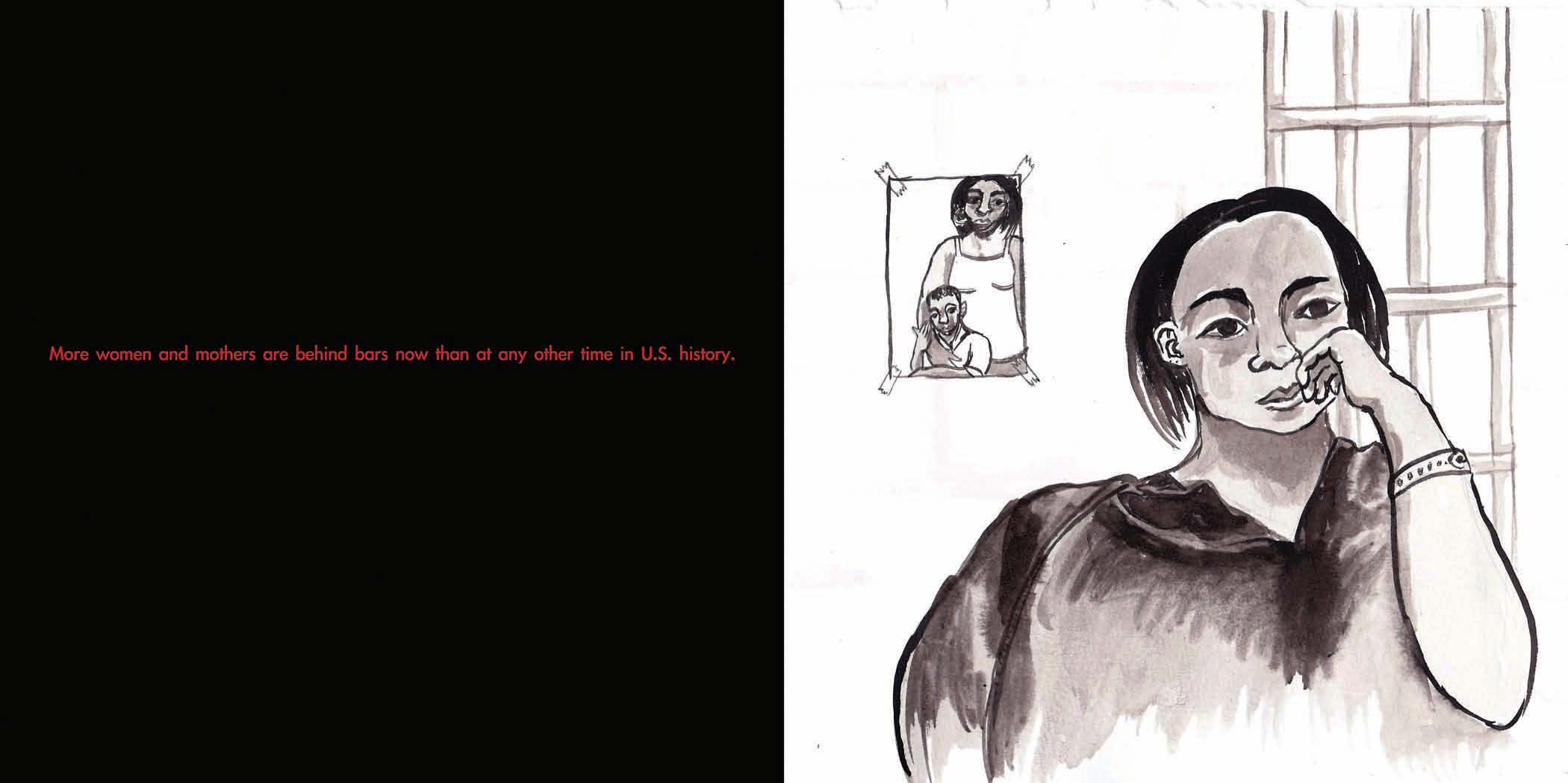
by Billy Dee - sketch for upcoming PIC zine

I was sent a book called “What Will Happen to Me?” this week.  It is about children whose parents are incarcerated.  The first thing that struck me were the 30 color photographic portraits of beautiful children that are featured throughout the book . The pictures  are poignant and affecting.  These are all of our children.  Along with the photographs, we can read the children’s thoughts and reflections about their experience of having a parent in prison.  One young woman’s portrait particularly called out to me.  Her name is Maranda and she looks just like my little sister did as a child. Here is the text that accompanies her photograph:

I would be thinking about my mom before I went to sleep.  I had a counselor, but I didn’t talk to her.  I just talked to her about problems with my friends ’cause I don’t like spreading that around about my mom.  It makes me sad.  It felt good when my mom came back.  And when my dad comes back, I want to take him out to eat and go swimming and do other things.  Go to the movies.”

From her comments, it seems that both of her parents are behind bars.  It is incomprehensible to me that this could be the case but it seems that it is.  It is truly tragic. Her words belie the simple pleasures that so many children yearn for: going swimming and to the movies with their parents.  Yet what also comes across is Maranda sense of shame; shame that she has a mother in prison.  This is an emotion that I know many other children with incarcerated parents experience.  It is our failure as a society to provide these children with love and compassion that feeds the shame.

The main thing that I appreciate about the book is that it moves beyond the statistics (which are of course important) and tells the human stories about the impact of incarceration on family members.  The book underscores the very real collateral costs of incarceration.  I dare anyone to look at the faces of the children portrayed in this book and not be convinced that what we are currently doing to millions of people through mass incarceration is inhumane and immoral.

The book also shares the stories and thoughts of grandparents who are drafted into service to become caregivers for their grandchildren as a result of parental incarceration.  “What Will Happen to Me?” includes information for family members, educators, social workers, clergy and other community members about how to support children to deal with their emotions and how to access needed resources.  The book is co-authored by Howard Zehr (he is also the photographer)  who is world renowned as a restorative justice practitioner.  As such, the book includes a “Children’s Bill of Rights” along with thoughtful consideration about how to apply restorative justice and respect for relationships in these difficult situations.

Below is an excerpt from the book that might be of interest:

Ten Questions Often Asked By Children Whose Parents Are In Prison
By Howard Zehr and Lorraine Stutzman Amstutz,
Author of “What Will Happen To Me?

Children need time to adjust to the separation caused by having a parent in prison.  But it takes more than time.  As we have heard in their voices, children also need to make sense of what has happened to them and to their parent or parents.  Because of this, they have many questions.

Some of the questions they ask are straightforward.  But sometimes their questions come out indirectly or in their challenging behavior.  Incarcerated parents, as well as caregivers of children or other adults in their lives, often have to answer their uncomfortable questions.

Children who are present when a parent is arrested, especially young children, are usually not told where their parents are being taken, when they will be coming home, or why they have to go away.  As time goes on, the children have even more questions.

Our childhood experiences shape much of our adult lives.  Children who live with these kinds of questions, many of which are not answered to their satisfaction, experience trauma as a result.  Frequently that leads to their general mistrust of authority, especially the legal system.  Not having their questions answered can also lead children to blame themselves for their parents’ absence or to believe that they are destined to follow in their parents’ footsteps.

Here are questions that children whose parents are incarcerated often ask, along with suggestions about how to answer them.  We will address some of the questions more fully in later sections of the book.

1) Where is my Mom or Dad?
Parents and caregivers often believe it is best to protect children by not telling them where their mothers or fathers really are.  Children may be told that their parents are working in another state, going to school, or serving in the military.  Sometimes children are told that their parents are ill and had to go away for special treatment.

Sooner or later children will realize the truth and know they have been lied to.  This tends to hurt their relationship with the persons who have told them the untrue stories and can lead to feelings of distrust that affect their other relationships as well.

While the adult who hides painful reality does so believing it is in the best interest of the child, such an action (or inaction) creates a family secret that results in children feeling ashamed.  Most childhood experts advise that children be told the truth.

2) When is he or she coming home?
The outcome and schedule of a parent’s arrest and/or imprisonment is often uncertain.  However, it is important to keep children up-to-date about what parents or caregivers do know.  Children need to have concrete information they can deal with, even if it is, “We don’t know what will happen yet.”

3) Why is she or he in jail or prison?
Sometimes an innocent person is arrested.  But when a parent has done wrong, it is important that this wrongdoing is acknowledged.  Children need to know that there are consequences when people do things that are against the law or harmful to others.

At the same time, they also need to be reassured that even if someone sometimes does something wrong, it doesn’t mean that s/he is necessarily a bad person.  While a child’s parent may be serving the consequences for something wrong s/he did, the parent is still worthy of love and capable of loving.

A child can learn to trust a caregiver who is honest about what a parent has done wrong.  This practice of honesty allows the child to believe other things that the caregiver tells her or him as they progress together on this journey.

4) Can I talk to my mom or dad?
Jails and prisons have specific and often constraining rules about prisoners talking on the phone to their loved ones.  Phone calls from prison are often quite expensive and restricted in length.  Many times a parent does not have enough money to call home because it is so expensive.

When phone calls are difficult, letters can be especially important.  Although young children may find it hard to express themselves through words, they may find it more meaningful to make drawings.  As Stacy Bouchet, now an adult, suggests in her reflections, children often treasure the notes and letters they receive from their parents, as she did from her father.

5) When can I see my mom or dad?
It is helpful to explain to children that prisons have specific times for visiting, and their caretakers will get that information so that they can see their loved ones.  If a parent is incarcerated at a distance, the child should be prepared for seeing his or her mother or father infrequently.

Some children are angry and do not want to see their parents, or at least they’re ambivalent about the possibility.  In general, though, it seems important for children to visit their parents as regularly as possible.

Before the first visit, they should be prepared for the circumstances of the visit.  The caregiver should explain the security around the prison.  The children should also know that there will be limits upon where they can visit and what they can do with their parents.

Most children want to know what their parent’s life is like in prison.  They may imagine frightening scenarios.  Giving them a sense of mundane details of everyday life in prison can be helpful.  If the child is interested, a caregiver can encourage the parent to describe his or her cell or room and tell what a normal day is like.

6) Who is going to take care of me?
Children in this situation often feel insecure.  It is important to let children know who will be caring for them.  If there is uncertainty about their living arrangements, children may need to be told that, but they also need to be reassured that plans for their care are being made and that they will not be abandoned.  As much as possible, they need stability in their living situations and their relationships.

7) Do my parents still love me?
When children are separated from their parents, they often worry about whether their parents love and care for them.  Most children need reassurance that they are loved by their parents no matter where the children happen to be living and with whom.  They also value other loving relationships in their lives, but they still want to know about their parents’ interest and love.

8. Is this my fault?
Children often blame themselves for being separated from their parents or even for their parents’ misbehavior.  They may imagine that if they had behaved better their parents would still be with them.  They need reassurance on three fronts: that what happened to their loved one is not their fault, that it happened because that person did something wrong or harmful, and that this does not mean that their parent is a bad person.

9) Why do I feel so sad and angry?
Sadness and anger are children’s common responses to a parent’s incarceration.  But most children do not understand their feelings or the origins of them.  It is helpful for them to be reassured that their feelings are normal.  Ideally, they can be encouraged to talk about their feelings of sadness or anger.  If they cannot talk to their immediate caregivers such as their grandparents, they can be invited to talk to school counselors or social workers or even friends.  Children often find it helpful to know other children in similar situations because they can understand each other’s feelings.  Children who find it hard to articulate their feelings can be encouraged to express them through their drawings or other art work.

10) Can I do something to help?
Children typically feel helpless and responsible.  They need to know that their loved ones usually appreciate letters and pictures. They can be encouraged to send them as often as they want to.
The above is an excerpt from the book “What Will Happen To Me? by Howard Zehr and Lorraine Stutzman Amstutz. The above excerpt is a digitally scanned reproduction of text from print. Although this excerpt has been proofread, occasional errors may appear due to the scanning process. Please refer to the finished book for accuracy.

For more information please visit http://www.howardzehr.com/ and follow the author on Facebook

Reprinted from What Will Happen to Me?. © by Good Books (www.GoodBooks.com).  Used by permission.  All rights reserved.

It is well worth your time to read this book and even better if you give a copy of it to your school social workers, your children’s teachers, and others who might regularly interact with young people. In case you are wondering if I get a cut of the book profits, unfortunately I do not. I still recommend the book. 🙂

Feb 09 2011

Prison Culture Is Off The Grid…

By Mauricio Pineda

Well folks…. It has come to this. I recently injured myself and have been trying to recuperate from that for the past few days. As such, I have had more time for blogging. I am now in the unenviable position of having to catch up on a literal mountain of work that I have not had a chance to get to because it involved actually talking to other people :).

Reality has set in and I will be taking a few days to focus and catch up on that work. This means that I will only be posting very sporadically here in the coming days. I hope to be back to regular blogging again by Tuesday.

Thanks for reading and even caring about my musings, rants, and thoughts.

Feb 09 2011

It took me 3000 words to say what System of a Down said in 35…

Honestly it is a curse to have spent so many years in school… Academia has a way of making it impossible for a person to write succinctly and clearly. I have now spent the past few years unlearning bad habits from years of graduate school. No one cares about any of this so back to my main point…

I am writing an article about the so-called “war on drugs” and its impact on young women of color. I really hate what I have written so far. When that happens, I decide to listen to music to get my mind off the pain of writing. So I put in my Black on Both Sides CD by Mos Def. Halfway through listening to the song “Mathematics”, I decided to chuck everything that I had just written. I turned off the CD player and went to lie down. Some lyrics just have a way of making things plain.

For example, in under 35 words, System of a Down said what I still could not convey in 3000. Here’s the relevant passage from their song called “Prison Song:”

all research and successful drug policy show
that treatment should be increased
and law enforcement decreased
while abolishing mandatory minimum sentences
they’re trying to build a prison
(for you and me to live in)
.

There you have it folks. There is no way to top the eloquence and simplicity of these words. So now this is the standard. I am going to tell the editor of the journal that she should call System of a Down and ask them to write the essay about how the war on drugs impacts women of color. They’re likely to send back two sentences that say it all…

Note: When I first posted this I was thinking about System of a Down’s “Prison Song” but I had been listening to “Mathematics” and attributed Prison Song’s lyrics to Mos Def. Thanks to a comment from a reader, I finally re-read the post and recognized my error. My apologies…

Feb 08 2011

An Interview with Photographer Ara Oshagan about His Juvies Project

I have previously featured Ara Oshagan’s photography on this blog here. I am a fan of his work. Julie Haire, over at the Boy with Grenage blog alerted me to their interview with Ara. I will post some of that article below.

Ara Oshagan’s “Juvies” from Shawn Nee / discarted on Vimeo.

Interview by Shawn Nee and Julie Haire

Ara Oshagan is a Los Angeles-based documentary photographer who delved into the  world of the juvenile criminal justice to make “Juvies,” a moving series about the bleakness and despair of kids who are caught up in a broken system that has nothing to do with rehabilitation.

The project was developed in tandem with  filmmaker Leslie Neale, who created her own documentary on the subject. Oshagan graciously submitted to a long interview with us, and he has a lot of good insights on getting access, his process and the state of documentary photography today.

Leslie Neale’s documentary Juvies focuses on juvenile offenders in an LA County detention center. Can you tell us how you became the set photographer for the film?
Leslie had seen some of my work from Armenia and she invited me to shoot with her. From very early on in the project, I did not consider myself to be a set photographer but in a sense a collaborator, a documentary photographer working in parallel with the aim of developing a parallel project, a book that would be about the same kids and same topic.

For a project like “Juvies,” we’re always interested to know how the photographer was able get to permission to photograph such a difficult subject that involves state government and the prison system. It seems like you must have jump through a lot of hoops while cutting endless strands of red tape. Can you explain how you were able to gain access?
Leslie Neale was a magician when it came to access. She was politically very well-connected in high places (for instance she knew the DA well), and she had some very key people in Corrections supporting her work. She also had an assistant who dealt with access on a continual basis. Often we would get shut down during a shoot and then we would have to wait in a waiting area until Leslie or her assistant made some calls and then we got clearance to shoot again. It was a HUGE and tireless effort on her part because, as you know, no one wants to give you access. I was supremely fortunate to be part of her crew.

What was the routine like that you went through each time you entered the prison?
We came with a cart-load of equipment—camera man’s equipment, sound person’s equipment, myself with my camera gear. A list of all our equipment would have to be sent in ahead of time and then at the entrance to the prison, our equipment would be checked against that list. Then we would be allowed in. Always one or two corrections officers would be with us the whole time we were there.

Photographers are artists who are generally allowed to be creative and free-flowing, so was it at all challenging to photograph inside a place where there are many rules and restrictions?
This was the most challenging part of the work for me. My usual process is to wander and photograph whatever interests me in, for instance, a certain region or around a topic. And I tend to spend a lot of time with people until they are comfortable with my camera and myself. To make the kind of images I am interested in, I need people to be in their natural way of life and ignore my presence. My book Father Land is based on this process. And I always work alone. So, in prison, not only are you not allowed to wander too far away from the two corrections officers who are accompanying you, but you also have to deal with a film crew shooting at the same time and basically shooting the same thing you are shooting. And when you are in the yard for instance, all the prisoners are interested in you and looking at you and want to speak to you. Plus to be able to shoot anyone besides the youths who were in the film, we needed to get signed releases. So, the whole process was very cumbersome and not at all intuitive.

You should read the full interview. It is very interesting.

Feb 08 2011

The Underground Prison Economy: The Currency of Bartering

Wired Magazine has a fascinating article by Ben Paynter about the underground prison economy.

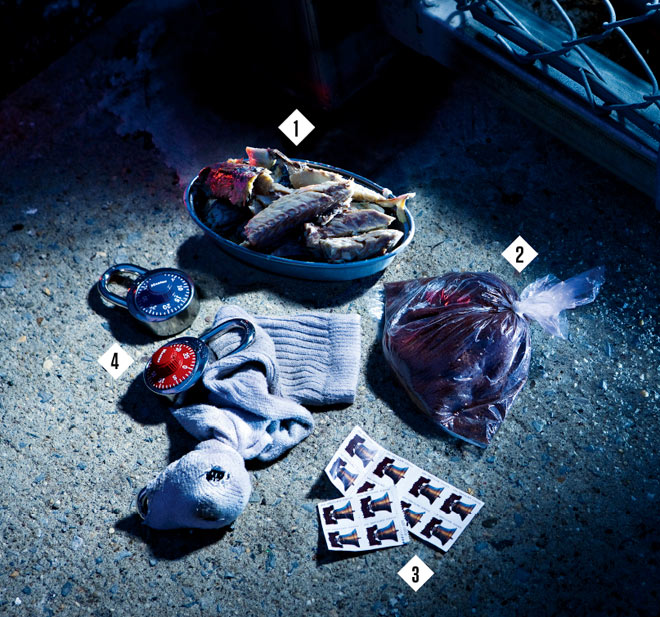
Nothing makes you more powerful inside the joint than a strong grounding in currency arbitrage. Inmates in federal penitentiaries aren’t allowed to have actual money; family members can load up prison commissary accounts, which usually max out at about $300 a month, but the money’s not transferable and can be redeemed only at the commissary. And cigarettes, the former gold standard for securing everything from a bodyguard to starched laundry, have all but disappeared since tobacco was banned at federal pens in 2004. So inmates have to rely on other forms of currency. All of which means the prison economy runs much like a commodities market: Money in a commissary account can’t be traded, but goods sold at the commissary can be. And since the amounts in circulation are tightly regulated, their value can far surpass their price in dollars. So if you’re sent away to, say, the US Penitentiary in Lewisburg, Pennsylvania, for “mistakes” you made in the run-up to the Great Recession, here’s how to get the best return on your next investment.

1. Mackerel
Cost $1.40 per 3.5-ounce pouch
Limit 14 per week
Use Tipping for laundry service, cell cleanup, or a haircut.
Value If you don’t open the pouch, it never spoils … which means the fish retains its close-to-a-dollar value.

2. Instant Coffee
Cost $3.35 per 4-ounce bag
Limit 3 per week
Use Getting buzzed cheaply.
Value Prisons just say no to drugs, so caffeine is the licit stimulant of choice.

Read the full article here.

Feb 08 2011

Hip Hop and the Banality of Incarceration

Look at the cover of Ja Rule’s 2003 album Blood in My Eye. See the prison in the background? He is paying homage to George Jackson's book of the same title. Yet the impactful cover art belies the crappy lyrics contained on the actual CD. Ja Rule’s words in no way measure up to the powerful ones written by Jackson.

This got me thinking about the fact that the most successful modern social movements (the black freedom movement, the anti-war movement, etc…) seem to have had an accompanying soundtrack.

What would be the soundtrack for a modern social movement to dismantle prisons? A few weeks ago, in response to a request, I offered a few songs about prisons/jails that I like. However besides Black Steel in the Hour of Chaos by Public Enemy and 16 on Death Row by Tupac from that list, I don’t know that I would include any of the other songs on my anti-PIC movement soundtrack.

This led me to think more deeply about the relationship between rap music and the prison industrial complex. A number of rappers offer prison as a setting for their lyrics, album covers and videos. Yet how often have you heard these performers actually talking about prison abolition or even reform? The answer is simple… very rarely. Why is this?

I have a theory that it is because incarceration among young black men has been and is naturalized in actuality and in representation. I think that hip hop artists don’t talk about reform or abolition because to them prison has been and is a part of the experience of being young and black in America. It is a black boy’s rite of passage so to speak. I have no empirical evidence of the truth of this claim. I am just making an assumption based on very limited knowledge. This will no doubt prove to be problematic when it is shown that I am completely wrong. Yet, how would you explain the disconnect? I look forward to hearing your thoughts on the matter…

Feb 07 2011

Angela Davis and Michelle Alexander Speak Tonight on WBAI…

I thought that this would be of particular interest to readers of this blog. There is a special radio event that airs tonight on WBAI which will bring together Angela Davis and Michelle Alexander. Here is the description of the program:

The New Jim Crow: Mass Incarceration in the Age of Colorblindness. Guests: Michelle Alexander, civil rights advocate and litigator, author and Angela Davis, Professor, University of California, Santa Cruz.

The New Jim Crow: Mass Incarceration in the Age of Colorblindness
with
— Michelle Alexander, civil rights advocate and litigator, author
— Angela Davis, Professor, University of California, Santa Cruz. She is a leading advocate in the movement to end the prison-industrial complex.

Alexander offers a bold and innovative argument that mass incarceration amounts to a devastating system of racial control. “Jarvious Cotton’s great-great-grandfather could not vote as a slave. His great-grandfather was beaten to death by the Klu Klux Klan for attempting to vote. His grandfather was prevented from voting by Klan intimidation; his father was barred by poll taxes and literacy tests. Today, Cotton cannot vote because he, like many black men in the United States, has been labeled a felon and is currently on parole.”

In her incisive critique, former litigator-turned-legal-scholar Michelle Alexander argues that we have not ended racial caste in America, we have simply redesigned it. Alexander shows that, by targeting black men and decimating communities of color, the U.S. criminal justice system functions as a contemporary system of racial control, even as it formally adheres to the principle of color blindness. Angela Davis explores the range of social problems associated with incarceration and the generalized criminalization of those communities that are most affected by poverty and racial discrimination. She urges us to think seriously about a world without prisons and to help forge a 21st century abolitionist movement.

*************************

Building Bridges: Your Community & Labor Report
Produced & Hosted by Mimi Rosenberg and Ken Nash

Listen on your Smartphone — WBAI live streams are available on the iPhone, BlackBerry, Android & other smartphones. For more information, click here.

Listen When You Want
Building Bridges and most WBAI Programs are now being archived for 90 Days. These links will be live ca. 15 minutes after the program ends. To listen, or download archived shows go here.

Visit their web site here.

Finally, you can click here to listen to the program tonight at 7 p.m. (eastern).

Feb 06 2011

Sunday Musical Interlude: Hip Hop is Universal…

One of the things that I love about rap music is its worldwide appeal and its openness to improvisation… Here is Akon’s Ghetto remixed with Arab and Dutch performers:

Feb 06 2011

Open Season on Black Boys: Police Officers & “Official Oppression”

I am tired of writing about cases of police brutality; especially those that involve brutal assaults on black teenagers. But alas… each day brings another such assault to light. Here is the latest incident; this one is out of Houston:

News One describes the content of the video and offers details of the case:

In the video, police kick and punch then 15-year-old Chad Holley, who does not fight back, multiple times. Holley laid motionless on the ground while a group of cops descended upon him.

Holley was a burglary suspect who was later convicted in July 2010.

The teenager has now filed a federal civil rights lawsuit alleging HPD officers beat him during his March 23 arrest.

Four Houston officers were indicted on official oppression charges and fired after a surveillance videotape surfaced reportedly showing them officers beating and kicking Holley while he was sprawled handcuffed on the ground. He was 15 at the time.

I am certain that the tragic irony of filing “official oppression” charges against the police officer involved is lost on the Houston prosecutors’ office.

Feb 05 2011

A Prisoner Says Farewell to Solitary Confinement – Writing by Lee Savage

By Josh MacPhee

My friend Gary shared some excerpts from prisoner zines that were published in the Utne Reader last year.   I was particularly moved and somewhat overwhelmed by the words of Lisa “Lee” Savage who wrote a farewell letter to solitary confinement just before her eventual release from prison:

Dear Lowell CM Unit,

Over the past two years of being trapped within this “hellhole,” your behavior modification (human mortification) chamber, I have written many formal letters against you to your conceivers—the DOC administration, and I’ve penned several articles to inform prisoners and “free world” citizens of your insidious plans to destroy my mind and any chance for a productive life once I am freed from your chokehold. But today is the first time I’ve ever written to you personally and I have many things to say, so bear with me as I’ve had to bear with you every minute of these past two years while locked in your solitary confinement….

First, despite your lies, the stories you would tell me that I will never leave you, I could never leave you and within you is truly where I belong and you were just “trying to help me” become a proper woman, I AM leaving you. I’ve completed my penance and within a couple of days, I will walk out and not look back. I know you find this hard to believe and I can hear you saying, “You’ll be back. You’ll come home to me ‘cuz I’ve taught you to bring yourself back into my walls.”  Don’t be so confident and sure of yourself or your ability to twist my mind. I think you already know I am different from the others you’ve courted and caged before me.

I admit the first time we met and you took me in 6 ½ years ago, I was quite naïve and rather weak in my physical, mental and emotional states. Yes, you definitely had control and I was at your mercy, which I never received any, regardless of how I begged and pleaded with you to stop beating me, to stop hurting me, to stop breaking my heart and PLEASE just let me hold onto ONE LITTLE HOPE. You never ceased in your cruelty and I responded the way you wished, like a feral animal lashing out at any and all human contact. I’ve never felt so ashamed, so helpless, but I found the answer to your abuse…it would end, everything would cease to exist, even me. I would escape you by hanging myself, my spirit would fly free, this I would gladly pay for with this shell of flesh and bone.

It would come to pass: I hang, I die, I’m free.

Fate has a way of placing its hands on the steering wheel of life though and I was revived and brought back to you. It was that anger that helped me live until EOS.

You know, I can’t believe I’m being so civil to you and not ranting.

Yes I can believe it. I’ve changed in this second time I’ve spent so unwillingly with you. I swore that this time, I wouldn’t allow you to destroy me, to steal my life no matter what you did to me. Somewhere along the way, I found that I wasn’t a victim. I would be a survivor, a fighter. I would see my son again. I would enjoy a summer day, a cool winter night or the spring rain. I would bask in the sunshine with my lover. I would defeat you, beat you at your own game, and teach others how to survive and fight you.

There were days, many days in which my strength and hope waned, days when I would fight the guards just to FEEL, to KNOW I am ALIVE, I am REAL. The pain was real, the suffering was real and through all the mental and emotional anguish I held onto that burning rage I had inside and I became a “soulja,” a trained reconnaissance soulja, an urban guerilla who was ready for your warfare on whatever level you chose to fight.

When there was no attack on me, but on my captive sisters, I fought for them. I had to guard and protect those who didn’t understand your tactics. After all, that is “how you roll”—to besiege and then sequester the innocent, the unsuspecting. Isolated, they are then abused and returned to the free world shell-shocked. These are my sisters. I couldn’t just turn a blind eye or a deaf ear, even if it meant that I put myself in the line of fire, targeted.

I admit you are quite the formidable adversary. That is why your reach has grown and now no one is safe from you, not even your conceivers and your capitalist grantors. I’m quite sure you’ve deceived them into believing that you will not bite the hand that feeds. Won’t they be surprised and horrified when even they become trapped within you…

But, as your reach continues to expand, so does my network—my allies, the grassroots guerillas who support my resistance.

Funny, you fail to realize that, even while locked within you, deep in your bowels, my army of one is multiplying. Many armies of one are joining to become an army of many, who will foster and implicate the prisoner resistance movement and who will bring this hidden revolution to light.

I am leaving you and I know you are angry at this, but you see, I am ANGRIER and I MUST take this fight where your scary ass doesn’t want me to—to the streets. For it is outside of your walls that this revolution is about to explode. I will take it to the everyday common hardworking folk, the masses of overworked and underpaid who are your targets, so they no longer remain blind. I will take it to the uncertain and educate them, give them weapons to fight you. I will take it to the elitists on their pedestals and knock them down.

This is a war all right, a war for human rights and I will not allow you to take any more children from their families so that you can train them to become statistics of recidivism. You will not destroy my people. You will not destroy my family. For as much as you hate those you harm, I love them 100 times more.

My visionaries are beside me, inside me, speaking their truths.

My revolutionary sisters and brothers are everywhere, learning their truths.

Abolition has begun and it will not stop now.

I will not stop until all are free.

And this, Lowell Correctional Institution, is such a Savage Reality.

Until there are no more death chambers, I will fight.

Your Ex-Hostage,

(Lisa) Lee Savage

Lee was released on August 1st,  and continues the struggle from the outside.  To contact her, write to her at:

PO. Box 5453
Gainesville, FL 32627-5453

The following is a very good article from the same issue of Utne Reader that provides a tour of prisoner zines.  If you are interested in prisoner writing, you will find this very informative.