Jun 15 2011

Transformative Justice and “Cities of Refuge:” Miklat, Miklat Zine
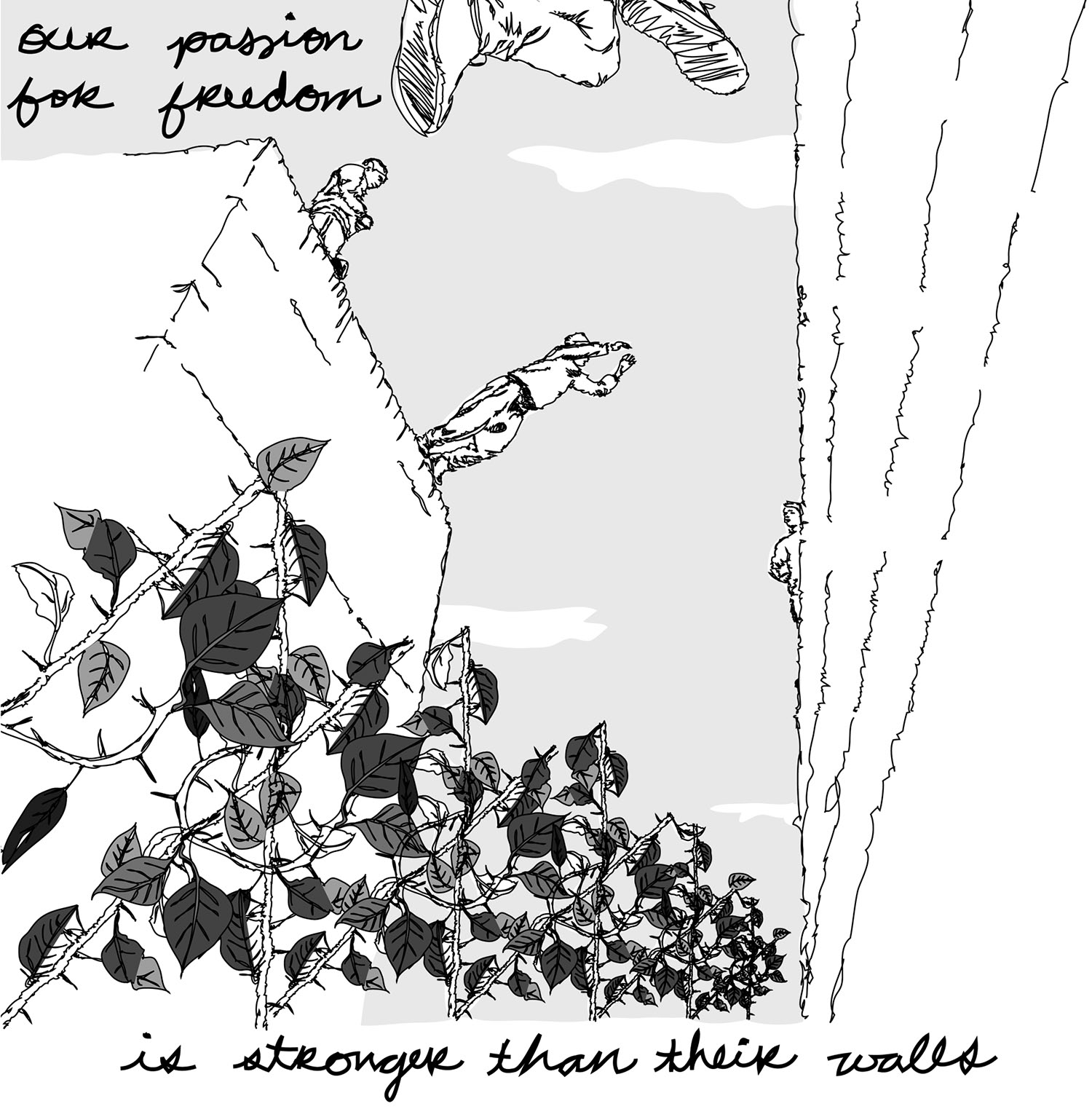
From Just Seeds - Critical Resistance Portfolio Project

My friend Lewis has created a terrific new publication titled “Miklat Miklat: A Transformative Justice Zine. I have written and continue to write a lot about the concept and practice of transformative justice on this blog. I believe that transformative justice and community accountability models for addressing harm offer the best opportunities for dismantling the prison industrial complex.

Time and again people ask me for an easy definition of the concept. They have a lot of questions about how transformative justice would work in “real-life.” I always resist those questions. In part, this is because I don’t have all of the answers. More importantly though, I resist definitions because I resent being asked to provide THE solution to ending prisons. The solution(s) will need to be formed in community – through sustained dialogue and by trying out many different models. No one person will have all of the answers. It is all of our responsibility to address the inhumanity of the prison industrial complex. The key though is for us to develop and to actually try out community accountability models. We then need to document those examples and share them with others. That is how we will transform the current broken and immoral criminal legal system.

What I love about the Miklat Miklat zine that Lewis has created along with his friend and collaborator, Micah Bazant, is that it offers examples that will not in their words “answer all of your questions about transformative justice, forgiveness, and social transformation, but examples that raised questions [sic] as we thought about and tried to locate Miklat in our own lives.

At this moment in time, at this juncture in our journey, the questions that we ask about transformative justice are more important than the purported “solutions” that we can offer. It takes time to envision and build new worlds….

So what is Miklat? Lewis and Micah offer this description:

The Torah also describes six Cities of Refuge or Ir l’Miklat. Miklat means refuge, but its three-letter root has two other meanings; absorption and integration. The Talmud tells of road signs in biblical times that pointed towards Cities of Refuge, allowing people who had transgressed or been put out of their community of origin a place of refuge, absorption and integration. The Miklat can also be understood as an internal, spiritual process — of shedding an old self, being absorbed into a new worldview, and seeking a more esoteric form of refuge. It can also be understood in more concrete terms, as a city that accepts ‘transgressors’ of all kinds into its walls, forgiving transgression and providing safety from punishment.”

The authors of the zine both “got interested in the idea of the City of Refuge as it relates to transformative and restorative justice.” The zine is a manifestation of this interest and it offers a very good definition of the concept of transformative justice. I will not give it away. I encourage you to read the whole zine for yourselves.

Readers should know that a couple of posts from this blog appear in the zine. However, I would still be highly recommending it if none of my posts were included. I have read through the zine three times already and I am finding new things in it every time. I highly recommend this publication as an invaluable resource to all who are seriously thinking about ending prisons and about real justice.

I will be taking a break from regular blogging over the next few days as I prepare for the release of a couple of reports and complete work on several other projects. Have a terrific next few days!

Update: I neglected to mention that the zine accompanies an art exhibition. Photos of the specific art piece associated with the zine will be forthcoming.

Update 2: Lewis and Micah have revised and updated the original Miklat, Miklat zine. Here is the updated version (PDF).

Jun 15 2011

Captive Consumers: Prisoners Get Bilked…


I received an essay titled “I.D.O.C. Bilks Prisoners for Millions Through Commissary Scheme” by Joseph Dole who is incarcerated at Tamms SuperMax a couple of days ago. I have written here and here about the millions of dollars in profit that prisons and jails make by “selling” goods to those who are incarcerated. An article in the Texas Tribune last year reported that prisoners in that state spent 95 million dollars at commissaries.

In his essay, Mr. Dole makes a cogent and convincing case that the Illinois Department of Corrections has been and continues to unfairly tax and exploit prisoners. He writes:

“In order to generate more revenue to help pay for a prison system that is both over capacity and siphoning money away from much-needed funding for infrastructure, education, and healthcare, the Illinois General Assembly passed Senate Bill 0629 on November 20, 2003, after both houses overrode disgraced Illinois Governor Rod Blagojevich’s amendatory veto. This bill, which became Public Act 93-0607 on November 25, 2003, effectively amended 730 ILCS 5/3-7-2a granting the I.D.O.C. the authority to add up to a 25% surcharge to all non-tobacco products and up to a 35% surcharge on all tobacco products sold at facility-maintained commissaries throughout the I.D.O.C. Prior to this amendment the surcharge was capped at 10%. The increase took effect on January 1, 2004, the effective date of the amendment.

Illinois prisoners groaned as the prices on commissary rose. As captive consumers and the state’s poorest segment of the population, this increase meant a drastic reduction in what they were able to purchase with the limited funds they have, especially considering that the ten-dollar state pay prisoners receive has never seen an increase to adjust for inflation. One can imagine the depreciation of purchasing power over the decades. The price of postage alone has tripled in the past four decades while state pay remained the same.

Ironically, it wasn’t the indigent prisoners who cried the loudest about the increase in surcharges, but rather it was the guards. Their union, the American Federation of State, County, and Municipal Employees (AFSCME) was able to convince Illinois House Representative Ron Stephens to sponsor a bill (HB4559) to again amend 730 ILCS 5/3-7-2a. This time the amendment was to effectively exempt the guards and other I.D.O.C. employees from the increases in surcharges enacted by SB0629 and cap the surcharges they would have to pay at 10%. The new bill also made sure, though, that the surcharges that were collected from prisoners could still go to pay the commissary employee’s salaries. HB4559 was filed by Rep. Stephens on April 26, 2006. It was originally known as the “Restore fair commissary pricing for I.D.O.C. employees” bill. Ironically, it is only the middle class guards and employees who are seemingly entitled to fair pricing of commissary goods and not the indigent prisoners who can’t choose to shop at Walmart instead. With AFSCME backing, it quickly sailed through both houses of the Illinois General Assembly with a wide margin of support, and the new amendment became law as Public Act 94-0913, effective June 23, 2006, a mere two months after proposed.”

Read Mr. Dole entire illuminating essay HERE (PDF).

Jun 14 2011

Congratulations, Texas Continues to Lead the Nation in Terrible Ideas…

I have to admit that I did a double take when I read this::

Texas is close to enacting a law that would provide teachers with detailed information about the criminal histories of their students, opening juvenile files that have always been confidential and are unavailable in most states.

The legislation, spurred by the fatal stabbing of a high school teacher in Tyler in 2009, is adding to a national debate over whether teacher safety should outweigh the rights of young offenders, who traditionally have moved through the juvenile justice system with their privacy protected.

The new disclosure rules were passed by legislators with little public attention last month. A spokeswoman for Gov. Rick Perry said the governor is “thoughtfully” reviewing the measure before deciding whether to sign it.

The use of the word “thoughtfully” in connection with Rick Perry is surely a joke. The governor who oversaw the killing of an innocent man is not going to care about keeping juvenile criminal records confidential.

Here is the most distressing part of this entire gambit:

Texas teacher groups strongly support the measure.

“We feel like we can deal with things when we’re in the know,” said Grace Mueller, a middle school teacher in San Marcos and an officer with the Texas Classroom Teachers Association. “When you’re blindsided, that’s when you get fearful or put yourself or someone else in harm’s way.”

Let me say this, as someone who formerly taught high school students and currently teaches college classes, I have the highest and deepest respect for educators. I think that it is the most difficult and most unappreciated vocation out there. All one needs to do is to look at what Republican governors are doing to collective bargaining rights for educators and at how many states are slashing teacher positions to understand how undervalued educators are in this country. That said, this is patently wrong and teachers’ unions and groups should STRONGLY oppose this law as a deep violation of privacy and as an enemy to social justice. I agree completely with Lawrence Wojcik quoted in the article who says:

“A kid walks into a classroom where the teacher knows all the details of the offense, the teacher would have to be super-human to be open-minded,” said Lawrence Wojcik, a Chicago attorney who chairs the American Bar Association’s juvenile justice committee.

What the hell is going on here? Seriously, what is the teacher going to be able to do once he/she receives information about a young person’s juvenile criminal record? Will the teacher have access to additional resources to deal with any potential needs that the student may have? Absolutely not. Let’s also be blunt, most of our elementary and high school teachers are white women and most of the youth in Texas with criminal records will be youth of color. Will this disclosure increase the likelihood of forming strong relationships between students and their teachers? I submit once again that the answer to this is a resounding “No.”

The article offers this important insight that I completely agree with:

However, the scope of the measure alarms some juvenile justice advocates. They worry that students who have committed crimes will be automatically placed in alternative education programs or subjected to other prejudicial treatment. They also point out that the written arrest notifications could haunt students even if they are cleared.

This is a terrible idea. It really is.

Jun 14 2011

Behind These Bars by Randy Miller

Josh MacPhee - Just Seeds

Here is another piece by Randy Miller who is currently incarcerated at the Indiana State Prison.

Behind These Bars
By Randy Miller

I crept into your dreams last night,
but you never knew I was there.
I kissed your eyes, your nose, your lips,
and ran my fingers through your hair.
So beautiful you were just lying there,
as still as the morning dew.
Although you didn’t know it,
I laid down next to you.
As I laid there next to you,
night slowly turned to dawn.
It was then you turned on your side,
and then began to yawn.
I rose to leave you lying there,
reaching for the door.
A tear rolled down your cheek,
and softly hit the floor.
So tonight when you close your eyes,
and drift off towards the stars.
I hope you can feel me next to you,
even though I’m behind these bars.

Jun 13 2011

On Feeling Despair When Working in Prisons…


I received a zine from a young man named Paul Brown this past week. It is excellent and frankly I am so grateful that he has taken the time to document the 11 months that he spent working in a jail in Seattle. The zine is titled “Eleven Months” and I highly recommend it.

He describes the zine as follows: “Eleven Months is a zine about my experience teaching in the jail in downtown Seattle. It is a mix of experience, dreams, analysis, rumors, reflections and internal e-mails. I wrote it as an attempt to condense a magnificent, traumatic, grueling experience into something I could share with others.”

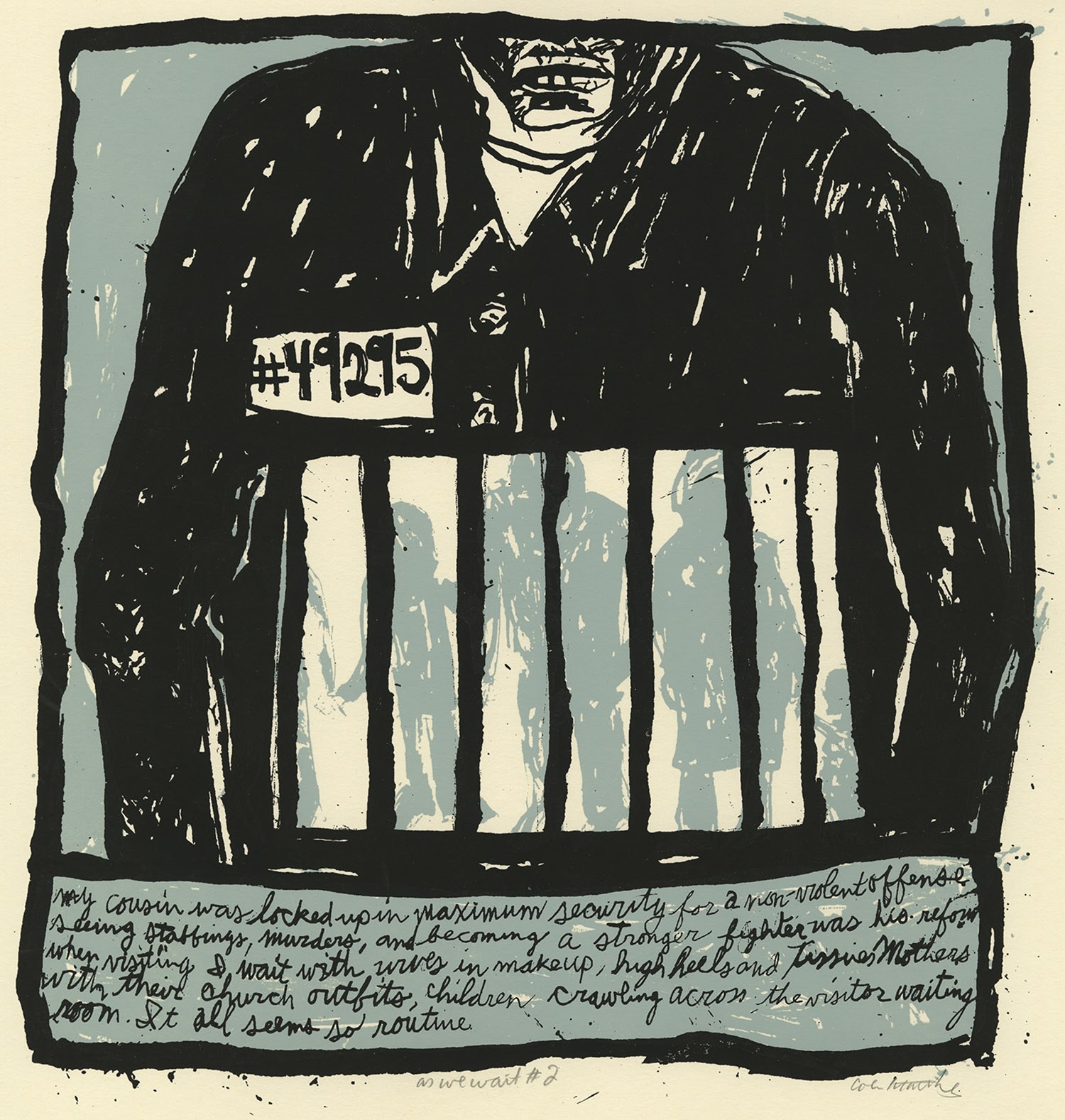
By Colin Matthes – Just Seeds Artists’ Cooperative

One of the most moving parts of the zine for me speaks to the feeling of despair that often threatens to overwhelm those who spend a significant amount of time working in jails or prisons. Here is what Paul writes:

“The jail has affected me tremendously. I feel less hope for the world, for humanity. I laugh less now than I did a year ago. I can’t remember what I used to be like. Now, when I feel hope, I treasure it, because I know it will be crushed on my bus ride to work the next day. Now I know that the world is a horribly fucked-up place, where people suffer and die and no one cares. Now I know that people kill at work. (I’m talking about cops, who kill directly, and also bureaucrats and politicians, who make decisions that deny people health care, housing, etc.) Work kills people and their relationships. People are seen as fuck-ups and no one gives them a chance. The system swallows people whole, spits them out more fucked-up than they came in. The effect that I am able to have is infinitesimal. I hope that once this year is over I get some of my hope back. Despair is a sensible reaction in this world, in this place. But it isn’t pleasant.

Sometimes I feel overwhelmed by the vast amount of suffering happening above me (the education office is on the first floor of the jail, inmates are “housed” on floors 2-11). I get kites* from inmates who have no one to turn to, who will be homeless on their release, who are in abusive relationships. I’ve gotten desensitized to everything. Instead of a sharp feeling that could move me to tears, it’s a feeling comparable to a dull ache. Occasionally the tears come through, but not nearly as much as they should. It makes me feel kind of dead.”

Interestingly, I just wrote last week about my own experience of feeling anxious about having to visit someone at Cook County Jail before I had read Paul’s zine. I did visit Cook County Jail on Friday and I am still around to write about it. I think that it is essential for as many of us as possible to enter jails and prisons in whatever capacity we can. We need to be witnesses to what is happening inside these hell holes. Yes, these experiences can feel soul-deadening but it is nothing compared to the people who are locked in cages for sometimes 23 hours a day. It is nothing compared to knowing that you will die in a cell. Feeling despair is OK. I think that it would make us inhumane if we didn’t despair at what happens on the inside. Yet, we do not have the option to give up. We can’t opt-out. We cannot abandon those on the inside to the cruelties of the prison industrial complex. Our liberation is inextricably linked to theirs. No justice, no peace for any of us.

I have so much empathy for the feelings and words shared by Paul. I wrote a post last year titled “How do you keep from giving up?” One salient portion of that post shared a quote by Cornel West that I find relevant to the idea resisting a feeling of hopelessness:

“It takes courage to cut against the grain and become non-conformist. It takes courage to wake up and stay awake instead of engaging in complacent slumber. It takes courage to shatter conformity and cowardice.” I would add that it takes courage to keep from giving up.

Thank you Paul for your zine and your determination to “wake up and stay awake instead of engaging in complacent slumber.”

Jun 12 2011

Sunday Poem – Reverse: A Lynching by Ansel Elkins

My sister shared this poem with me a couple of weeks ago and it has made an indelible impression.

Reverse: A Lynching
Ansel Elkins

Return the tree, the moon, the naked man
Hanging from the indifferent branch
Return blood to his brain, breath to his heart
Reunite the neck with the bridge of his body
Untie the knot, undo the noose
Return the kicking feet to ground
Unwhisper the word jesus
Rejoin his penis with his loins
Resheathe the knife Regird the calfskin belt through trouser loops
Refasten the brass buckle
Untangle the spitting men from the mob
Unsay the word nigger
Release the firer’s finger from its trigger
Return the revolver to its quiet holster
Return the man to his home
Unwidow his wife
Unbreak the window
Unkiss the crucifix of her necklace
Unsay Hide the children in the back, his last words
Repeal the wild bell of his heart
Reseat his family at the table over supper
Relace their fingers in prayer, unbless the bread
Rescind the savagery of men
Return them from animal to human, reborn in the long run
Backward to the purring pickup
Reignite the Ford’s engine, its burning headlights
Retreat down the dirt road, tires speeding
Backward into rising dust
Backward past cornfields, past the night floating moths
Rescind the whiskey from the guts
Unswallowed, unswigged, the tongue unstung
Rehouse the flask in the field coat’s interior pocket
Unbare the teeth, unwhet the appetite
Return the howl to its wolf
Return the shovel to the barn, the rope to the horse’s stable
Resurrect the dark from its heart housed in terror

Reenter the night through its door of mercy

Source: Boston Review

Jun 12 2011

Young People, They Want To Talk About The Police…

I spent last Thursday evening speaking with some youth from the Chicago Freedom School (CFS) about juvenile justice issues for a focus group that I was leading. As usual, every time I speak to young leaders, I get so much energy and my hope is sustained.

It will not come as a surprise to anyone who works with youth of color or talks with them regularly that racial profiling by law enforcement is what they most wanted to discuss. Regular readers will recall that I am one of the founders of CFS. I have to admit that when I was conceiving of the Freedom school, I didn’t think that criminal legal issues would play such a central role in the concerns of the young people who would participate in our programming. Yet these issues are in fact at the forefront of the minds of most of the young people at CFS.

CFS Youth Getting On the EL - Chicago Tribune 6-12-11

Just today, some of the members of the CFS Youth Leadership Board (YLB) are featured on the front page of the Sunday Edition of the Chicago Tribune. Some of the concerns that we spoke about on Thursday evening find expression again in the article which is focused on young people’s responses to the so-called “Chicago youth mob attacks” that took place on the Gold Coast last weekend. Since this incident, Downtown Chicago has been crawling with police officers. This has obviously not gone unnoticed by young people in this city. Here are some wise words by Allie (who is a member of the YLB) about that matter from the article:

Alexandra “Allie” Pates, 17, lives in Hyde Park and said her parents started taking her downtown to the movie theaters, restaurants and stores when she was very young. She said that now she often takes the Metra train downtown with five or six friends, and they sometimes meet up with others, further swelling their ranks.

“People feel threatened by black teens and even more so since the (incidents) happened” last weekend, said Allie, who’s black. “It’s unfortunate because people will buy into the stereotypes even more.”

While she said she believes the police should help maintain safety for everyone, she’s concerned that groups of black teens will face greater scrutiny than others.

“The police seem to assume something negative is going to happen or that you’re up to no good, if you’re a bunch of black kids,” she said. “I’ve never been in trouble in my life, but you don’t get the benefit of the doubt.”

She said she realizes that groups of young people can be intimidating.

“But at the end of the day, we want what everyone wants: to get together and have a good time.”

Allie speaks to the complicated interplay between race, racism, and “suspect” identity. Her final words are instructive though: “we want what everyone wants.” This is wise beyond her 17 years. Then again, Allie is in fact brilliant and has an analysis of the world that eludes people twice her age.

In the next couple of weeks, I will release a report about juvenile arrests in Chicago with my friend and colleague Cait Patterson. The report is part of an ongoing effort to educate our community members about the scope of juvenile arrests in the city. Without hard numbers, too many adults feel that they can remain disengaged from the plight of youth who come into police custody. Just last year there were over 27,000 arrests of juveniles 17 and under in the city of Chicago. Flooding Downtown Chicago with police officers will not stop a small percentage of young people from attacking people. If they are determined to attack folks, they will simply move to an area with less police presence. Instead of putting more cops on the streets downtown, perhaps Mayor Rahm Emmanuel will secure some employment opportunities for the thousands of young people in this city who are without jobs. The youth unemployment rate in Chicago exceeds 50%. As long as this is the case, young people who feel hopeless and need critical resources will search for what they need by any means necessary. I have used this Frederick Douglass quote before but it is particularly appropriate in this context:

Where justice is denied, where poverty is enforced, where ignorance prevails, and where one class is made to feel that society is organized in a conspiracy to oppress, rob and degrade them, neither persons nor property will be safe.

Jun 11 2011

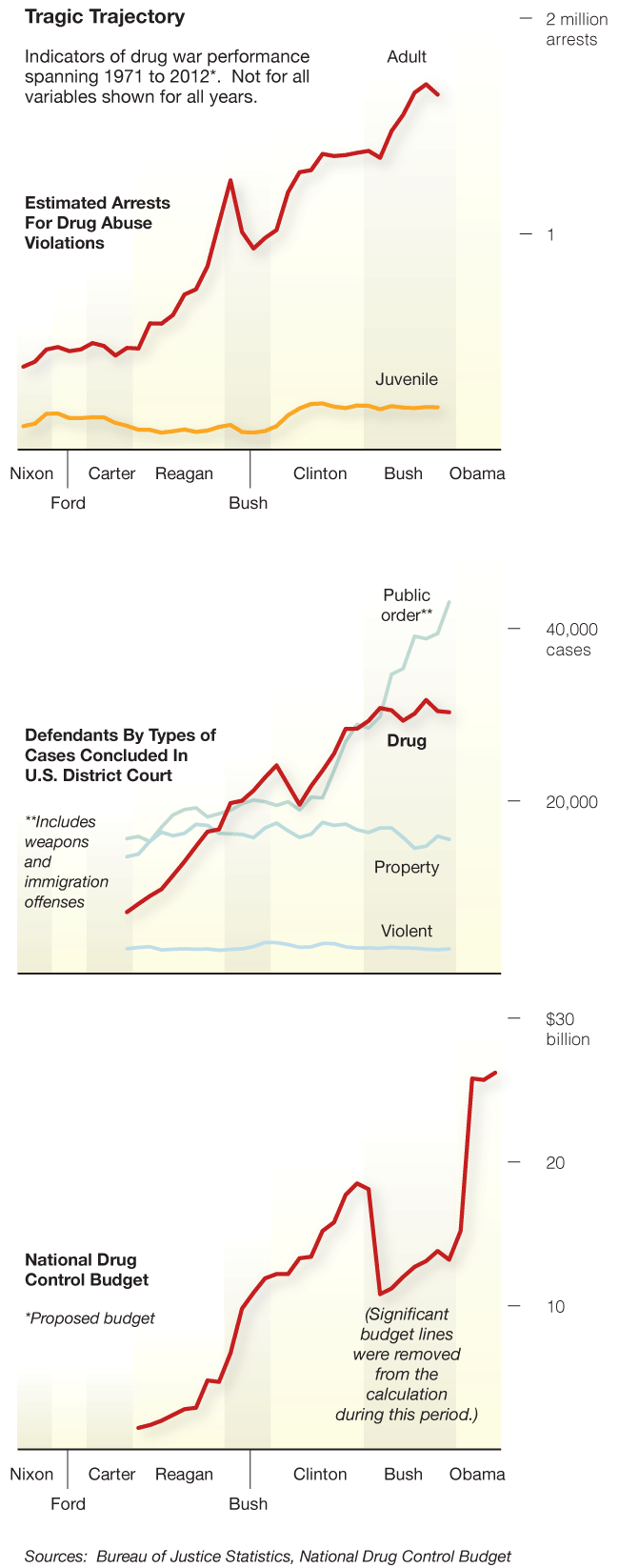
Crazy PIC Fact of the Day 6/11/11: Failed War on Drugs Edition

Source: New York Times

Jun 09 2011

This is What Community Accountability to End Violence Looks Like…

A big part of my work is focused on transformative justice. A key component of transformatiive justice is to develop community accountability models for addressing violence and crime. My terrific little sister shared a great little vignette from the Ring the Bell campaign which I want to share here. It is an excellent example of what we mean by community accountability. Folks often have a difficult time envisioning what is meant by the concept. This is one example.

I hope that some budding socially-conscious filmmakers might partner with local organizations that are focused on transformative and restorative justice to create a series of these types of vignettes. They provide concrete ways for people to address violence without involving law enforcement and the criminal legal system. Great job to the Ring the Bell campaign folks!

Jun 09 2011

I Have To Go Back To Jail Again Tomorrow…

Eric Ruin (Just Seeds Artists' Cooperative - Critical Resistance)

And I absolutely hate, hate, hate it. I am visiting a young person who is still being detained at Cook County Jail after 30 days. Like the vast majority of detainees at Cook, the young person is there on a drug violation.

Everything about the experience of being at Cook County makes me sick. It begins a couple of days before I know I will need to go there and it extends to a few days after I leave. If this sounds like I am complaining, this would be correct. I have a difficult time controlling my rage when I hear some people refer to jails as “country clubs.” Frankly, this type of statement gives the person away. You can be assured that the person who utters such nonsense has never actually set foot inside an actual jail.

Some months ago, I wrote about a young friend Jamal’s experience of being locked up at Cook County Jail:

All of a sudden, in 2007, I didn’t see or hear from Jamal for a month. That was unusual. I asked some of his friends in the neighborhood where he was and what had happened to him. There was a wall of silence. Finally one evening in October, I got a phone call from Jamal. He was at Cook County Jail and he needed my help. “What can I do,” I asked. “Do you need a private lawyer, I have friends who could help? Money for items from the commissary…” I was going on and on and he finally stopped me when he could get a word in. “Ms. K he said, please tell them to send me to prison now…just get me out of here.”

Jamal’s plea that I ask that the judge send him to prison to get out of Cook County Jail is the norm. The jail is a true hell hole. In 2008, a federal investigation castigated the jail for its conditions. The investigation “uncovered serious sanitation and medical care problems as well as violence directed against prisoners who clashed with guards or failed to follow commands.” Other key parts of the investigation included reports of physical abuse and dilapidated infrastructure:

Many inmates report that those who are old, mentally ill or do not understand English are struck by officers for undressing or dressing too slowly,” the report said. One prisoner who had trouble complying with orders from guards complained that they used his head as “a bongo drum.”

Inadequate staffing and supervision sometimes forced the jail to keep prisoners in their cells for long periods, the report said.

“Moreover, deficient maintenance in many cells (no lighting, plumbing failures, etc.) resulted in inhumane conditions for an extended lockdown,” the report said. It said that overcrowding at the jail has resulted in “hot bunking,” in which prisoners use beds in eight-hour shifts.

The report said that while each inmate uses his or her own bedding, the practice could still cause “sanitation and infection control problems.” It said skin infections have not been adequately controlled.

Fitzgerald told reporters that the jail has only one dentist for 9,800 prisoners and that 25 percent of tooth extractions result in infection.

Three years later, I believe that conditions have really not improved at the jail. In some instances, things may in fact be worse. So now tomorrrow, I have to go there again and I am dreading it. Spending one hour there feels unbearable to me, I just cannot fathom spending the 35 days that the young person who I am visiting has spent there. This is inhumane and it must change.