Jun 07 2011

The Meaning of Life by Joseph Dole – Incarcerated at TAMMS

As part of my ongoing attempt to feature original writing from prisoners, I would like to share this essay by Joseph Dole who is currently incarcerated at TAMMS Supermax Prison. Special thanks to my friend Lois of The Real Cost of Prisons Project who shared these powerful words with me. If you are moved to do so, feel free to send a note to Mr. Dole to let him know your thoughts about his writing. He can be reached here:

K84446 Tamms CC
8500 Supermax Rd
Tamms, IL 62988

The Meaning of “Life”
By Joseph Dole

Rarely am I asked what it’s like to serve a life-without-parole sentence. Arguing for a death sentence for my first felony conviction, the State’s Attorney implored the judge not to allow me to spend the rest of my life on a virtual “vacation” in prison. I can unequivocally state that it is not vacation.

A life-without-parole sentence means a million things, because, as its name suggests, it encompasses a person’s entire remaining life.

It means enduring being reduced to a second-class citizen in the eyes of most people. It means decades of discrimination from the courts and public. “Prisoner”, “inmate”, or “convict” each have a strictly pejorative use in the media or pop culture. Those terms become the sole defining characteristic of a man’s entire character.

It means that courts will turn a blind eye to any act against you unless it causes “atypical and significant hardship”. A free man may find protection in the courts from emotional and mental harm, but a prisoner can only find protection from “atypical and significant” physical harm, and that’s dependent on finding an objective and unbiased judge and enough citizens who can set aside their personal biases against prisoners to fill a jury box and render a fair verdict – a nearly impossible feat. So when you’re stripped naked and left in a concrete box with nothing but a toilet for four days without cause, as a prisoner you have no recourse in the courts. When you’re beaten to a bloody mess while handcuffed, as a prisoner you’re more likely to encounter a jury that will conclude you deserved what you got, regardless of the circumstances.

It means that after being “spared” the death penalty and receiving your life-without-parole sentence, you lack all the procedural safeguards against a wrongful conviction that a death sentence would have entailed, solely because you were found undeserving immediate death. How ironic it is that the worse you are deemed to be, the better chance of proving your innocence and regaining your freedom.

It means a lifetime of censorship, where you’re told what books and magazines you can read, what movies can watch, even what hairstyles you can sport, and where every letter coming in or going out is subject to inspection.

It means a complete lack of privacy forever, and a complete indifference to your physical and medical health until someone fears being sued.

It means a constant, heightened risk of catching a deadly disease. You’re captive in an environment where staph infections run rampant, where people still die from tuberculosis, where the population has twice the rate of HIV infection compared to non-prisoners, and where up to forty percent are infected with hepatitis. An environment where there’s nowhere to run from many of these diseases because you’re forced to use communal toilets and showers.

It means three meals a day of the poorest quality food that the least amount of money can buy without killing the inmate population.
It’s a daily existence where trust is non-existent and compassion is not allowed. Not only is compassion viewed as a sign of weakness in the prison milieu, but it is, ironically, actively discouraged by the prison administration. If your neighbor is destitute and you want to assist him by giving him soap, paper, or even a snack to supplement the meager meals, you can only do so at risk of being written a disciplinary ticket for “trading and trafficking”.

It’s a never-ending pressure cooker where the stress and anxiety compound daily as you constantly have to watch your back. Soldiers returning from Iraq understand this. It’s a major factor in Post-Traumatic Stress Disorder. The constant fear for your safety and the need for 24-7 situational awareness Frays at your nerves. Now imagine not a 12-month tour but a lifetime deployment.

It means you’re constantly being told that you aren’t worth rehabilitation and thus are ineligible for nearly every educational or vocational program. Your life sentence disqualifies you from any state or federal grants to pursue an education and even the Inmate Scholarship Fund (founded by a prisoner) has no qualms about telling you that you’re ineligible for a scholarship because you’re never going to get out and contribute to society.

It means convincing yourself daily that your life has value even when the rest of the world tells you you’re worthless. It’s a lifetime spent wondering what your true potential really is, and yearning for the chance to find out.

It mean decades of living with double standards, where any guard can call you every profanity ever invented without any fear of punishment, but where if you were to utter a single one in response, or say anything that even resembles insolence, you’ll be written a disciplinary ticket, lose privileges, such as phone calls and commissary, and be subjected to a month of disciplinary segregation.

It means the state constitution is irrelevant where lifers are concerned. Article 1, Section 11 of the Illinois Constitution states: “All penalties shall be determined both according to the seriousness of the offense and with the objective of restoring the offender to useful citizenship”, but the courts have decided that politics, revenge, and hatred of “criminals” trumps the constitution, and have thus rendered the above section essentially meaningless by their refusal to rule life-without-parole sentences unconstitutional, even if it is the defendants first felony conviction on a theory of accountability, as is my case. This also put the lie to the American maxim that everyone deserves a second chance.

It means that you’re especially vulnerable to incomprehensible punishments, such as a lifetime of disciplinary segregation. I was give indeterminate disciplinary segregation after being found guilty of my sole disciplinary infraction. That was 8 years ago, yet here I remain. I’ve been told (on more than one occasion) that I will never be allowed out of indeterminate disciplinary segregation. So I will continue to endure conditions for the rest of my life which are known to cause mental illness after just 3 months. It means that I will never taste another Hostess cake. Nor play softball or any group activity ever again. More importantly, it means that I will never have physical contact with another human being for the rest of my life, including my 11 and 12 year-old daughters.

It means being incapable of taking care of your grandparents and parents as they reach their final years.

It means missing out on every important event in your children’s lives, unable to raise them; impotent to protect them or assist them in any meaningful way. It means they’ll grow up resenting you for the thousands of times they needed you and you weren’t there.

A life-without-parole sentence means constant contemplation of a wasted life. A continual despair as to your inability to accomplish anything significant with your remaining years. A life spent watching as each of your family members and friends slowly drift away from you leaving you in a vacuum, devoid of any enduring relationships.

It’s a persistent dashing of hopes as appeal after appeal is arbitrarily denied. It is a permanent experiment in self-delusion as you strive to convince yourself that there is still hope.

It’s a compounding of second upon second, minute upon minute, hour upon hour, of wasted existence, and decade upon decade of mental and emotional torture culminating in a final sentence of death by incarceration.

These though, are simply futile attempts to describe the indescribable. It’s like trying to describe a broken heart or communicate what it feels like to mourn the death of your soul mate. The words to convey the pain do not exist. When you’re serving a life-without-parole sentence it’s as if you’re experiencing the broken heart of knowing you’ll never love or be loved again in any normal sense of the word, while simultaneously mourning the death of the man you could have and should have been. The only difference is that you never recover, and can move on from neither the heart break nor the death because the pain is renewed each morning you wake up to realize that you’re still here, sentenced to life-without-parole. It’s a fresh day of utter despair, lived over and over for an entire lifetime.

Jun 06 2011

Crazy PIC Fact of the Day 6/7/11

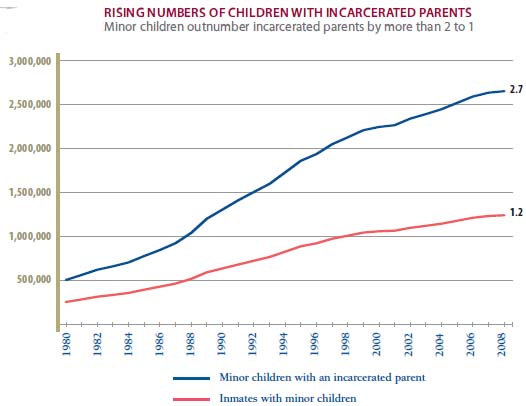
By age 17, one in four African-American youth has a father who has been sent to prison. Source: Western, 2011

Jun 05 2011

Tupac Breaks It Down: The PIC, ‘Thug Life’ and Reconceptualizing ‘Gang’ Violence

I just came across this amazing interview with Tupac and it just reminds me so much of what a true GENIUS this young man was. My goodness… Just take a few minutes to listen to him break down the prison industrial complex, violence, and systemic oppression. You can click HERE or you can watch it on YOUTUBE:

Jun 05 2011

Immigrants for Sale: Private Prisons and Criminalizing Immigrants

I’ve been wanting to post this here for a couple of weeks but didn’t get to it. Kudos to Brave New Films and The Cuentame Campaign for Spearheading this campaign!

Jun 03 2011

For Immediate Release: No Justice for Victims of Chicago Police Sexual Violence

No Justice for Victims of Police Sexual Violence
Tiawanda Moore court date set for June 8, activists demand justice

The Chicago Taskforce on Violence against Girls and Young Women is calling on State’s Attorney Anita Alvarez to drop the criminal charges against Tiawanda Moore. Ms. Moore is a young woman who reported that she had been sexually assaulted by a police officer in July of 2010, and was then herself charged with eavesdropping on police. According to her attorney, Robert Johnson, when she tried to report the assault, internal affairs “gave her the run-around, trying to intimidate and discourage her from making a report. The internal affairs officers told Ms. Moore if it happens again you have our number. Finally, a recording of the officer’s misconduct is made on her cell phone.” She was charged with two counts of eavesdropping – and if found guilty, will face up to fifteen years in prison.

Ms. Moore has been awaiting trial since her initial scheduled trial date of February 7. The next court date is scheduled for June 8 on which Judge Kevin M. Sheehan will decide what documents from the Independent Police Review Authority’s investigation will be released to the parties.

Describing the injustice facing his client, Mr. Johnson stated, “Ms. Moore reports an attack by a police officer in her bedroom and almost a year later she is facing prison and he is still patrolling our streets. Listening to that recording makes me wonder where future victims will get the courage to report sexual misconduct by a police officer.”

Ms. Moore’s case comes in the wake of local and national headlines, as a series of women have reported that they were sexually assaulted by police officers. In New York, on May 26, the acquittal of two police officers for alleged rape of a woman drew protests from local organizations, who pointed to the victim-blaming inherent in the defense’s winning argument that the woman had been drinking. Here in Chicago, officers Paul Clavijo and Juan Vasquez were finally indicted on June 1 for sexual assault, for an alleged rape of a 22-year old woman in Rogers Park in March. According to reports, Clavijo was charged with a second count of criminal sexual assault and official misconduct for an unrelated incident involving a 26-year old woman, which also took place in March.

Local activists have urged the State’s Attorney Anita Alvarez to drop the criminal charges and expedite the investigation into Ms. Moore’s allegations against the police. The Chicago Taskforce on Violence Against Girls & Young Women, a citywide coalition founded in 2009, launched an online petition on www.change.org that has drawn over 2,200 signatures. The State’s Attorney has not responded to these demands.
According to Taskforce co-founder Melissa Spatz, “cases like this have a chilling effect on women’s willingness to come forward and report if they have been sexually assaulted by police officers. It’s crucial that the city send a clear message that sexual assault of young women will not be tolerated.” Co-founder Mariame Kaba adds, “We at the Taskforce recognize the deep injustice of this case, and we demand immediate accountability from the State’s Attorney.”

Jun 03 2011

Aramark is apparently serving cooked mice to prisoners…

Based on my post about Aramark earlier this week, you know that I am not a fan. Regular readers will note that I am trying to educate myself further about prison food throughout history. When I wrote a post about food for prisoners during the Civil War a few months back, I could not have imagined that I would be writing about a prisoner in 2011 having to feast on rodents. Well according to the Lexington Herald-Leader:

An inmate at Eastern Kentucky Correctional Complex at West Liberty found a dead mouse in his soup May 1, leading to an investigation by corrections officials, according to state prison incident reports.

In a written grievance, inmate Christopher Branum said that after eating some of his soup, he saw “what appeared to be a mouse leg.”

“I touched it with my spork (a combination spoon and fork), and it was a cooked mouse,” Branum said in the grievance.

Corrections officer Ronald Cantrell wrote in a report that Branum called for him and showed him the mouse 30 to 45 seconds after Cantrell served Branum lunch in his cell.

“The mouse was saturated as though it had been in the soup for some time or cooked in it. The soup was still lukewarm,” Corrections Capt. Paul Fugate wrote in a report.

Who is catering these delicious meals?

State Rep. Brent Yonts, D-Greenville, characterized the incident as the latest problem with Philadelphia-based Aramark Correctional Services, which has a $12 million contract with the state to provide prison food.

“It indicates what I call malpractice of their job,” Yonts said.

But Aramark spokeswoman Sarah Jarvis said the company provides good service to the state.

“We have strong quality-assurance processes that ensure the high quality and safety of the meals we serve, and this has been consistently verified by the high scores we receive on independent county and industry health inspections,” Jarvis said in a statement. Those inspection scores average close to 100 percent, she said.

Well obviously something went drastically wrong with the “quality-assurance” process in this case.

Jun 03 2011

My Comment on the Rihanna Man Down “Controversy” Sans Words

What’s the difference between these four products of artistic expression?

“But I shot a man in Reno, Just to Watch Him Die…”

Jun 02 2011

“Bad” Girls: Demonizing Girls in Conflict with the Law

I read an article yesterday that crystallizes some of the conventional thinking about girls in conflict with the law. The Superintendent of Jersey schools was speaking with a group of pastors and had this to say:

“Young ladies” are the community’s “worst enemy,” Superintendent Charles T. Epps Jr. said today to a group of Jersey City pastors.

Discussing the $1 million that Jersey City public schools pay to staff police officers at its facilities, Epps blasted the district’s “young girls.”

“Our worst enemy is the young ladies,” Epps said. “The young girls are bad. I don’t know what they’re drinking today, but they’re bad.”

By Rachel Williams (Cradle to Prison Project)

Concern about girls’ aggression and violence has rarely been higher; largely because the general public feels that girls’ violence is increasing at a remarkable rate. The media has played a central role in this perception, not only in showcasing girls’ violence, but also by providing the public with explanations for this perplexing “new” phenomenon. Headlines have referenced hazing incidents, stories of vicious fights among girl gangs, and an overall explosion of the rates of arrests for aggressive acts.

The past 15 years have seen an explosion in the popular media of books about girls’ aggression and violence. In the 1990s, several popular trade books (Odd Girl Out and Queen Bees and Wannabees among them) announced the emergence of a new prototype of young woman – the “mean girl.” At the turn of the century, media accounts began to concentrate more specifically on the increase of young women’s use of violence. The “mean girl” image would soon be supplanted by the notion of the “violent girl.”

Researchers point to the fact that the image of the “mean girl” is just the latest incarnation of a time-honored stereotype that goes back to the 1960s. First there were the young women revolutionaries like Patty Hearst and Angela Davis, then there were the “gang girls” of the 1980’s, this moved to the “tough girls” of the 90’s, then morphed into the “mean” girl of the early 2000s, finally culminating in today’s “violent bad” girls.

Over the past years, researchers have struggled to catch up with the reality of these popular constructions of girls and young women. Their findings have presented a complicated picture about girls’ aggression and violence. On the one hand, they note an increase in the number of girls who have entered into the juvenile justice system. On the other, they disagree about what this means as to whether girls’ are indeed becoming more violent. In fact, several researchers suggest that a changing culture is more to blame for this rise in the number of girls referred to the criminal legal system than is an actual increase in girls’ use of violence (Chesney-Lind and Irwin, 2007).

In the introduction to their edited anthology “Girls’ Violence: Myths and Realities,” Christine Adler and Anne Worrall (2004) acknowledge that some statistics do suggest “an increase in violent offending by young women in particular (p.5).” While some of these statistics have been used by the media and popular authors to support the view that young women are indeed becoming more violent, Adler and Worrall (2004) caution that “such statistics are as much an indication of definitions of particular behaviors, and criminal or juvenile justice system responses to them and to particular individuals, as they are about the actions of young women (p.5).”

The notion of whether girls’ violence has really increased over time is contested (Adler and Worrall, 2004). Some researchers suggest that the rates of arrests and the reclassification of violent acts are the real culprits for the increased involvement of girls in the criminal legal system (Chesney-Lind, 2004). They contend that on average girls’ actual behavior has changed very little.

I will posit the following ideas:

1. The labeling of girls as increasingly violent is widespread whether or not it is based on actual fact.
2. We need to listen to girls’ voices and contextualize their use and experience of violence. Girls’ violence needs to be contextualized rather than sensationalized.
3. There is a blurred boundary between girls as perpetrators of violence and girls as victims, survivors or witnesses of violence.
4. We need a better understanding of how and why girls end up in conflict with the law and what their experiences are once they get into the system.

Superintendent Charles Epps actually presents us with a valuable opportunity to do some truth-telling and to smash some stereotypes. Rather than demonizing young women we need to seek opportunities to better understand their lived realities. We need refrain from stigmatizing and further oppressing young women.

Jun 01 2011

This is NOT Restorative Justice…

I have written a lot about restorative and transformative justice on this blog. I know from my work that when this lens is applied to addressing issues of violence and crime, it has great potential for improving communication and paving the way for a consideration of alternatives to incarceration.

When I think and talk about restorative and transformative justice, the following example is really not what comes to mind. One of the most worrisome aspects of restorative justice in 2011 is the level to which the criminal legal system has co-opted the concept:

You see them on the side of the road, wearing bright yellow vests with “Sheriff Work Detail” on the back. You may see them picking up litter, painting over graffiti, pulling weeds and doing other projects to better the community.

And most of them are more than happy to do so – for them it is better than being in jail.

Sheriff Heath White implemented the Community Restorative Justice Program about 4½ months ago, not long after he got into office.

So it seems that the “restorative” aspect of this program involves “community service” instead of jail time. On the surface this looks to be a great deal for the person who averts jail, doesn’t it?

To qualify for the program, inmates have to be nonviolent offenders. They are sentenced to community service by a judge, who decides the length of the sentence; at this time the offenders’ sentences range from 8 hours to 364 days.

They have to be screened before being accepted into the program — screened to make sure they have a chance at succeeding in this setting, are in good health, and don’t have a history of being kicked out of such programs.

I very much support nonviolent offenders avoiding incarceration. So I am all for alternatives to incarceration. The Sheriff who started this program makes the case that his program is cost-effective for the county:

“What this program is for is … to take our nonviolent offenders out of jail, so it’s not costing us the money every day to house them,” White said. “They can keep a job if they have a job … but at the same time they are still paying for their crime, and they are giving back to the community instead of sitting in jail.”

What are the participants actually doing as part of their sentences and how does the program operate?

They are assigned their duties after White asks the mayors in Torrance County what needs to be done in the community — so far, besides cleanup projects, they have repainted handicapped parking spaces and helped the county animal shelter prepare and move into its new building last month.

When the offenders have spare time, White puts them to work washing county vehicles or sprucing up around the Torrance County administrative office building.

Although they aren’t sitting in jail and do get to live at home, White emphasizes that the offenders are not just given a “free ride.”

They are under supervision at all times and can be given random alcohol and drug tests. Sheriff’s deputies can show up at their house at any time to check up on them to make sure they aren’t drinking and whoever is in the house is acting responsible as well.

I am certain that some of you have begun to get a queasy feeling as you read that participants are “under supervision at all times.” What does this really mean? I have written before that I do not support interventions that simply serve to extend the reach of the prison industrial complex. I don’t want to replace the prison industrial complex with the surveillance industrial complex. Some might argue that we are actually already living in the era of the surveillance industrial complex through laws like the Patriot Act. Suffice it to say that the concept of keeping people “under supervision at all times” is not comforting to me. The article continues to describe the program:

The conditions aren’t ideal, but the program is voluntary.

“They are not forced into this program, the people who are assigned to us, it’s their choice – they can go sit in jail for a year or come here and work and be with their families,” he said.

And although White wants to give the offenders “every opportunity to succeed and to prosper in this program,” the offenders go straight back to jail if they don’t show up for work or make an attempt to call in with a valid excuse.

Because the program is so new, it is hard to tell if offenders are liable to go back to their law-breaking ways after their community service is done.

“The program is so new … we haven’t had enough time to see the effects of it … time will tell,” White says.

White does know that in the short time the program has been around, it has saved the county $26,855: $18,895 is what he projects it would cost to have workers do these jobs at minimum wage, and incarceration fees for these offenders would have been $7,960.

I like the idea that this program is voluntary. This it seems to me is a key aspect of any “restorative” program. However community service is not in and of itself “restorative.” It may allow someone to give RESTITUTION but this does not mean that the program is RESTORATIVE and certainly not that it is TRANSFORMATIVE. So while I don’t view this program as being exemplary of restorative justice, I am in support of trying out many alternatives to incarceration. So kudos to this sheriff for at least being willing to try something different. I say this even though I have qualms about several aspects of his program.

May 31 2011

Working with Girls in Detention: Girl Talk Curriculum is Now Available…

I have written a lot about supporting girls in conflict with the law on this blog. This is mainly because I have such a passion for working with girls and young women in general. Much of my adult work has focused specifically on this population. I have also shared information about a terrific project that I am blessed to be associated with here in Chicago called Girl Talk. Girl Talk has a long and illustrious history. It officially ended in 2005 and I have been part of a team that just revived it again earlier this year. You can learn more about Girl Talk’s values and our conceptualization of our role as a group that works inside a jail here.


I am happy to share a new resource today: The Girl Talk Curriculum – Film, Art, and Resistance with Young Women in Detention. You can visit the Girl Talk blog to access this curriculum. I believe that it will be of use to others who work with young women in conflict with the law. It is also a resource that I believe would work equally well with girls on the outside.

I feel really lucky to be sharing time on the planet with the members of the Girl Talk Leadership Team. I am awed by these women’s fierceness, talent, brilliance, and compassion. I know that many others are working inside juvenile jails and prisons across the world. We hope that this new resource will be of use to your work. Let Girl Talk know what you think about the curriculum guide! Again the guide can be accessed through the Girl Talk blog HERE.