Jun 27 2011

Taking Black & Brown Youth on Prison Field Trips: Not A Good Idea

This blog post is solely addressed to my fellow people of color.  I would like to suggest that taking our young people on prison “field” trips is a terrible, terrible idea. 
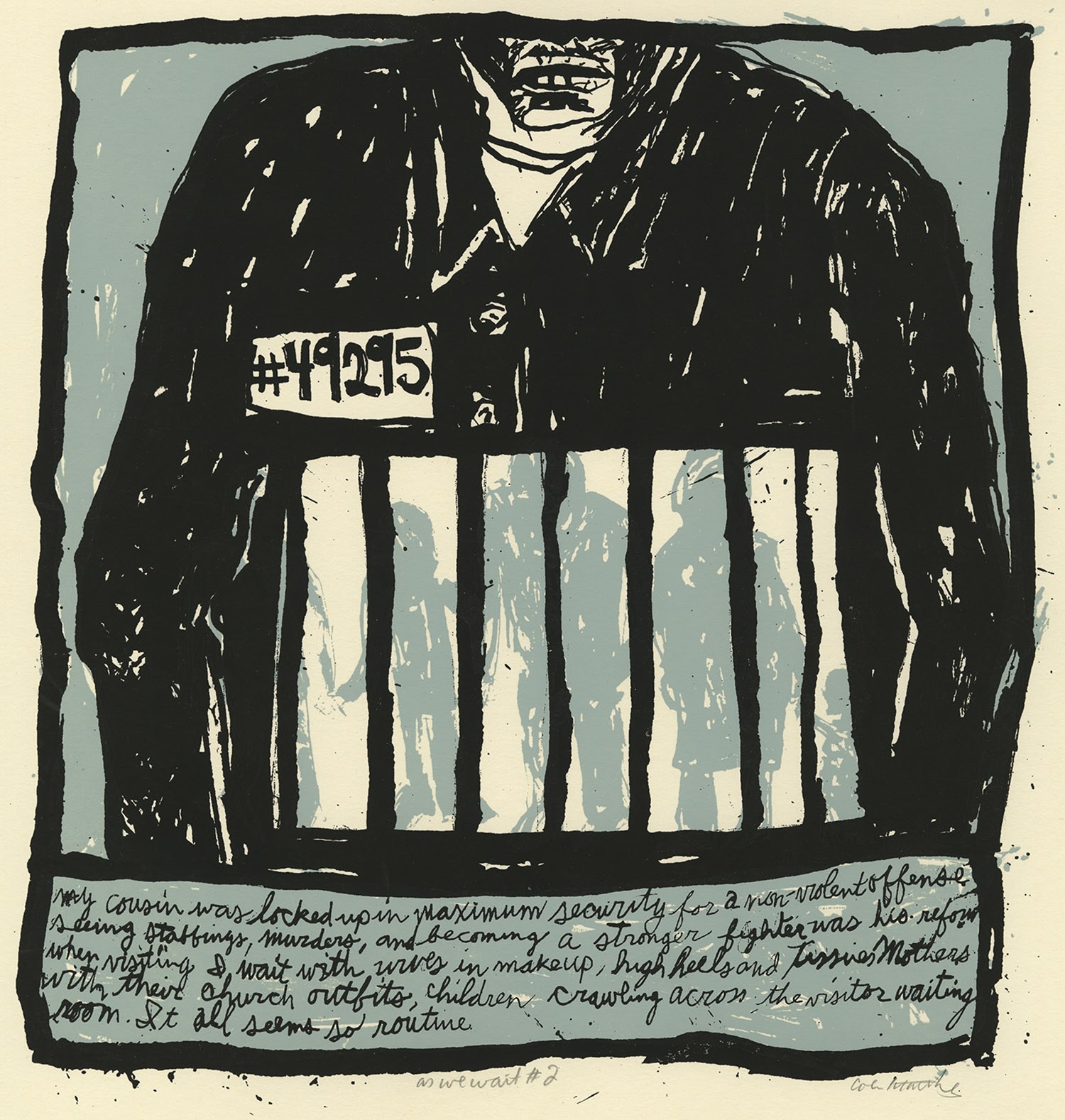
By Colin Matthes - Just Seeds Artists' Cooperative

This post originates from a comment made by a well-intentioned woman who attended an event that I co-organized this past weekend.  We were having a conversation about solutions for preventing the arrest of so-many of our youth of color in Chicago.  As part of a longer answer suggesting that community members must be involved in the lives of youth, she offered these words: “We need to take these kids to the jails and prisons and show them what they should expect if they get locked up.”  There was of course an “Amen” chorus following this suggestion.

Brothers and sisters, scared straight approaches have been repeatedly proven NOT TO WORK. You can read about this here and here. Let’s embrace empiricism and reject fact-free conjecture.

It feels cathartic to call for a return to “tough love” as the obvious solution for what ails us. In fact, shortly after the comment that I cited above was made, several people began to lament the “good old days” where we used to be able to “knock children upside the head.” The inference (not subtle) was that when we could readily use corporal punishment (or the threat of it) our youth were not getting arrested or incarcerated. That is simply not true. Youth of color have consistently been disproportionately impacted by the juvenile justice system. I just wrote about that over the weekend. What is lacking when we have these public discussions in our communities is factual historical perspective and also a critical understanding of how systemic oppression works. The so-called “War on Drugs” has exponentially more to do with why more of our young people are being arrested, detained and incarcerated than does the fact that families are less reliant on corporal punishment as a disciplinary practice.

The other tired trope that I am constantly subjected to is that “it’s the parents, stupid.” Everyone who is reading this has been part of discussions where it all comes down to: “The parents or families are the key to everything….” I say, that’s all well and good. However it doesn’t help the young people who I work with. They DO NOT HAVE parental and/or family support. Often there is nothing to “heal” there because they are estranged from their families. What are we supposed to do with those young people? We must build “resilient” community support networks that extend beyond “parents” or “families” as they have traditionally been defined in this country. I don’t want to attend ONE MORE workshop or event where someone says: “We have to engage the parents or family.” Yes, of course, by all means let’s “engage” families when and where we can. While we are doing this though, it would be great if we would get over our judgmental and blaming attitudes in the process. It would also behoove us to find other people in the community who can step into the gaps where parents and families cannot (for whatever the reasons).

Let me return to my original premise which is that it is a bad idea to organize field trips to jails and prisons for black and brown youth. What our young people need is exposure to a reality OUTSIDE of their daily experiences. They need to be taken on trips downtown to the Art Institute, the Shedd Aquarium, the Museum of Science and Technology. I would say that the majority of the youth who I work with hardly ever leave a one mile radius from their communities. Downtown is often a foreign country for some of our young people.

About 12 years ago, I took a group of youth from the Westside to the Field Museum. When we finished, I decided that as a treat, I would take them to Starbucks and let them order whatever they wanted. When we got to Starbucks, half of the group said that they were not thirsty or hungry and decided to wait outside. The others came in with me and after taking one look at the menu began to excuse themselves to wait outside with their friends. Only two out of a dozen young people stayed with me inside the store.

When I turned to ask them why everyone was outside. One young man said: “Ms. K, maybe we can just go to 7/11. They have regular drinks there.” I felt so stupid and ashamed. Here I was, someone who prided myself on being so conscious of how privilege truly works in the world… Yet I had not recognized how intimidating reading a Starbucks menu would be for these young people who never left Lawndale and Austin. When we debriefed the field trip afterwards, I apologized to the young people for not having been more sensitive and for putting them on the spot. They were of course exceedingly kind and forgiving of my misstep (though they did tease me mercilessly for several more weeks). It was a lesson learned for me and really motivated me to support and create opportunities for our young people to be exposed to new ideas and environments different from their own. I took that for granted in my own youth as I was privileged to travel the world growing up. This is not a small thing. Exposure to different people and different cultures provided me with an invaluable education and augmented my critical thinking skills. These things have held me in good stead over the years. I learned how to learn through those experiences.

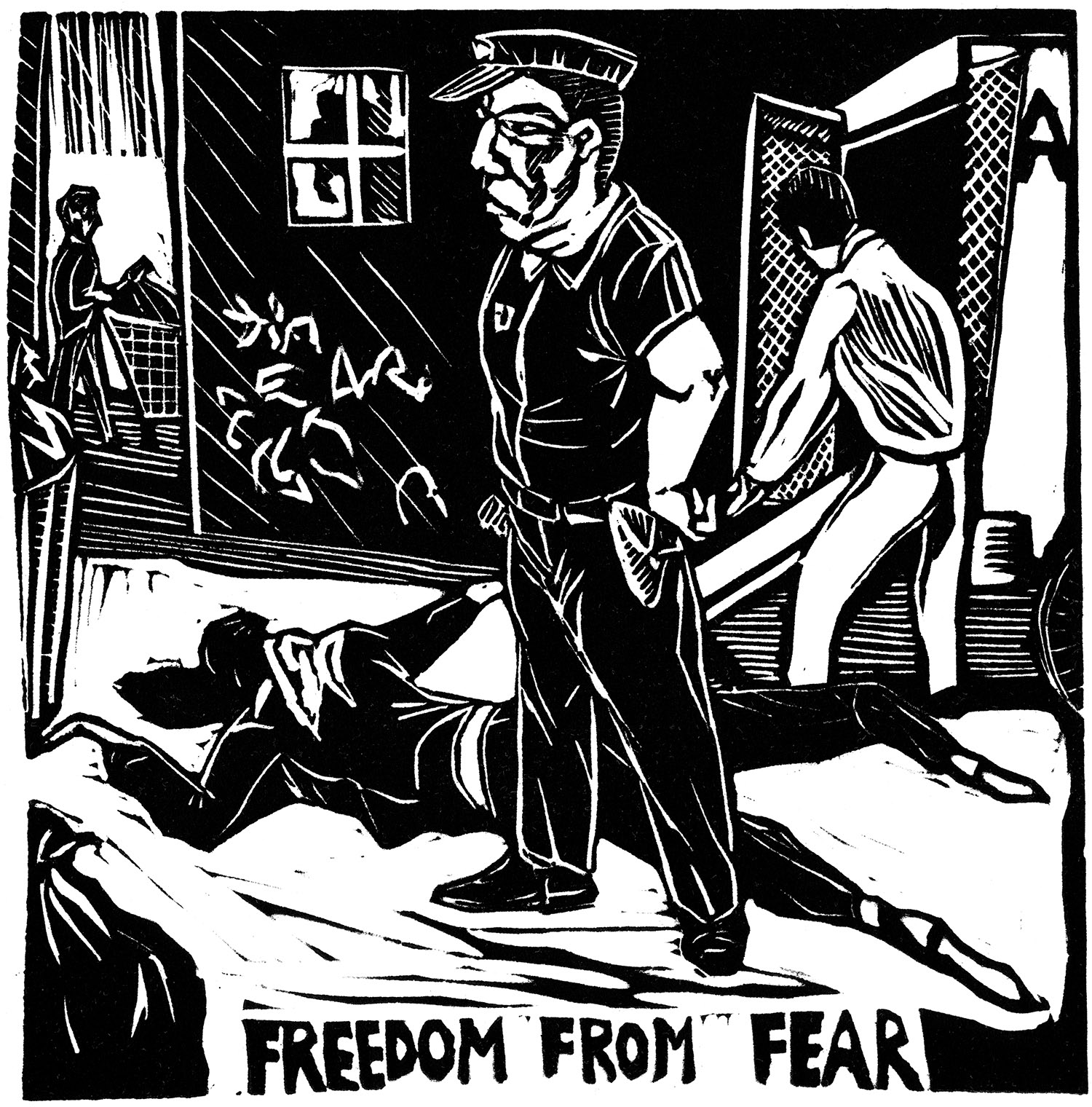
Taking Black and Brown youth to prisons does not expand their horizons. It doesn’t open up new windows of opportunity for them. If anything, it reinforces the status quo. It tells them that this is where they “could” end up when most of them are already living in prisons of poverty and neglect. It tells them that prison is not a pleasant place to be. Well they ALREADY KNOW THAT. Many have family members and friends who have been on the inside (though they may not articulate this publicly). Some of them have already been in lock up themselves. What’s new about that experience? Nothing. Do something different. Take the young people on a tour of Civil Rights monuments, take them on a trip to South America, take them to a baseball game. Anything except prison.

The brilliant Aaron MacGruder uses satire to make a similar point in an episode of the Boondocks that has Huey and his classmates visiting a prison. Below is an excerpt of that episode:

Jun 27 2011

Call to Action: HB83 is a Chance to Decrease Youth Incarceration in Illinois

We have an opportunity to decrease youth incarceration in Illinois. House Bill 83 is currently sitting on Governor Quinn’s Desk and we need to insist that he sign this bill before July 16th. Below is a template of a letter that you can and should send to the Governor’s office on this matter. You can also download the letter HERE.

If you would like to call the Governor’s office instead, please do so at 217-782-0244 and tell him to sign HB83. It will take only a few minutes to make your voice heard on this. Please call or write to the Governor.

The Honorable Pat Quinn
Governor of Illinois
Room 207, State Capitol Building
Springfield, IL 62706

RE: House Bill 83

Dear Governor Quinn:

We respectfully request that you sign House Bill 83 into law.

House Bill 83 (Yarbrough-Gabel, Hernandez, Soto and D. Smith/A. Collins-Steans) amends the Juvenile Court Act to encourage courts to explore community alternatives prior to sentencing youth to incarceration in the state Department of Juvenile Justice. This bill is expected to save the state money by encouraging the use of less expensive – and more effective – community alternatives to state funded incarceration. The bill is also expected to help Illinois recoup federal Title IV E funding for youth who need residential placement.

House Bill 83 passed the Senate unanimously, and has no known opposition.

This bill addresses the concerns of impacted community members that sentencing a youth to state juvenile confinement be a last resort, following a well informed and deliberative review of all available community based alternatives. Research has established that youth are least likely to repeat offend if they are given community based treatment and interventions. In light of the poor outcomes for youth committed to the state Department of Juvenile Justice, expanding the use of community-based alternatives is critical. This bill will encourage the use of community-based alternatives.

The bonus is that not only is encouraging community alternatives better policy – it is cheaper, far less costly, than confinement. Thus, by encouraging courts to make all reasonable efforts to keep youth at home, this bill will help the state save money, while reducing repeat offending by juveniles. Further, the reasonable efforts review is required in order to access federal IV E dollars for juveniles who need residential placement.

Please feel free to contact us if you have any questions.

Respectfully submitted,

Jun 26 2011

1913 Chicago & 2011 Chicago:Black Youth Still Disproportionately Locked Up

In the course of an investigation recently made by the Juvenile Protective Association of Chicago upon the conditions of boys in the County jail, the Association was much startled by the disproportionate number of colored boys and young men; for although the colored people of Chicago approximate 1/40 of the entire population, 1/8 of the boys and young men and nearly 1/3 of girls and young women who had been confined in the jail during the year were negroes.” – The Colored People of Chicago, 1913

So I spent all day yesterday at a forum that I organized along with my friend Cait to discuss the disproportionate impact of policing and incarceration on youth of color living on the Westside of Chicago. Interestingly as I was preparing for the forum, I came across a report written by the Juvenile Protective Association in 1913 titled “The Colored People of Chicago.” The passage quoted above comes from that report. I defy anyone to tell me that this very same paragraph could not be written in 2011 with respect to the disproportionate targeting by the criminal legal system of black youth in Chicago. The conversations that we were having yesterday at the Jane Addams Hull House Museum were probably the very same ones that animated reformers at the Museum in 1913 when the report that I am citing was published. The difference in 2011 is that the disproportionality of youth in the legal system is even more pronounced than in 1913 (if that can even be believed!).

Many of you might find the following passages from the 1913 report relevant to our current plight:

“From the interviews with all the boys in the jail it is clear that the lack of congenial and remunerative employment had been a determining factor in their tendency to criminality, but because the colored boys suffered under an additional handicap and because the opportunities for work are the essentials for all economic progress, the entire investigation had much to with the basic question of employment.”

“Those familiar with the police and the courts believe that negroes are often arrested on excuses to flimsy to hold a white man; that any negro who happens to be at the scene of a crime or disorder is promptly arrested and often convicted on evidence upon which a white man would be discharged. The Juvenile Protective Association has on record cases in which negroes have been arrested without sufficient cause and convicted on inadequate evidence, and it is well known that a certain type of policeman, juryman, and prosecuting attorney have apparently no scruples in sending “a nigger up the road” on mere suspicion. ”

“Occasionally, it happens that very little time is given to a case where a negro is concerned. Some time ago a colored man was arrested and charged with murder. He pleaded guilty and was sentenced by a judge to imprisonment for life in the penitentiary. It took just sixteen minutes from the time the negro was brought into the court to the time he left it, to have his case brought up, to plead guilty and to have a sentence of lifelong imprisonment pronounced. It surely seems as if such a serious crime as the taking of a life and the commitment of a man to prison for as long as he lives, should at least require less haste and more mature deliberation.”

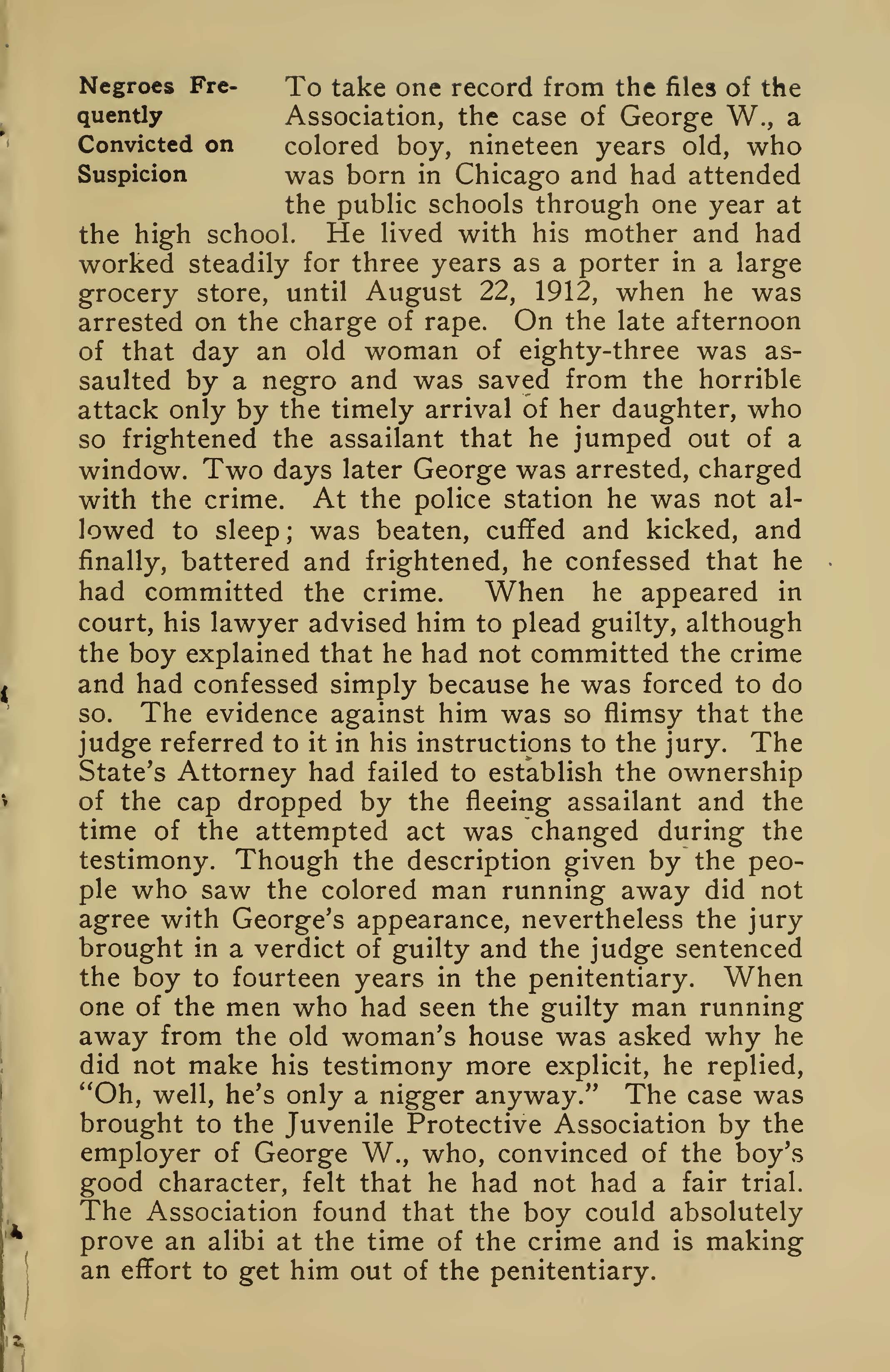
The report also describes the case of a 19 year black man named George W to illustrate how the legal system in Chicago treated negroes at the time. I am attaching a PDF of the account HERE for those who might want a copy of it. The account that JPA provides is invaluable to helping us understand the context for young black males in Chicago in the early 20th century.

This is why I am so passionate about the teaching and learning of history. It is why I loved teaching social studies and why I have founded organizations that focus on making sure the leaders (youth and adults) of today understand social movement history. How can anyone read the report by JPA and not see the direct correlation with where we are in our current moment?

Read the entire report, it is well worth your time. Be advised that there are some cringe worthy aspects to the report especially when the authors suggest that colored people are “particularly fond of music.” Alas it was 1913 people, what do you expect????

Jun 23 2011

A Morning in Court in Support of Tiawanda Moore

The first thing that strikes me when I see Tiawanda Moore is that she looks so very young. The second thing is that she reminds me of my cousin Fatime. She has the same fine features and beautiful dark skin. She is slight in build and is wearing glasses. Every black person in the U.S. has a sister, friend, cousin who looks just like Tiawanda Moore.

I arrived at Cook County Criminal Court at 9:30 this morning for a scheduled 10 am hearing on Ms. Moore’s case. I sat in the “holding area” reserved for spectators and the accused. Large tinted windows separate me from what’s happening inside where the judge and attorneys hold court. We can hear the proceedings happening past the large windows and glass doors through a horrible sounding speaker system. The sound keeps cutting on and off. I get frustrated so I walk through the doors to alert someone about the technical difficulties. A woman who appears to be waiting for a relative to be called for his case informs me that this is the norm and that when I hear Ms. Moore’s case called I should walk inside and stand by the doors if I want to support her. I thank her for the advice.

by Dave Buchen

Promptly at 10 am, Ms. Moore’s name is called and she walks up to the judge with her attorney, Robert Johnson. I get up and stand inside the doors toward the back so that I can hear what is happening. The judge makes a couple of pronouncements that I as a layperson don’t understand. Then he invites the Assistant State’s Attorney and Mr. Johnson to use his chambers to review some items for discovery. The particular item of interest is the internal review report from the Chicago Police Department which has heretofore been kept underwraps.

Ms. Moore walks out back toward the “holding area” and I follow her out. She sits on one of the nondescript wood benches that court watchers and the accused share. I walk over to her and introduce myself. I let her know that I am one of the co-founders of the Taskforce and that we have been trying to bring attention to her case. She shakes my hand which feels really small in mine. She is soft-spoken and shy. She thanks me for helping her. We go outside the courtroom and she starts telling me about her case. Shortly, we are joined by her lawyer, Mr. Johnson. He says that he expects to look over the internal review documents today and will make a motion demanding that the case be brought immediately to trial.

Ms. Moore tells me that she is invoking her right to a speedy trial. This ordeal is of course weighing on this 21 year old young woman. I can’t even begin to imagine the stress of these regular trips to criminal court. It was obvious to me today that the State of Illinois is stalling for time. I speculate that they do not want a public hearing of the audio recording that Ms. Moore made of the police when they would not take her complaint seriously. This is of course conjecture on my part but the first hearing in this case was scheduled for February 7th and the expectation was that trial would begin shortly thereafter. Today is June 23rd and still there has been no trial. State’s Attorney Anita Alvarez has no case against Tiawanda Moore and she ought to pursue an investigation against the rogue police officer who abused his power by sexually assaulting Ms. Moore in her own home.

The Chicago Taskforce on Violence Against Girls and Young Women intends to continue to pressure the State’s Attorney to end this unjust prosecution. We will keep you apprised of the developments in this case.

To learn more about the background of this case, you can read the following pieces:

New York Times Article

Radley Balko's Huffingpost Article

You can help by signing our petition demanding that Anita Alvarez drop the unjust charges against Tiawanda Moore.

Update: Ms. Moore has her next court date on June 30th.

Jun 22 2011

Chicago Torture Justice Memorials: Launch Event on June 28th

By Art Hazelwood

Some of my friends and colleagues are organizing a very important project. For those of you in Chicago, you will want to attend the launch event for this project on June 28th. I will be providing much more information about the request for proposals etc… in the coming days as that information becomes available. I am proud to be a member of the advisory board for this important and much needed project.

CHICAGO TORTURE JUSTICE MEMORIALS
We invite artists and those who seek justice of all kinds to submit proposals for a monument to memorialize the Chicago Police torture cases. Our goal is to honor the survivors of torture, their family members, and the African American communities affected by the torture. The monument will also recall and honor the nearly three decade long struggle for justice waged by torture survivors and their families, attorneys, community organizers, and people from every neighborhood and walk of life in Chicago.

Project Launch: June 28, 2011, 6 – 8 pm
Hull House, 800 S. Halsted St., Chicago

The program will include:

* music and performances by Deja K. Taylor, In the Spirit / Emily Lansana & Zahra Baker, Basik, and Nicole Garneau;
* Testimony by Darrell Cannon, torture survivor;
* History by Joey Mogul, People’s Law Office;
* Reparations, Stan Willis, National Conference of Black Lawyers;
* MC, Alice Kim; and
* Introduction to the Memorial project with the organizers

Organizers include:
Stephen Eisenman, Adam Green, Alice Kim, Carla Mayer, Joey Mogul, Laurie Palmer, Amy Partridge, Laurie Jo Reynolds, Ellen Rothenberg, Ben Stagl, Jan Susler, Daniel Tucker

For more information about the launch event, visit FACEBOOK.

Jun 22 2011

More “Words Stronger Than Walls:” Voices of Incarcerated Girls

Many people were moved by the poems from the young women at the Cook County Juvenile Temporary Detention Center that were put together in a chapbook titled “Words Stronger Than Walls.” Since the first few poems were so well-received, I wanted to share a few more here.

Speaking Without A Tongue
By Paris

I want to be a singer so I come up with a tune
I want to be a dancer so I prance across the room

I want to be a model so I sashay across the stage
I want that guy to notice me so I lie about my age

I want to feel beautiful so I go to his house
I want him to love me so I have sex with him on his couch

I wake up the next day and he says I have to leave
I say I want to stay, he says ‘not unless you get on your knees’

Couple of days later we chillin’, smokin’ dope
I must have laughed too hard ’cause next thing you know his hands
are around my throat

I was so confused didn’t know what to do but stand there and stare
Then I chalked it up and said ‘so what?’ because this must mean he
really cares

I walk around like I’m walking on glass, trying to ignore the pain
Telling myself he just needs my love and one day he will change

What I didn’t know was that if he changed for me, it would be too late
If I don’t get out now I may never escape

To all my sisters living with an abusive man
If you want to help yourself, or someone else, you have to take a stand

Don’t be like me and let love blind you from the truth.
When you see the scars and bruises, those should be enough proof

I tell you this because you don’t have to wait —
When I finally tried to open my mouth it was already too late.

If you wait too long the damage may already be done
Take it from me — it’s hard to speak
Once you’ve already lost your tongue.

Depression
By Heather

I see you and I see me
I see trees but no leaves
I feel wind but no breeze
But what I’ve really been wondering
Is why I let these streets control me
It feels like I’m blind and can’t see
Because I let depression overcome me.

In and Out of Jail
By Patricia

In and out of jail was where I thought it was.
Hanging with the wrong crowd making money, selling drugs.
I thought I was smart but all I was, was dumb.

Selling to kids, even pregnant women.
Just trying to get money, making money the wrong way.
Now look where I’m at — they got me.

Now I’m looking stupid, staring at the bricks.
Eating dog food, can’t wash up when I want to.
I’m just a fool and an idiot
Mad at the world because of my mistakes

But it’s ok because now I’m going the right way
Just had a baby on June 17
he’s 7 months and I’m still with his daddy
Look at me now successful as can be.

Forgive Me
by Paulette

Mama are you listening
I need your love today
Mama can you hear me
I need your help today
Mama can you help me
I need you everyday
Mama can you forgive me
Because I caused you pain
Mama please believe me
I need you everyday
Mama please I need you
I didn’t mean to cause you no pain
So Mama please believe me
I know that you are with me
Just please don’t leave me
I need you everyway
Mama just please forgive me
I want to come back home.

When I look up
by Antonia

Every time I look up at the walls in my cell
I get a frown on my face.
Ask myself why am I in here again
When I could be at home
Treated like a queen?
I won’t hesitate to rock the world
But like they say,
Maybe God wanted me here for a reason.
If not I would have been at the crib
Acting a fool in da hood!
My life is a shame.
I will never be da same gurl again.
But like they say,
Life only shines when you’ve got freedom.
When the bricks fall it’s dark and evil.

Life is short.
Life is real.

Jun 21 2011

Darius Got A Summer Job and Other Tales of Resistance…

A couple of months ago, I wrote about the story of a young man who I named Darius. The post was titled “Orphans of the Mass Incarceration Epidemic.” I received quite a few e-mails from folks who read that piece and wanted to share their own stories. Mainly though, you wrote to let me know that you hoped I would offer periodic updates about Darius. I asked him about that and he told me: “If the people want to know, then let the people know.” I am afraid that Darius is overestimating the number of the “people” who read this little blog. Nevertheless….

I received great news over the weekend. Darius has been accepted into a summer apprenticeship program that will offer him a stipend while he learns valuable computer and other technical skills. Special thanks to my friend Maurice for ensuring that Darius got his application completed and in on time to qualify for this opportunity.

Darius lives on the East Coast but young people everywhere are really struggling to access summer employment this year. Opportunities are never great but this year is particularly dismal. Just yesterday, Natalie Moore from WBEZ reported that 89% of black teens in Chicago are unemployed. The city of Chicago which offered 17,000 jobs in 2010 will only offer 14,000 this summer. There are nearly 220,000 young people between the ages of 12 to 17 living in the city of Chicago. Do the math!

When I asked Darius about what he would have been doing had he not had the apprenticeship opportunity this summer, his answer was instructive: “Probably playing video games and running the streets getting into trouble.” Out of the mouths of babes, we always get to the truth.

So Darius will spend his summer learning skills that I hope will be put to use as he continues his education and perhaps even in the world of work. I have been around long enough to know that this is not a guarantee that he will make it out of high school or that he might actually get through college. But I am celebrating the small victories. I am savoring the baby steps that might help expose him to a different world and that might open up new doors for him. No one can dream something bigger for you than you can. But I am hopeful that with more support and encouragement as well as access to concrete resources, that Darius has more of a chance to succeed than he did without these things. I am holding my breath for the many Dariuses in my life. I am waiting to exhale.

Jun 20 2011

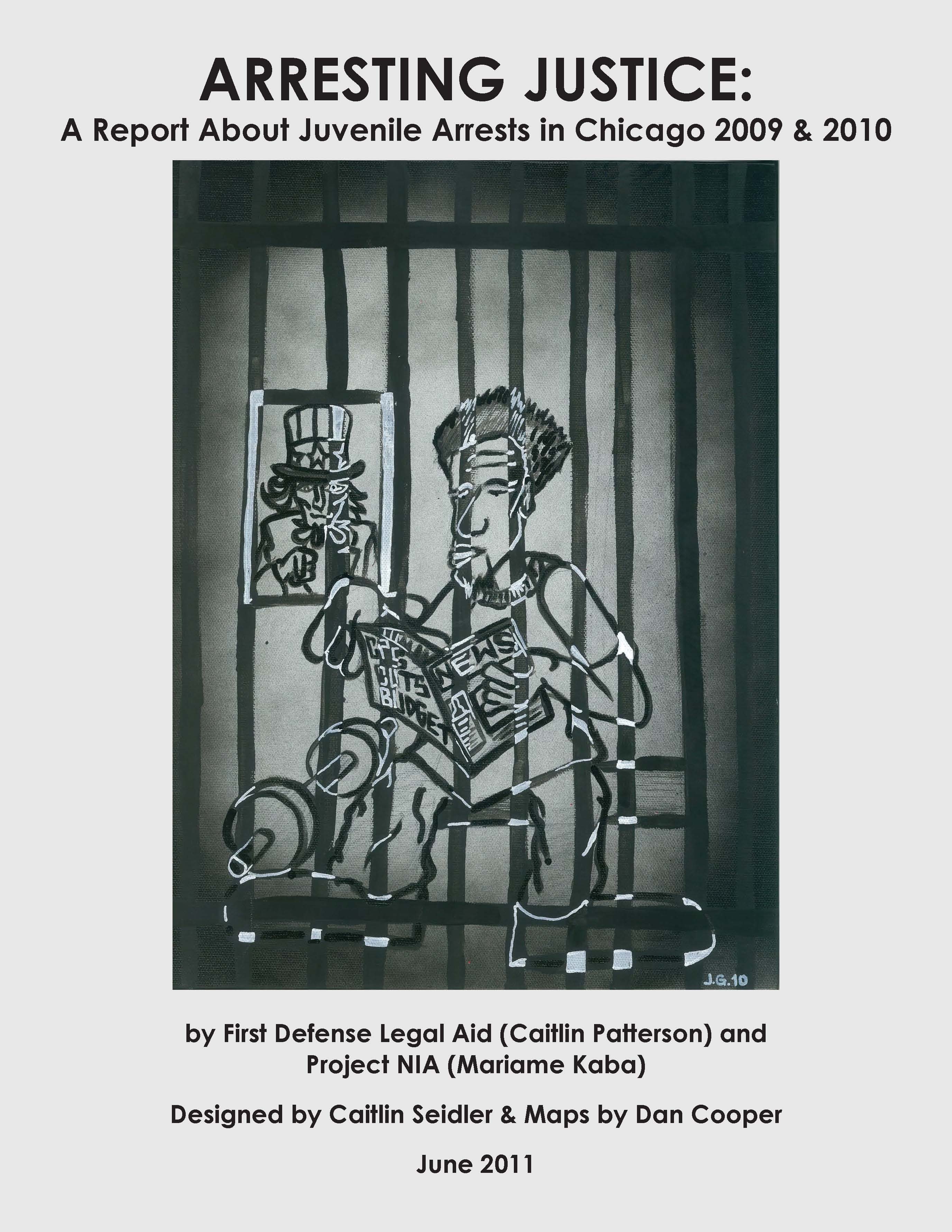
Arresting Justice: A New Report about Juvenile Arrests in Chicago


Contrary to sensational reports of “flash mobs”, youth are the minority of people who get arrested in Chicago. The Chicago Police Department made 181,669 arrests in 2009 – approximately 17% were of people seventeen and younger (31,224).

Today, First Defense Legal Aid (www.first-defense.org) and Project NIA (www.project-nia.org) have released a new report documenting juvenile arrests in Chicago in 2009 and 2010. The key data points in the report are that:

1. According the Chicago Police Department, there were 27,563 arrests of juveniles 17 and under in 2010 in the city of Chicago (some youth may be arrested more than once). This number is down from 31,224 in 2009.

2. In 2010, the 8th district had the highest total number of juvenile (17 and under) arrests in Chicago with 2,247.

3. From 2003 to 2009, the total number of juvenile (16 and under) arrests in Chicago declined by 25.7%.

4. Most of the juvenile arrests in 2010 (63%) happened in 10 out of the 25 districts. In order of most to least, these districts are: 8, 11, 15, 4, 6, 3, 5, 7, 25, and 10.

5. Most juvenile arrests in Chicago are for misdemeanor offenses, generally, or felony drug possession.

6. There were 5,574 arrests of juveniles 17 and under on school property in the city of Chicago in 2010.

7. There were 1,733 formal and 7,040 informal station adjustments reported by CPD in 2010.

To access the full report, visit the Arresting Justice blog at HERE.

Jun 16 2011

Kensley Hawkins Gets To Keep His Money: The Illinois Supreme Court Rules that IDOC Cannot Steal Wages Earned by Prisoners


A few months ago, I wrote about the case of Mr. Kensley Hawkins on this blog. As a reminder, Kensley Hawkins had accumulated $11,000 over 20 years in prison from jobs that he has had while behnd bars. The State of Illinois wanted to garnish those earnings to have Mr. Hawkins pay for the costs of his own incarceration. Mr. Hawkins has been making about $2 a day building furniture at Stateville Prison which amounts to about $75 a month.

Today, I received this e-mail from the good folks at SNR Denton, a law firm that represented Mr. Hawkins pro-bono in his appeal [the e-mail has been slightly edited for length]:

“SNR Denton obtained victory (7-0) in its appeal before the Illinois Supreme Court in the case, titled People v. Hawkins. People v. Hawkins was on an appeal from an Illinois Appellate Court decision that upheld a $456,000 judgment against Kensley Hawkins for the cost of his incarceration and allowed the Department of Corrections to collect the approximate $11,000 that Mr. Hawkins had earned and saved over 21 years while working in prison as a furniture assembler.

This attachment of savings was in addition to the legislatively mandated 3% offset that was automatically deducted from Mr. Hawkins’ prison wages to pay toward his incarceration costs. The relevant statute requires that “{a}ll other wages” beyond the 3% offset must be deposited in the inmate’s account.

Mr. Hawkins was represented pro bono by SNR Denton. In addition, the Institute for People with Criminal Records filed an Amicus Curiae Brief in support of Mr. Hawkins’ appeal.

In the ruling authored by Supreme Court Justice Rita Garman, the court took issue with the Department’s policy noting that: “Here, the Department’s literal interpretation of sections 3–12–5 and 3–7–6 produces a result that is absurd, unjust, and that our analysis indicates was not contemplated by the legislature. We therefore reject that interpretation.”

A separate concurrence by Justice Lloyd Karmeier, joined by Justice Charles Freeman, noted the adverse impact of the Department of Corrections policy. Justice Karmeier wrote: “Work may be its own reward for some, but probably not for most inmates in the Department of Corrections. Once inmates realized that the extra work necessary to generate savings would benefit only the Department of Corrections, not them, they would quickly reevaluate the utility of prison employment. The result would likely be a precipitous drop in the amount of labor available to prison industries. If the number of work hours plummeted, the various enterprises operated by prison industries would no longer be able to provide the services and produce the goods necessary to keep them economically viable. The income they generate would evaporate, and they would no longer be able to provide any meaningful contribution toward offsetting the substantial costs of maintaining this state’s prisons. In addition, any real hope of providing inmates with marketable skills, instilling a work ethic, or improving their ability to support themselves and their families following their release would be lost. In the end, virtually the entire economic burden necessary to support this state’s large and growing prison population, while they are incarcerated and after their release, would revert to Illinois’ taxpayers.”

Studies have found that inmates like Mr. Hawkins who participate in vocational training programs have a 20% lower rate of recidivism. As the Institute noted in its Amicus Brief, “Not only is there a direct connection between unemployment and crime, there is considerable evidence of a connection between unemployment and repeat crime, i.e. recidivism.”

The Institute’s Amicus Brief also highlights the severe financial problems inmates face upon their release. For example, a study found of the more than 20,000 inmates who were released to Chicago communities in 2005, a staggering 1,200 of them ended up homeless.

Our victory shows that Illinois is serious in promoting the basic hope of its prison system – namely, that once inmates are released they will not return to a life of crime – they are showing inmates that working and saving pays off. This is a necessary step to prevent inmates from immediately falling into poverty and homeless and back into the cycle of crime. Mr. Hawkins and other inmates in his position are not asking for a handout by any means. They simply want to be able to use the money they earned while working in prison to get them back on their feet,” said David Simonton, SNR Denton’s appellate counsel for Mr. Hawkins.

Indeed, from a practical point of view, the confiscatory policy espoused by the Department of Corrections was self-defeating and financially backwards,” Mr. Simonton continued. “The State would have received a relative pittance from an inmate, as compared to the cost of his or her incarceration, but for the inmate it would have been everything. Without any savings to fall back on, the inmate was more likely slide back into a life of crime, which would cost the State far more in future incarceration expense. We are very happy that the Court’s decision unanimously recognized the absurd nature of the Department’s policy. ”

Out of deep respect for the lawyers who argued this case on behalf of Mr. Hawkins, I will refrain from commenting on some of the arguments advanced by the Justices in this case. That will be for another post on another day. You can read the judicial opinion for yourselves HERE

Jun 16 2011

Words Stronger Than Walls: Poetry By Incarcerated Girls

My friend and colleague Katy is a passionate advocate for young people. She has devoted a large chunk of her life to working with young people who are in conflict with various institutions (including the law). Along with being a gifted therapist, she also ran a poetry circle for incarcerated girls. As part of that work, she and the young women produced an excellent poetry chapbook titled “Words Stronger Than Walls.” I plan to feature poems from the chapbook periodically on the blog to highlight the talent that so many young people in trouble with the law possess. This is part of a continuing effort to feature more prisoner voices on this blog.

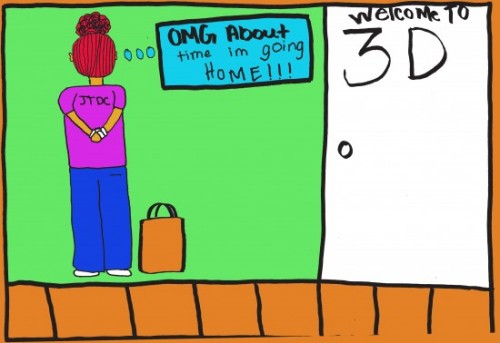
By a young woman at JTDC (August 2010)

From the introduction of the book:

CC JTDC is a closed system within a segregated city, and this is our attempt to communicate beyond these white walls. The girls at the Cook County Juvenile Temporary Detention Center (CC JTDC) are housed under the WINGS (Working In Nurturing Girls’ Success) program, and range in age from 13 to 18. In a given week, there could be more than thirty or less than fifteen girls detained for over a year or for just one night. I am the clinical social worker providing mental health services to the girls of WINGS, along with all levels of amazing staff. (Adults working in detention are known by their last names only, and the juvenile residents cannot have their last names published.) There is much to say about our current (deeply unjust) justice system, but one of the fundamental issues is how it dehumanizes Chicago’s children. I started the poetry group in April 2009 as a space in which these kids were not being corrected, shaped, or taught, allowed to share a quiet moment of creativity and equality between staff and residents.

Once a week the girls who want to participate in Poetry Circle move downstairs to the classroom area. We put the desks in a circle, pass out the opening statement, pencils, and notebooks, and get to work. Everyone reads a poem, everyone writes a poem, and everyone shares their poem in an atmosphere of supportive listening. We snap our fingers after each poet reads, you know, for a jazzy vibe. The Circle has had two fantastic Poetry Slams (and counting) where the girls and staff perform their work and everyone pitches in to provide artwork, snacks and support.

Ugly Little Monster
By Alejandra

All my life we lived with pain,
I’d rather sit here and watch the rain.
It all started when I was a little thing.
I would beg my daddy for stuff but nothing would he bring.
Alcohol and drugs took over his body.
All he ever does now is hit my mommy.
“Daddy please stop!” me and my sisters would yell.
He always yelled back, “I don’t care, I know I’m going to hell.”
Days went by and he stopped drinking.
Weeks later he’d come home and start again with the beating.
Mommy and my sisters moved out and left him.

I had always said I wanted to be like my daddy – a hero,
Once beer, weed, and cocaine took over I realize he wasn’t no “hero” –
He was a big old zero.
He passed away on August 22, 2008.
I want this to be a dream so I could awake.
I’m getting older and I wanna live my life,
But I’m going through his same steps, playing with knives.
Weed, liquor, and cocaine have all been in my system.

Now mommy don’t want me
cause she compares me to Daddy
She keeps calling me a monster.
I guess I’ll live my life full of pain and disaster,
Because as much as I wanna change I keep dancing with the devil.
I hope and pray he doesn’t take me forever.

For now I am what everybody calls me:
“Ugly Little Monster just like yo daddy.”

My Life
By Ray

My life it’s not perfect or right.
It was almost taken overnight.
Bullet to the hip could have paralyzed me for life –
Tears running down my eyes
Screaming for help
no one in sight.
Laying in the hospital bed,
I thought I was gone.
Never going back to the crib
leaving my family all alone.
My life it’s not perfect or right
In and out of JTDC
How did I end up here
Well: gang banging drug slingin’
Not going to school
All of this, it’s not cool
My life it’s not perfect or right
But I thank God every day of my life.

Wait Patiently & Pray
By Rikita

I hate being locked up in a place where I can’t get out.
I hate that the system is slow and don’t go the full route.
I hate that Cook County don’t report what is really going on behind these walls.

All I can do is wait patiently and pray

I hate hearing these doors “POP” when it’s tome to get up.
I hate wearing the same color clothes — pink and blue.
I hate seeing WINGS CCJTDC everywhere I go.
I hate going back and forth to court every two weeks.

All I know is God will lead me on and I will continue to PRAY.