Jul 08 2011

Overcoming Our Bloodlust to Reclaim Our Humanity

I came late to the Casey Anthony case. I have avoided any comment over the past week since a jury of her peers issued a not guilty verdict. I am not going to focus on the rightness or wrongness of the verdict in this post. Though I do find the people standing outside the courthouse with signs yelling baby killer to be pathetic. The thing that I care about in this case is that the defendant’s lawyer, Jose Baez, took his opportunity in the spotlight to make a compelling statement against the death penalty:

“I think that this case is a perfect example of why the death penalty does not work and why we all need to stop and look and think twice about a country that decides to kill its own citizens. Murder’s not right no matter who does it, whether it’s a ritual killing or someone becoming a victim in a drive by shooting. It’s disgusting and I think, if this case gets any attention, it should focus on that issue, that we need to stop trying to kill our own people.”

What’s your best guess as to whether Mr. Baez’s statement jumpstarted a national conversation about the death penalty in America? I’ll give you three guesses. Since this was the lead attorney’s first statement immediately after the verdict was handed down, you would have thought that the media and the public would have at least pretended to discuss the death penalty. You would of course be wrong. Alas the substance of his words only garnered cursory coverage and scant public comment. Why is this?

The answer, I think, is that Americans are particularly wired to support “rough justice.” I don’t know where this comes from but I just know that it is. In writing about the electric chair at Indiana State Prison, Etheridge Knight (1970) muses about the condemned man:

“I wonder if he realizes that he has become some kind of sacrificial lamb, soon to be strapped onto a weird altar/throne so that the blood lust of a barbaric society will be quenched. I wonder if he knows that even if he does not die in the Chair he will still have served his purpose. Because when the newspaper headlines gloated: MAN SENTENCED TO DIE IN ELECTRIC CHAIR — That somewhere in the dark/bright regions of this society’s mind it projected his death, walked the last mile with him, and licked its lips as he died in eye-bulging agony. So the question of capital punishment is merely rhetorical. It was never meant to deter crime, and the people who are pro-capital punishment on those grounds are hypocritical liars. No matter how sophisticated their argument, they are — in their souls — “eye-for-an-eye” fundamentalists.”

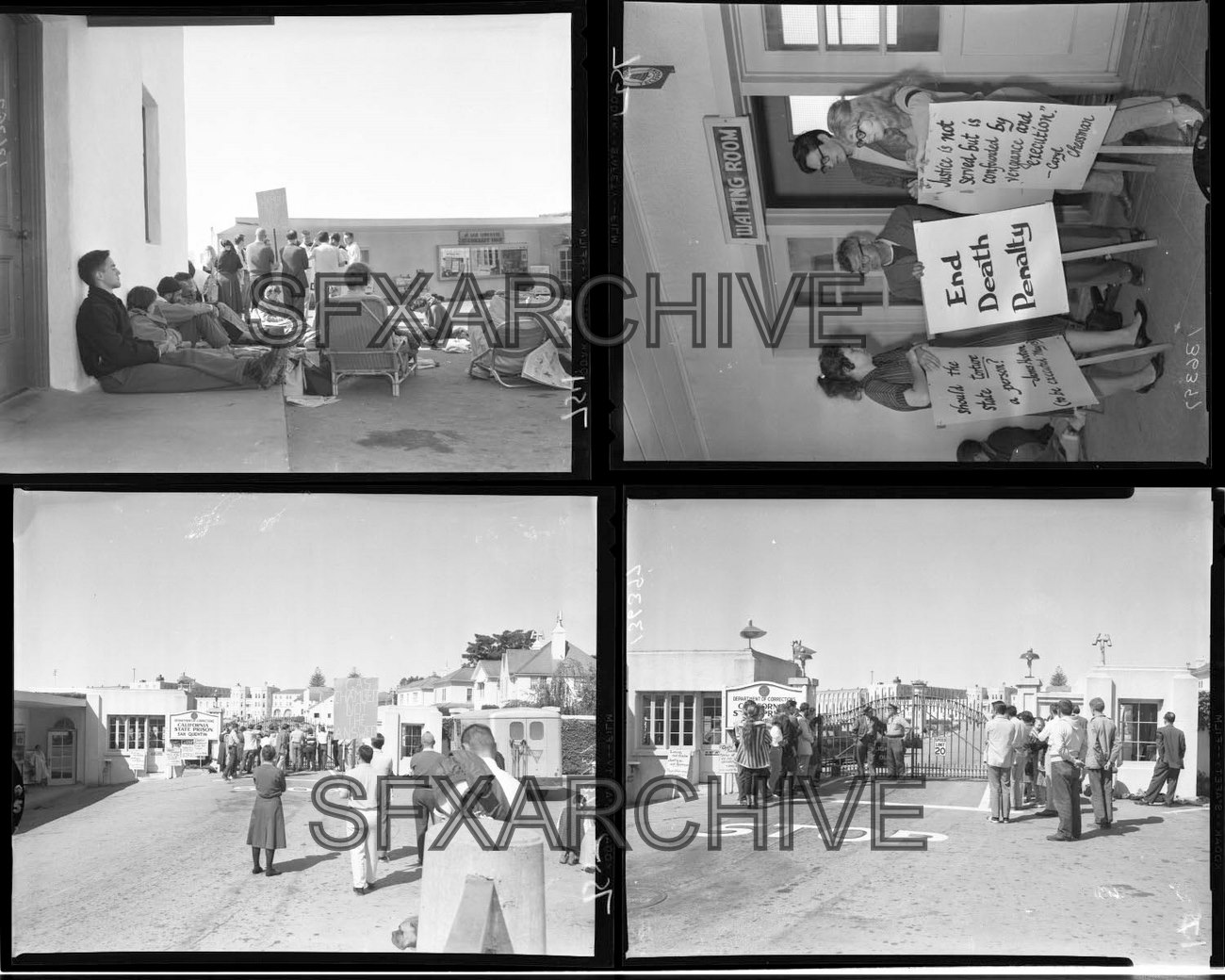
There seems to be something in the DNA of the country that makes us susceptible to accepting state-sanctioned killing of our people. It is hard not to become despondent about our fellow citizens when we focus on the people outside the courthouse in Florida who still insist that Ms. Anthony deserves to die. Yet… We learned just this week that my state of Illinois has officially closed down its death row. This came after a long and sustained campaign against the death penalty led by people like my friend Alice Kim and many others. Their efforts show that it is possible to persuade our legislators and the general public about the injustice and inhumanity of the death penalty. We have to hold both realities in our heads at once. On the one hand, many Americans seem to be “eye-for-an-eye” fundamentalists as Knight puts it and yet we also know that another (perhaps smaller) group of people are calling us to our better angels. In honor of those who continue to struggle to eradicate capital punishment in the U.S., I want to share an image from my photographic collection. These are negatives depicting a protest against an execution at San Quentin in 1960. La lucha continua!
Jul 07 2011

Poem for the Day: Self-Portrait

america would probably
blow it
if it ever woke up
and dug,
that its government
is supposed to revolve
around the people,
not the people
around its government.

by Juno Bakali Tshombe/Craig Dee Anderson

From: Who Took the Weight? Black Voices From Norfolk Prison – An Anthology of Poems, Essays, Stories and Plays.

Jul 06 2011

Attica on My Mind…

by John Shearer

This September is the 40th anniversary of the Attica Prison Rebellion and I have been thinking about how to best utilize this occasion to bring more focus to our current epidemic of mass incarceration. In my experience, a number of people recognize the word “Attica” and some smaller number may actually have a sense that it is a prison where a “riot” took place in the 1970s.

Luckily over the past few years, several resources have been developed to educate the public about the Attica Prison rebellion. I particularly like the “Attica Revisited” website which includes links to various Pacifica radio documentaries that shed a great deal of light on this history.

At the core of the rebellion were the prisoners’ demands for changes in prison policy including better medical care, better food, and more educational programs. The prisoners wrote a declaration of beliefs to the American people:

“WE are MEN! We are not beasts and do not intend to be beaten or driven as such. The entire prison populace has set forth to change forever the ruthless brutalization and disregard for the lives of the prisoners here and throughout the United States.”

It seems a particularly good time to recall Attica this week as prisoners across California show solidarity with the hunger strike organized by prisoners at Pelican Bay supermax by refusing meals. The Pelican Bay Hunger Strike is an example of non-violent resistance that may or may not focus the public’s attention to the injustices faced by the prisoners. In sharp contrast, in September 1971, the nation was transfixed by the Attica Rebellion as journalists and photographers documented the unfolding tragedy. Americans followed the events on television and when Nelson Rockefeller ordered state troopers to retake control of the prison, he unleashed a massacre. At the end of the episode, 43 people were dead, including 32 prisoners and 11 hostages. It was the television and photographic images that made Attica so resonant in the public’s imagination. The images exposed in black and white as well as in color what prison conditions were like in the U.S.

Leading up to September, I will write more about the circumstances and the significance of the Attica Prison rebellion. Additionally, I have decided that I will curate a photographic exhibition of the Attica Rebellion here in Chicago this September. I am honored beyond belief that the great John Shearer who was the only photographer allowed inside Attica during the assault by New York law enforcement in September 1971 will be providing some of his photographs for this community exhibit. Mr. Shearer was also the second African American staff photographer at Life Magazine following Gordon Parks. You can read a blog post that he wrote about Attica here.

I look forward to sharing more about my progress on the Attica photography exhibition with all of you in the coming weeks. Right now, I am confirming the location and the dates for the exhibition. It will be a youth-friendly space so I encourage those of you in Chicago or nearby to arrange to bring your students and your youth groups to the exhibition. More details will be forthcoming.

Note: Zine makers are invited to create publications that we can share with people who attend the exhibition. Please e-mail zines to [email protected].

Update: Here is some information about the upcoming photographic exhibition in September.

Jul 06 2011

To Make A Poem in Prison by Etheridge Knight (1968)

By Josh MacPhee

It is hard
To make a poem in prison.
The air lends itself not
to the singer.
The seasons creep by unseen
And spark no fresh fires.

Soft words are rare, and drunk drunk
Against the clang of keys;
Wide eyes stare fat zeros
And plea only for pity.

Pity is not for the poet;
Yet poems must be primed.
Here is not even sadness for singing,
Not even a beautiful rage rage,
No birds are winging. The air
Is empty of laughter. And love?
Why, love has flown,
Love has gone to glitten.

Jul 04 2011

On Freedom, Abolition, and the 4th of July…

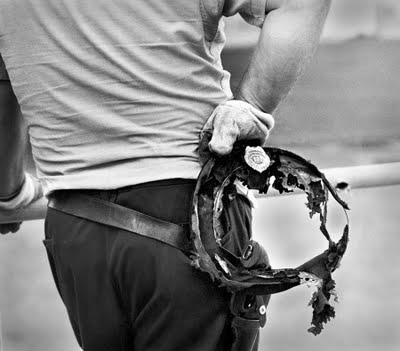
I own the photograph below depicting a Michigan prisoner in 1981. For several years now, I have collected original press photos depicting various forms of resistance (especially resistance against the carceral state). This original photo comes from the archives of the Detroit News which covered the “1981 Jackson Prison Riot.” The photograph speaks for itself and does not need any commentary from me.

On this 4th of July, I am thinking a lot about the concepts of “freedom” and “abolition.” If you don’t usually do so, please take a moment on this day to read Frederick Douglass’s 1852 speech “What to the Slave is the 4th of July?” If you don’t want to read the entire speech, though I really think that you should, here is a great essay by Kai Wright about the meaning(s) of the speech for all Americans.

Today I think of Frederick Douglass, an abolitionist in his time, and wonder what he would have to say about our current prison industrial complex. I don’t have to imagine too much. Here are some key words from the 1852 speech that can easily be applied to our current mass incarceration epidemic:

Fellow-citizens; above your national, tumultuous joy, I hear the mournful wail of millions! whose chains, heavy and grievous yesterday, are, to-day, rendered more intolerable by the jubilee shouts that reach them. If I do forget, if I do not faithfully remember those bleeding children of sorrow this day, “may my right hand forget her cunning, and may my tongue cleave to the roof of my mouth!” To forget them, to pass lightly over their wrongs, and to chime in with the popular theme, would be treason most scandalous and shocking, and would make me a reproach before God and the world. My subject, then fellow-citizens, is AMERICAN SLAVERY. I shall see, this day, and its popular characteristics, from the slave’s point of view. Standing, there, identified with the American bondman, making his wrongs mine, I do not hesitate to declare, with all my soul, that the character and conduct of this nation never looked blacker to me than on this 4th of July! Whether we turn to the declarations of the past, or to the professions of the present, the conduct of the nation seems equally hideous and revolting. America is false to the past, false to the present, and solemnly binds herself to be false to the future. Standing with God and the crushed and bleeding slave on this occasion, I will, in the name of humanity which is outraged, in the name of liberty which is fettered, in the name of the constitution and the Bible, which are disregarded and trampled upon, dare to call in question and to denounce, with all the emphasis I can command, everything that serves to perpetuate slavery-the great sin and shame of America! “I will not equivocate; I will not excuse;” I will use the severest language I can command; and yet not one word shall escape me that any man, whose judgment is not blinded by prejudice, or who is not at heart a slaveholder, shall not confess to be right and just.

Millions of our brothers and sisters are currently locked in cages all across our country. We must create a new abolition movement for the 21st century. I believe that Douglass were he alive today would be leading this charge. We should be asking today: What, to the American prisoner, is your 4th of July? Quoting again from the speech:

“What, to the American slave, is your 4th of July? I answer: a day that reveals to him, more than all other days in the year, the gross injustice and cruelly to which he is the constant victim. To him, your celebration is a sham; your boasted liberty, an unholy license; your national greatness, swelling vanity; your sounds of rejoicing are empty and heartless; your denunciations of tyrants, brass fronted impudence; your shouts of liberty and equality, hollow mockery; your prayers and hymns, your sermons and thanksgivings, with all your religious parade, and solemnity, are, to him, mere bombast, fraud, deception, impiety, and hypocrisy—a thin veil to cover up crimes which would disgrace a nation of savages. There is not a nation on the earth guilty of practices, more shocking and bloody, than are the people of these United States, at this very hour.”

Consider these words, though written against slavery, to be an equally appropriate indictment of our current practice of incarcerating masses of black and brown bodies. I leave you with the words of the great Bob Dylan today from his amazing song “George Jackson.” These lyrics, I believe, define the stakes for our current prison abolition struggle:

Sometimes I think this whole world
is one big prison yard
Some of us are prisoners
The rest of us are guards
.”

Jul 03 2011

Romanticizing Prisoners…

I received an e-mail last week from a young woman who wanted to let me know just how she felt about this blog. She wrote many things but what stood out most to me was the following question: “Why do you try to sanitize prisoners?” She went on to say that “people are in prison because they did wrong.” Her e-mail suggested that I should concentrate on the people who have been victimized instead of those whom she characterized as the “offenders.” Her communication basically accusing me of romanticizing prisoners is not the first that I have received over the past year since I started “Prison Culture.”

I have struggled to find the language to express how I feel about this critique. Truthfully, sometimes words can be limiting. What I want to say is that there are plenty of other places where people can turn if they want to hear from and learn from victims of crime and survivors of harm. While Prison Culture does not expressly focus on victims of crime, the blog posits the experiences of those harmed by violence and crime as central and important. [Incidentally many who are locked up have also been “victims” of something in their own lives.] My interest in restorative and transformative justice is precisely because I want to be part of creating a system of accountability that truly does meet the needs of the harmed. I just want to do that without relying on a broken, immoral and oppressive prison industrial complex.

Why do you try to sanitize prisoners?” There is so much wrapped up in these seven words. In reading the young woman’s e-mail, I could feel the fear and hurt dripping off my computer screen. A couple of years ago, I saw a TED TALK by a writer who I really enjoy. Chimamanda Adichie is a Nigerian-born and American educated fiction writer. She spoke at TED about the danger of a single story. Below is a video of that talk. It is about 15 minutes in length but packs an enormous punch.


Basically, Adichie is telling her audience that we must open ourselves up to multiple stories about people, countries, and continents. None of us is just one thing. Stereotypes can have small kernels of truth in them but they basically offer incomplete and often distorted information to the public. So as I struggle to respond to the critique of my “romanticizing” prisoners, I think about Adichie’s admonition.

A large part of what I try to do on this blog is in fact to provide a platform for insisting on the HUMANITY of those who we lock in cages. I don’t want to “sanitize” prisoners, what I do want is to intentionally complicate their portrayal in our culture. I want to move away from telling the accepted, one story of prisoners. I don’t want bad deeds to come to define prisoners as “bad people.” I reject that characterization. Naturally, I will get some e-mails now asking me if I disagree that Charles Manson is a bad person… Please save those e-mails. Those concerns are red herrings. The reason anyone knows Charles Manson’s name is because he is actually unique among those imprisoned. The millions of other nameless and faceless people behind bars then still deserve our attention and our intervention (in spite of the fact that a Charles Manson exists). Manson has been found to be mentally ill. In a world without prisons, mentally ill people who commit harm would be treated for their illness just not by being locked in cages.

So to the young woman who wrote to me, I want you to know that it is not my intent or desire to “sanitize” or otherwise romanticize prisoners. I do want to make sure though that people remember that prisoners are HUMAN and COMPLEX, as we all are. I want people to remember that we can all do bad things and that this does not necessarily make us “bad people.” I want people to know that “crime” is socially-constructed and that to a large degree we are all “criminals” of some sort. I want people to understand that we have to move away from the current unjust criminal legal system that we have. We need to focus instead on building a new system that provides true accountability and repairs harm. I don’t think that we can do that through prisons. My point is to say that we are all saints and sinners and that we deserve a real chance to make right those things that we have done wrong.

I thank one of my readers, Marissa, for sending along the link to an amazing story of restorative justice. A woman named Mary Johnson literally put her arms around a young man named Oshea Israel who killed her son. You can listen to their story HERE. Their story is a reminder to all of us that prisoners (or any of us for that matter) should not be defined by their worst mistakes and that ultimately when we account for harm transformation is possible.

Jul 02 2011

An Illustrated Exploration of the Prison Industrial Complex

Back in May, a group of us released a terrific zine called the Prison Industrial Complex Is. The zine was illustrated by Billy Dee and created with the Chicago PIC Teaching Collective. I am proud to say that the zine has found its way to England, New Zealand, South Africa and all around the U.S. that we know of. All of us at the Collective are super proud of that. I thought that I would take the occasion of the 4th of July commemoration to share some of my absolutely favorite illustrations with you. You can find a free PDF copy of the zine HERE. Please share it with others who you think would be interested. You can click on the images below to enlarge them.

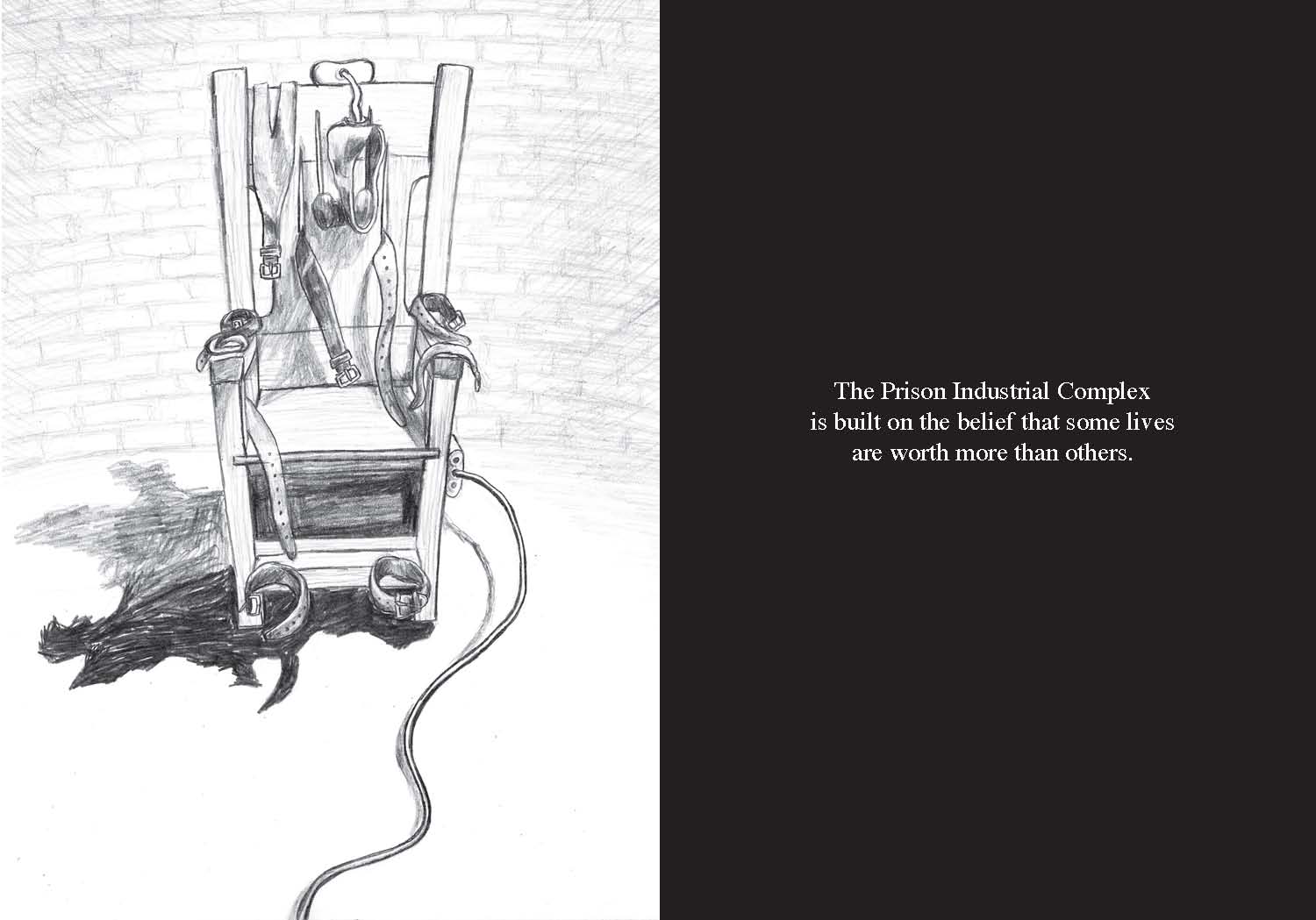
“The Prison Industrial Complex is built on the belief that some lives are worth more than others.”

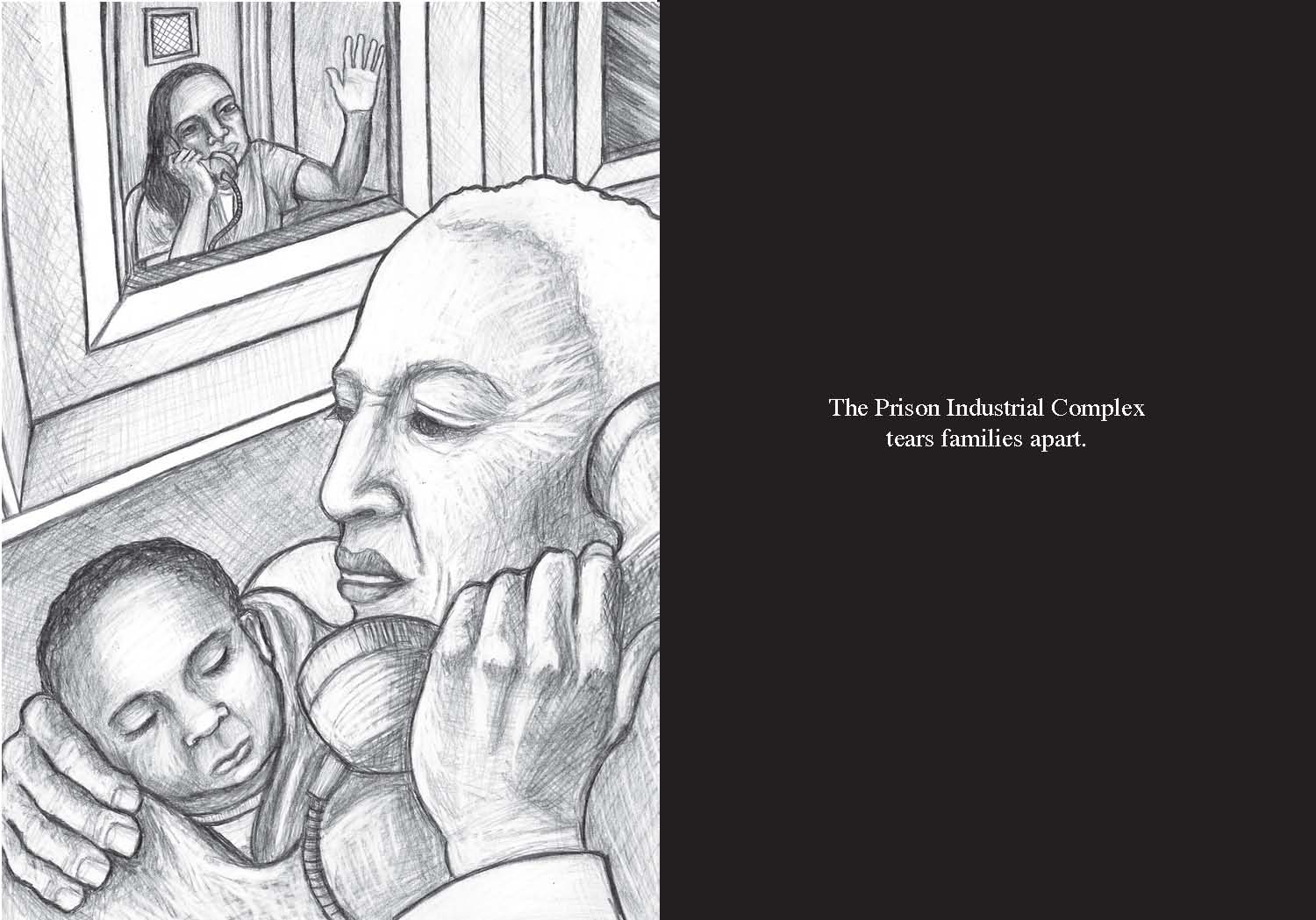
“The Prison Industrial Complex tears families apart.”

“The Prison Industrial Complex takes a foothold in your underfunded public school when counselors are replaced with cops.”

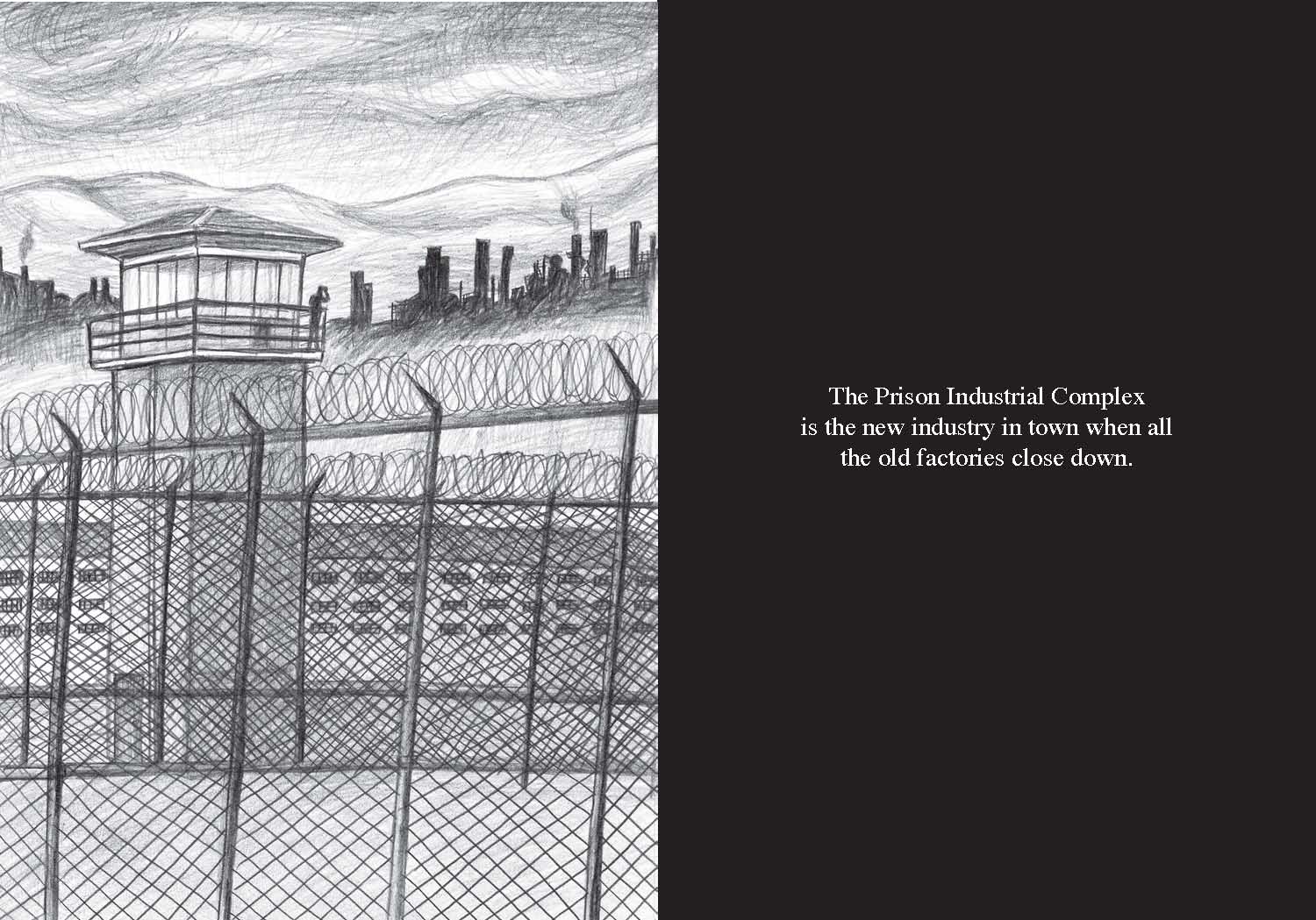
“The Prison Industrial Complex is the new industry in town when all the old factories close down.”

“The Prison Industrial Complex targets people from certain neighborhoods, especially poor people, people of color, young people, and LGBTQ people.”

“The Prison Industrial Complex criminalizes immigrants.”

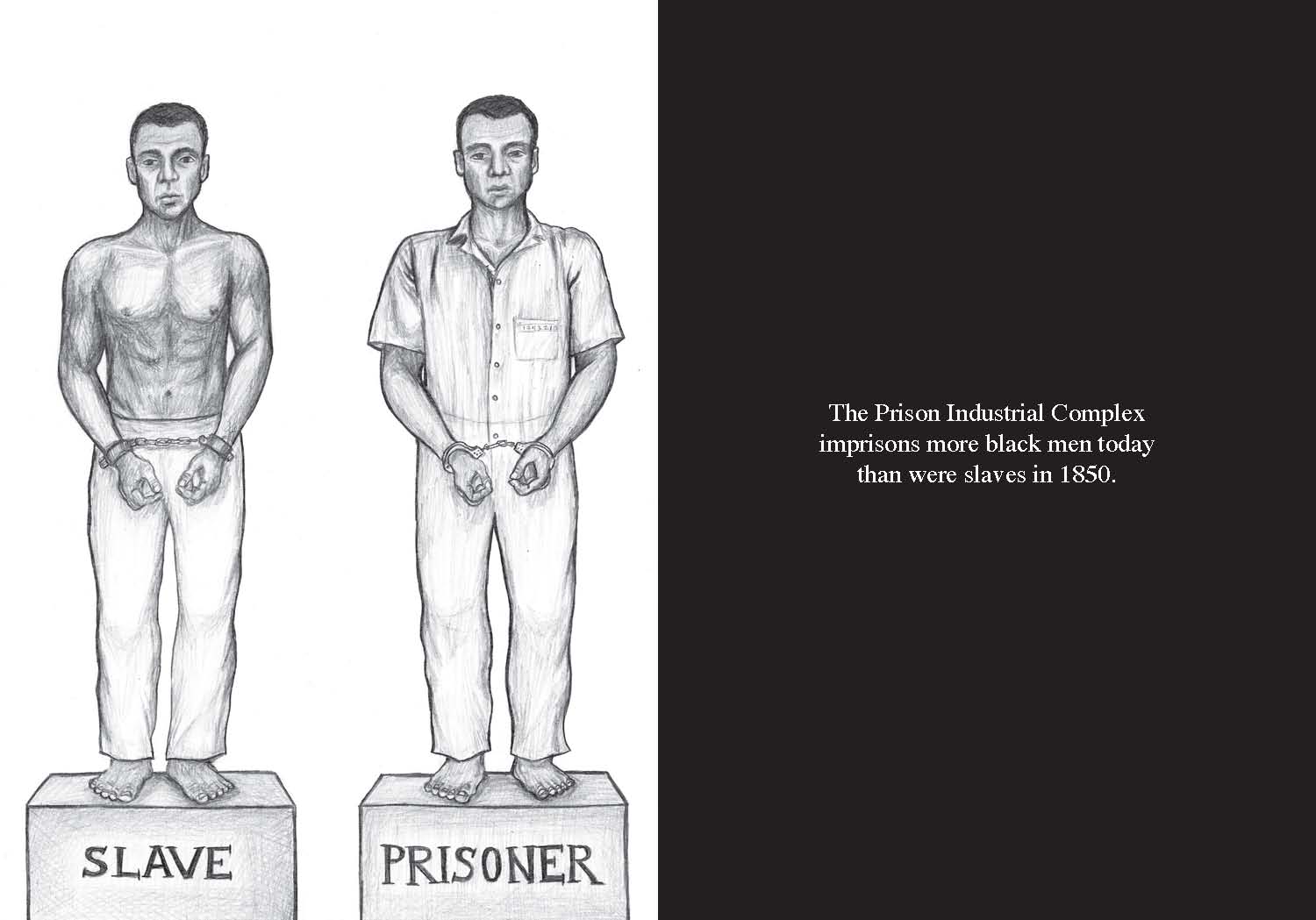
“The Prison Industrial Complex imprisons more black men today than were slaves in 1850.”

Jul 01 2011

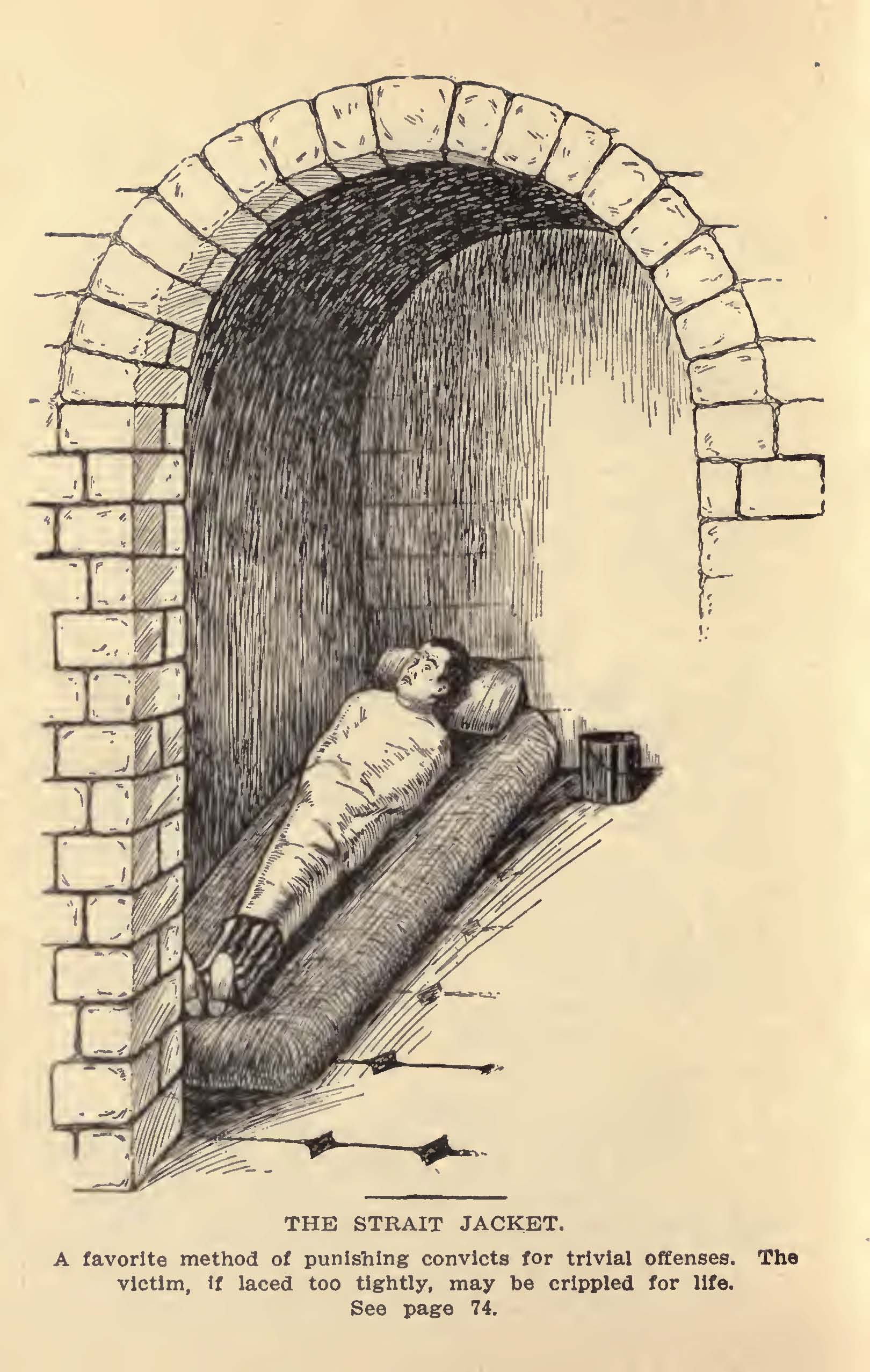
Torture & Corporal Punishment in Early 20th Century American Penitentiaries…

There has been a lot of conversation over the past few weeks about Peter Moskos’s new book “In Defense of Flogging.” Basically, Moskos provokes the reader to consider whether flogging is any more inhumane than the current barbaric conditions in which we incarcerate people in the U.S. (especially those who are locked up for non-violent crimes). Moskos suggests that it might in fact be more humane to offer people convicted of crimes a choice of receiving lashes or spending time in prison. You should read the book yourself to learn more about Moskos’s thesis. I have been reading the book this week and am not done with it yet. It gives one a lot of food for thought, that’s for sure.

Reading “In Defense of Flogging” has me thinking about torture and corporal punishment in U.S. prisons over their history. I found a very interesting book online titled “Crime and Criminals” that was published by the Prison Reform League in 1910. I have only read a couple of chapters in that book so far. However, the book provides a comprehensive review of the state of American prisons in the early 20th century. This includes a lot of documentation as well as first hand accounts of torture and corporal punishment.

From Crime and Criminals (1910)

From Crime and Criminals (1910):

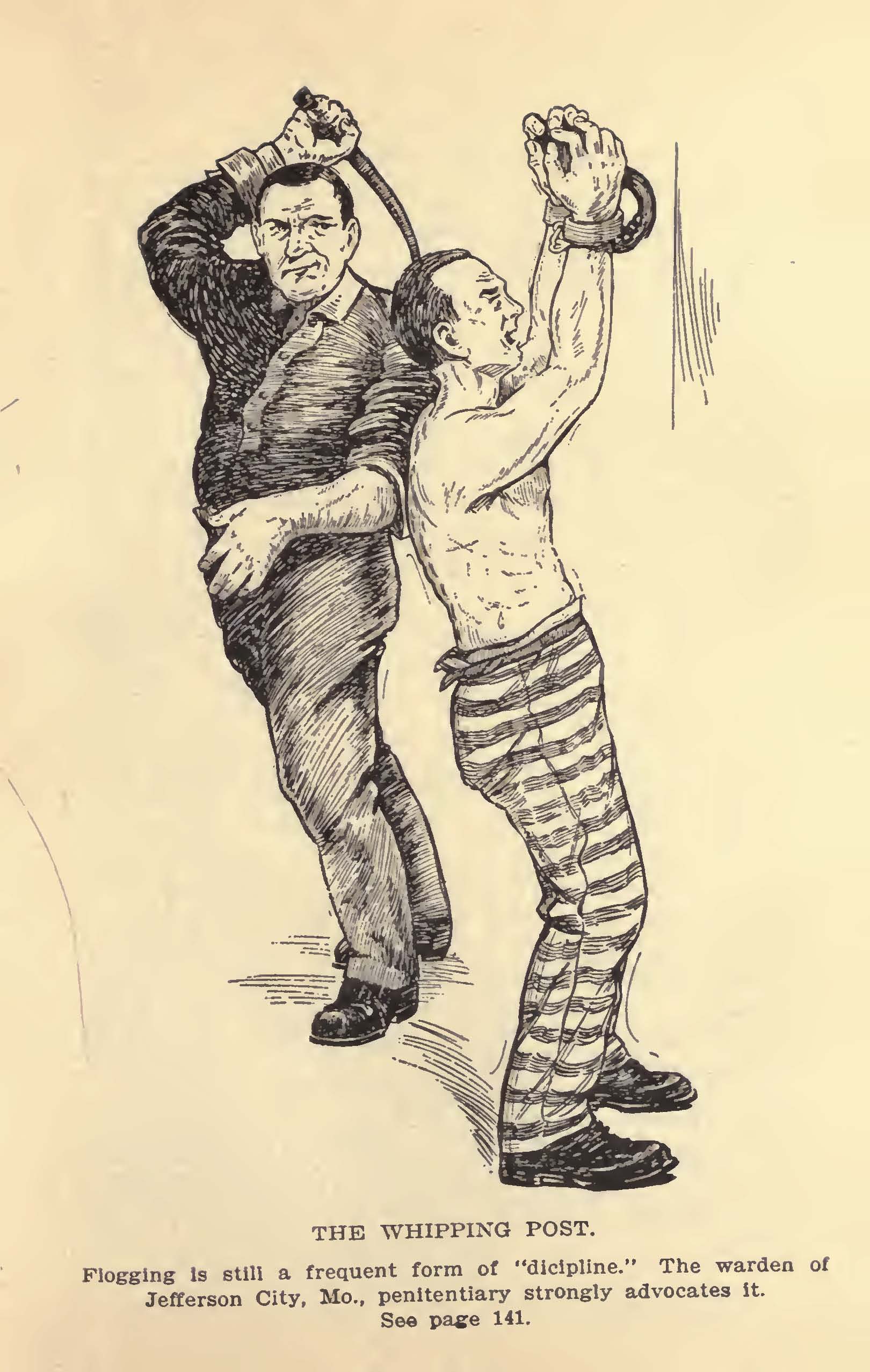
“[I]n the Missouri state penitentiary at Jefferson City the whipping post is resorted to constantly for the disciplining of refractory prisoners and the warden vehemently defends its use. In Hampton’s Magazine, for October, 1909, Charles Edward Russell quotes him as follows:

In my opinion, it is absolutely necessary. You cannot manage 2000 men of the character of our convicts without corporal punishment. Some men cannot be governed by kindness and recognize only the power of a blow; if we used milk-and-water methods we should have a mutiny every week. I do not know of any punishment more effectual than the whipping post. If you have a bad man you must conquer him, and if society objects to the means employed, society should bear in mind the character of the convict.

“Mr. Russell describes the floggings, and adds reflections that according to our view, aptly summarize the general situation. He says: ‘At the whipping post in this prison the victim is fastened to a wooden pillar, his hands and feet are manacled and the lash is applied to his bare back. The prison officers say that the number of lashes does not exceed fifteen and that the whip is used only when solitary confinement fails to subdue the convict. It sounds to the last degree barbarous and horrible, but I do not know that it is worse than the sanded paddle of Columbus, and probably it is not so painful or dangerous as the water cure.'”

Below is an illustration of the water cure which is described as follows:

“Having been stripped the delinquent is manacled in the great bath tub. At the height of his neck in the sides of the tub are grooves and in these play great wooden clamps, carved to fit the human body. These are screwed together so as to grip in a vise the man’s chest and arms. In front of him is a faucet and a bit of hose, throwing a smart stream of water. First it is necessary to get the man’s mouth open by making him cry out (which is usually done by frightening him), whereupon the water streams down his throat and strangles him. By those who have suffered this treatment the sensations are said to be indescribably horrible. In spite of his reason the victim feels that with the most excruciating pains he is being tortured to death. I understand that in nine cases in ten the man was carried away insensible and sometimes spent days in the hospital. If he died, I don’t know how the facts would be known. ‘Tis but a man gone — and he is a convict.”

In seeing the image below, I think of the waterboarding that the Bush administration administered to detainees at Guantanamo and in CIA secret prisons. These techniques seem to be with us still…

From Crime and Criminals (1910)

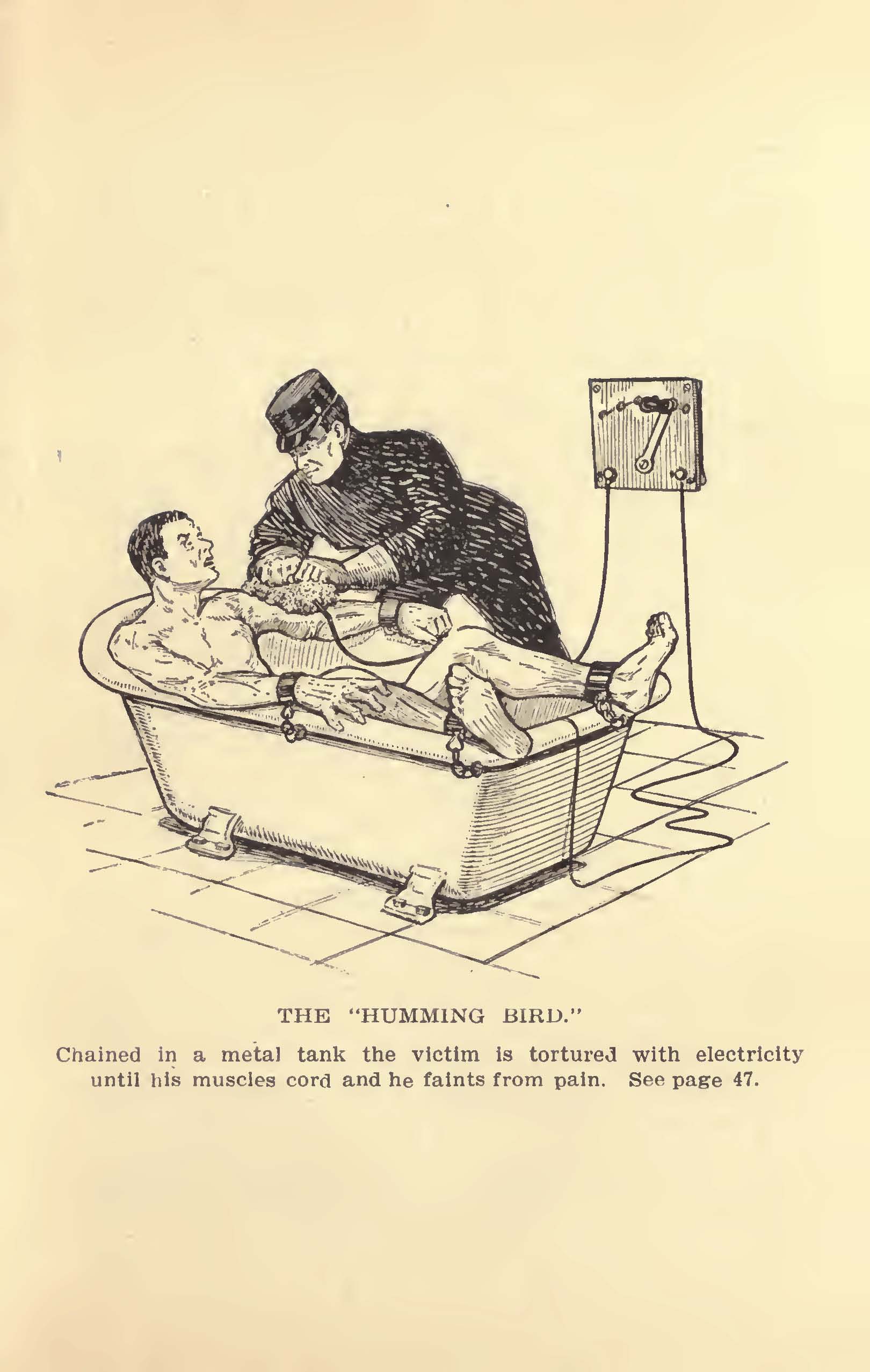
Other forms of torture also included something called the “Humming-bird” which was documented as having been used in Ohio and Illinois penitentiaries.

“Having been stripped the delinquent was fastened on his back in a shallow metal tank filled with water and connected with one electrode from a dynamo; the other electrode was a wet sponge. Gloved in rubber the operator took the wet sponge and passed it slowly up and down the prisoner’s bare limbs. As it went his muscles corded into knots and he shrieked aloud until he fainted.”

From Crime and Criminals (1910)

Below are a couple of other visual illustrations of torture and corporal punishment in early 20th century prisons.

From Crime and Criminals (1910)

Bullrings – “The prisoner is strung up by the wrists in a dark cell and thus left hanging, like a carcass of beef.”

You might wonder what the value of knowing about these techniques is. First, it is important to understand that some of these techniques are still with us today (i.e. waterboarding). It seems important to have a historical context for current torture techniques used against prisoners. Practices do not emerge from nowhere. Second, I think that having a better understanding of prison history allows us to unfurl our imaginations and to consider prison abolition as a viable option. After all, prisons have not always existed and they have not always existed in their current incarnations. It is possible to make changes. It is possible to end incarceration.

Jun 29 2011

Prison Culture is One Year Old Today!

Here’s how I launched this blog on June 29th 2010:

In the upcoming days, this site will catalogue some of the information that I come across as I research the way that the prison industrial complex intersects with all aspects of U.S. culture. I hope to blog about interesting articles that I have read and to include new resources that I find useful. I will also use this site as a way to document how the prison industrial complex operates and the ways that it is impacting U.S. society.

Nicolas Lampert - Just Seeds Portfolio Project

Well it seems hard to believe that it has already been one year but it has. I am stunned at what this small personal effort has turned into. We have reached over 100,000 total views on the blog. I can honestly say that I didn’t think that more than 10 of my friends and family would read this (and I was being generous at that!).

The thing that has been most gratifying for me has been the e-mails and communication that I have received from young people, prisoners, and others who are impacted by the epidemic of mass incarceration. I have also had the opportunity through this blog to connect with new allies who are fighting the good fight against the PIC.

As Prison Culture enters its second year, I look forward to continuing to share what I learn with you. I look forward to including more voices on this blog. That is a not-so-subtle hint to my many friends and colleagues who are brilliant and dedicated to dismantling the PIC. I would love to feature your voices, thoughts, and ideas on this blog!

Finally, I have tried over the course of this year to marry personal observations with empirical facts. I will continue to do this in the coming year. However, I really am open to other ideas of what folks might be interested in seeing on this blog in the coming months. So, please reach out to me and offer your feedback. I can’t promise that I will be able to incorporate every single suggestion but I know that I will be able to implement some of them. Thanks to every single person who has stopped in to read Prison Culture whether it was a one time thing or you’ve been a regular visitor. Peace to you all!

Jun 29 2011

Letting Go…

I am trying to remind myself to not carry so much “stuff” related to my work these days. There is a lot happening and I sometimes feel myself slipping into self-pity mode. These are the moments when it is important to remind myself to breathe and to concentrate on “letting go.” Many years ago, I found some inspirational words about the process of “letting go” that I rely on consistently in my day to day life. I thought that I would share those words with all of you today:

Letting go does not mean to stop caring –
it means not to take responsibility for someone else.
Letting go is not to cut myself off from others –
it’s realizing that I can’t control others.
Letting go is to admit my own powerlessness,
which means the outcome is not in my hands.
Letting go is not to try to change or blame others –
but to make the most of myself.
Letting go is not to care for –
but to care about.
Letting go is not to fix –
but to be supportive.
Letting go is not to be in the middle, arranging,
but to be on the sidelines, cheering.
Letting go is not to be protective –
it’s to permit another to face reality.
Letting go is not to deny –
but to accept.
Letting go is not to nag, scold, or argue –
it is to search out my own shortcomings and correct them.
Letting go is not to adjust everything to my desires –
but to take each day as it comes, and cherish myself in it.
Letting go is not to criticize and regulate others –
but to be what I can become.
Letting go is not to regret the past –
but to grow and live for the future.
Letting go is to fear less, and love more.

– Anonymous