Mar
28
2012
After a another morning in court, a reminder…
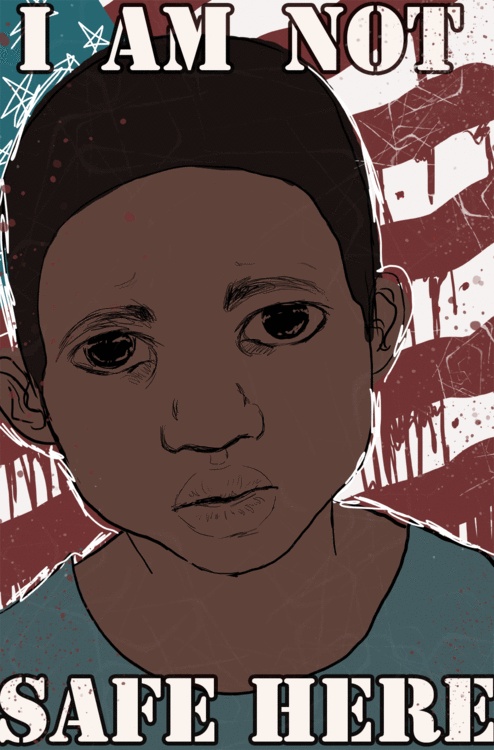
There is simply nothing else to add.
 Uncategorized | prison culture |
  Comments Off on After a another morning in court, a reminder…
There is simply nothing else to add.
Uncategorized | prison culture | Comments Off on After a another morning in court, a reminder…
Rekia Boyd's (Video) family is hosting a rally for her this afternoon at Douglass Park. While I will be unable to attend, I dedicate this Audre Lorde poem to Rekia today.
For the Record
In memory of Eleanor Bumpers
by Audre LordeCall out the colored girls
and the ones who call themselves Black
and the ones who hate the word nigger
and the ones who are very paleWho will count the big fleshy women
the grandmother weighing 22 stone
with the rusty braids
and gap-toothed scowl
who wasn’t afraid of Armageddon
the first shotgun blast tore her right arm off
the one with the butcher knife
the second blew out her heart
through the back of her chest
and I am going to keep writing it down
how they carried her body out of the house
dress torn up around her waist
uncovered
past tenants and the neighborhood children
a mountain of Black Woman
and I am going to keep telling this
if it kills me
and it might in ways I am
learningThe next day Indira Gandhi
was shot down in her garden
and I wonder what these two 67-year old
colored girls
are saying to each other now
planning their return
and they weren’t even
sisters.
Uncategorized | prison culture | Comments Off on Poem for the Day: “For the Record” by Audre Lorde
One of the great privileges of my life is that I am blessed to be able to constantly learn new things. As I have been working on a pamphlet about “historical resistance to police violence in Harlem,” I came upon the name of someone I didn’t know – William Epton. Since I stumbled upon him last year, I have become consumed with learning as much as I can about this fascinating and courageous man.
William (Bill) Leo Epton was born on January 17, 1932 at City Hospital in New York city. His father William Epton was a laborer born in Georgia and his mother Lucy Green Epton was born in New York. Bill Epton was educated in NYC public schools and graduated from DeWitt Clinton High School. Like many black men of his era, Epton was a military veteran. He entered active duty in 1952 and fought in the Korean war where he was honored with a number of awards including two bronze stars. He was honorably discharged from the Army in 1954.
Epton was slender man, 170 lbs with brown eyes and a mustache. He worked mostly as an electrician and machinist during this lifetime. In 1959, he became a member of the Communist Party. He eventually became the chairperson of the Harlem branch of the Progressive Labor Party (PLP). Time Magazine once dubbed him “Mao’s Man in Harlem.” I requested a copy of his FBI file and it is filled with details about the meetings that he attended, the actions that he led and much more.
It was the Harlem Riots of 1964 that brought Bill Epton to public attention. On July 16, 1964, NYPD Lieutenant Thomas Gilligan (who was white) shot and killed 15-year-old James Powell, a young black boy. The accounts of the shooting are conflicting but some eyewitnesses suggested that Gilligan fired without warning and then shot twice more eventually killing the teen. Black people in NYC were infuriated by this incident. They viewed the killing as unjustified and as one more in the long line of racist incidents of brutality by the NYPD.
PLP’s Harlem branch, which had been agitating in street rallies against police brutality for several months, distributed hundreds of posters proclaiming, “Wanted for Murder, Gilligan the Cop.”

Photo by Dick De Masico, 1964 - Protestors Marching With Posters of Lt. Gilligan
During a Harlem protest about the Powell-Gilligan incident, Epton gave a speech on a soapbox declaring: “We’re going to have to kill a lot of cops, a lot of the judges, and we’ll have to go against their army.” Months later he would recount what he said at the July rally:
“What I said was that we must fight back when the cops attack us. I said that the police have declared war on Harlem and Harlem must declare war back on them. They – the judges, the cops, the slumlords, the bosses – are the ones who institute violence and murder against the people. I called – openly and publicly – for revolutionary struggle by the people to defeat that reign of terror.”
Harlem went up in flames for over three days from July 18th to July 21st 1964.
Several days later, Epton and attorney Conrad Lynn of the Freedom Now Party were arrested as they attempted to lead another Harlem march on July 25th. They had been warned by the police that they did not have a permit to protest. Subsequently Epton was also charged with “criminal anarchy,” “seeking to overthrow the government of the State of New York,” and “advocating the assassination of public officials.” Epton faced 20 years in prison for these charges.
 Before facing his sentence for a conviction of “criminal anarchy,” Bill Epton gave a speech to the court that he titled "We Accuse". It is well worth reading the entire speech but I want share his opening below because it is so powerful and meaningful:
I would like to address a few remarks to this court and its government.
You have judged me “guilty” and have labeled me a “criminal” and also “dangerous.” I have been found “guilty” by a “jury of my peers.” On this I will have more to say later.
Now – let me examine what I have been found “guilty” of doing and saying:
I have been found “guilty” of agitating against the conditions that my people are forced to live under in New York and all over the country.
I have been found “guilty” of protesting the murder – yes, murder – or legal lynching, whatever you choose, of James Powell by Thomas Gilligan, a New York policeman.
I have been found “guilty” of organizing the Harlem community against police brutality that has been occurring in the Black ghettos for hundreds of years. I have been found “guilty” of standing up for the right of all men to be free – to be free from the system of exploitation of man by man.
I have been found “guilty” of proclaiming that capitalism is an oppressive system and that socialism is the only solution for mankind to live in peace and humanity.
I have been found “guilty” of demanding that the U.S government take its troops out of Vietnam and stop its genocidal war against the Vietnamese people.
I have been found “guilty” of asking the question of Black boys and men, “What are you doing in the U.S. Army fighting your colored brothers around the world who are engaged in battle against the same government that is oppressing you?” and “Is it in your interest to kill and be killed to support a racist government?”
I have been found “guilty” of being an outspoken critic of the U.S. government and its paramilitary police force.
I have been found “guilty” of publicly advocating socialism to cure the ills of the Black people of the country and the workers in general.
And finally – I have been found “guilty” of being a communist – and a Black one at that!
If these are the “crimes” that I have been found “guilty” of committing, then I am “guilty” a thousand times over. In fact, I will be “guilty” of these “crimes” as long as the conditions exist, and I will fight against these conditions as long as there is a breath in my body!
I haven’t had a chance to read through the 1,100 pages of his FBI file yet. I plan to write more about him once I do. In the meantime, read his entire speech to the court. I can’t think of anything more relevant to our current struggles. And ummmm, one last thing: special note to black folks, our people have been resisting police violence for like generations so time for our generation to embrace that fight (as I know so many of us already are). It’s truly a badge of honor for us to be standing on the shoulders of people like Bill Epton among so many others who are better known to us.
Uncategorized | prison culture | Comments Off on Bill Epton: Resisting Racist Policing in Harlem
I will be out of town this weekend and unable to blog. After a difficult few weeks for many in Florida, I dedicate this “Ballad of Harry Moore” by Sweet Honey in the Rock to the lovers of justice. Prison Culture will be back next week. “Freedom never dies.”
Uncategorized | prison culture | Comments Off on Musical Interlude: The Ballad of Harry Moore
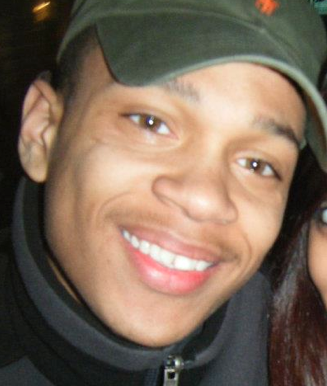
Anthony Scott
I did not know Anthony personally. My connections to him are tenuous but significant. He is the nephew of my little sister’s best friend. He was shot in my neighborhood. He was just like the hundreds of young men of color who I have interacted with and supported over the past 20 years. He mattered because he was human and because we all know and love an “Anthony” in our lives.
In the midst of her grief, his aunt took time to share a few words about him with me.  Anthony’s nickname was “Chicken Head” because of his resemblance at birth to a baby chicken. His dream was to join the Navy and even at the age of 19, he often still fell asleep next to his beloved mommy. He was talented. He wrote and performed his own music. He was also a whiz at science. He was a big kid and his favorite dish was a trail mix of Ramen Noodles, Doritos and Slim Jims.
Do you recognize Anthony? He is your son, brother, cousin, best friend, lover, and neighbor. Anthony didn’t deserve what happened to him; no one does. He mentioned his fears of ending up dead to his mother. She sent him to live down South because she feared for him on the streets of Chicago. When I think of all of the young men who are being sent “down South” because they need protection from the mean streets of our major urban centers, I think that we are living in the midst of another Great Migration or perhaps we are recreating our own Underground Railroad in a desperate attempt to save our children.
I want Anthony to know that he is not forgotten. I want his family to know that we all care. You have a chance if you live in Chicago to stop by for his viewing tomorrow. Details are available here. The family can use support and funds right now to cover all of the financial costs associated with his funeral and burial. I am collecting money for them. Checks can be written to Project NIA (Anthony Scott in the memo line) and mailed to 1530 West Morse Ave, Chicago, IL 60626. Any amount will be welcome and appreciated.
Anthony is survived by his mother Kathryn, older brother Alex, 3 younger siblings Divine, Brianna and Omar, and countless family and friends. He is also survived by all of us who comprise the community of fellow travelers who care about the health and the lives of our young people whether we know them or not.
Rest in Power, Anthony! Rest in Power!
Uncategorized | prison culture | Comments Off on Anthony Scott and Our ‘Invisible’ Deaths…
This youtube video narrated by a teacher named Brian Jones does an excellent job of articulating what I hope more people do. He connects mass incarceration, the endemic fear of the “criminalblackman” that I always talk about, and demands for justice in the Trayvon Martin case. You should watch this and then you should take ACTION in your own life, your own community, and in the country at large. There is much that we need to be doing. Let’s do popular education about mass incarceration in all of our communities and let’s organize and build towards a different vision of “justice” that truly serves all of us.
Uncategorized | prison culture | Comments Off on Trayvon Martin and the “Sense of the Whole Thing Being Rotten”…
I am working on several exciting projects right now. One of them is an upcoming series of pamphlets about historical moments of police violence. I referenced the project here a couple of weeks ago.
I am writing and/or editing a couple of pamphlets as part of the series. One of the topics that I have been and am focused on is the oppressive policing tactics employed during the black freedom movement. The endemic nature of police violence during that period has been striking to say that least.
I stumbled across a set of affidavits that were collected during and right after Freedom Summer in Mississippi by the Council of Federated Organizations (COFO). Some of these statements and affidavits from black and white people were published in a book titled “The Mississippi Black Papers.” The book is out-of-print so I am editing a sample of the affidavits to be published in a pamphlet that will be released in May. I am excited to say that this is a collaboration with my friend Mauricio who is contributing his art and design talents to the project.
Here is an example of a statement that was offered by a black man in Mississippi about the violence that he experienced from law enforcement:
COAHOMA COUNTY
I am 24 years old, and I reside in Clarksdale, Mississippi.
At about 1 p.m. on Sunday, July 12, 1964, I was in the Laundromat on State Street, next to the __________ Store. Although the store has no signs up, this is understood to be a “white” laundromat. My clothes were in the washer when the owner of the store came in accompanied by two policemen. He told me to get out and be quick about it, so I left. The police car followed me and about three blocks away pulled me over to the side. They asked to see my driver’s license. They said I had failed to signal a turn. Then they took me down to the jail. There Police Officer A__________ and two other officers began to beat me. They hit me with both their fists and with a billy club, causing my mouth to bleed. Officer A_______ asked me what business I had in that place (the laundromat). He also said, “Do you know you’re a nigger and are going to stay a nigger?” This was all going on while they were hitting me. Then they locked me up, and I was later released after making $64 bond on charges of “resisting arrest” and “failure to signal.” At no time did I put up any resistance to arrest.
SIGNED: James A. Campbell
 This testimony is perhaps not shocking to those who remember black and white images of police officers letting dogs loose on peaceful protestors but it is a keen reminder that the police have a history of oppressing marginalized people. I think that looking to history offers us an opportunity to better understand our present context. It isn’t hard to see the echoes of the corrupt Sheriff Rainey in 1964 Mississippi in the corrupt present-day police department in Sanford, Florida that seems to be engaged in a cover-up in the Travon Martin case.
I am hoping that those who read some of the affidavits from the Mississippi Papers will take heart in the fact that others have successfully resisted law enforcement terrorism and violence in our not so distant past. La lucha continua! Stay tuned for our pamphlet in May.
Uncategorized | prison culture | Comments Off on Police Violence as Endemic…
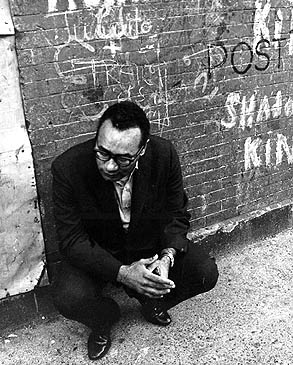
Piri Thomas in 1957
In his book, 7 Long Times, Thomas writes movingly and searingly about his incarceration. In particular, I found his description of parole to be insightful and to be worth sharing on this blog. This excerpt comes from the Appendix of the book (pages 180-181).
Before I was released from prison, the authorities filled my head with all kinds of threats and warnings of what would happen to me if I stepped out of line on the outside and how in the twinkling of an eye I could be back in the slams. I was to be an ex-con on parole with few or no civil rights. If I had been a second-class citizen before I went to prison, and a third-class citizen in prison, I was a fourth-class citizen upon my release.
In 1955, when I was released, there were no organizations working with parolees, with the exception of the Police Department, the Department of Corrections, and some religious groups. Parolees come out of prison badly shook-up, scared on the inside even if they didn’t show it. Very few can re-enter society with no sweat at all. It is a process that takes determination, time, and mucho patience. There is a high rate of recidivism because it is hard to make it on the outside. Face it, when jobs are hard to get on free side for non-offenders, being non-white and an ex-con makes it near impossible. Don’t care who you are. You’ve got to eat, dress, and have a place to sleep, and if you have a family, the burden is even greater. Many former inmates fight to go straight, but slowly find their way back to whatever got them in prison in the first place.
For me, parole was like a short rubber band that could snap me back into prison a million times faster than I had gotten out. My meager sense of being free on the outside vanished when my parole officer and probation officer, seeing me on Tuesdays and Thursdays, pounded into me that I was only out on parole, not free. Like if I fart in the wrong part of town, sir, I’ll find myself back in prison so fast it’ll make my head spin.
My parole officer would usually notify me when he was coming for a visit, but sometimes he would come around without notice. I wasn’t breaking any laws, unless making love is a crime, but according to the rules and regulations of parole, I wasn’t supposed to make love with anyone other than my legally wedded spouse. They got to be kidding!
One day I got real shook-up when my parole officer came to visit and I was standing on the stoop talking to Bayamon, who had just gotten out of prison. I froze and whispered to Bayamon, “Diggit, here comes my parole officer,” and Bayamon disappeared so smoothly and gracefully it was like he had vanished in a puff of smoke. If my parole officer recognized Bayamon as a parolee, he didn’t let on. I figured he probably knew that most of the parolees came from neighborhoods like mine.
Yet try as hard as I could to cool my role, I couldn’t help being nervous every time I reported and got visited. A parolee has no rights, and any bullshit complaint by a citizen can start him on his way back to prison. A parolee has got to walk on water because if he’s picked up on his way home while something is happening on the street — a fight, somebody else pulling a job, or whatever — he is in for sweat’s sake unless there is proof of innocence beyond a shadow of a doubt.
It was hard to deal with people who had never done time, especially when they knew I had. They would either clam up and look curiously at me or put on a big act of friendliness while also looking curiously at me. When I ran into an ex-con, it was like meeting a fraternity brother, even if I had hated his guts in prison.
It took me a long time before I was able to get the prison cockroaches out of my head. I’d wake up at home from nightmares that I was back in prison hearing the horrors, the curses and screams, reliving the tensions, anger, and pain, my body drenched in cold sweat. It would take minutes for me to realize I was at home.
When I first came home, I couldn’t break the habit of waking up in the morning half-asleep, getting into my clothes and stumbling around my bedroom looking for the toilet bowl and wash bowl, then standing like a damn fool in front of my bedroom door waiting for the guard to spring the lock. While in prison, I had always fought against being institutionalized, but some of its habits had rubbed off on me a little too damn deep. Even now, twenty-four years later, I still have an occasional nightmare that I’m back in prison.
Uncategorized | prison culture | Comments (1)
Schoolhouse/Jailhouse
by nancy a. heitzeg
Last week, i had the honor of being listed amongst presenters at the fifth annual symposium hosted by a local law school; the topic, How Are The Children Part V: From the Classroom to the Courtroom, Exploring a Child’s Journey through the Justice System.
The short answer — Not Good. Not good that is if you are a student of color in an under-resourced, over-policed inner city school.
For more than ten years now, scholars, activists, educators, juvenile justice personnel and parents have been discussing the so-called School to Prison Pipeline All this discussion has not produced meaningful policy changes that result in the lessening of the flow of youth of color from schools into legal systems.
As a recent report from the Department of Education’s Office of Civil Rights indicates, the pipeline is alive and gushing an increasing number of youth of color out of school and into jail:
Although black students made up only 18 percent of those enrolled in the schools sampled, they accounted for 35 percent of those suspended once, 46 percent of those suspended more than once and 39 percent of all expulsions..
One in five black boys and more than one in 10 black girls received an out-of-school suspension. Over all, black students were three and a half times as likely to be suspended or expelled than their white peers.
And in districts that reported expulsions under zero-tolerance policies, Hispanic and black students represent 45 percent of the student body, but 56 percent of those expelled under such policies.
When will this be considered a national emergency??
Uncategorized | prison culture | Comments Off on Guest Post: Schoolhouse/Jailhouse by Nancy Heitzeg
“As tragic and disgusting as it is, the Trayvon Martin case, is merely a symptom. We’ve yet to address the virus.” – @1SunRising on Twitter.
So I am about to become even more unpopular than I already am but I find that I have to say a few things today…
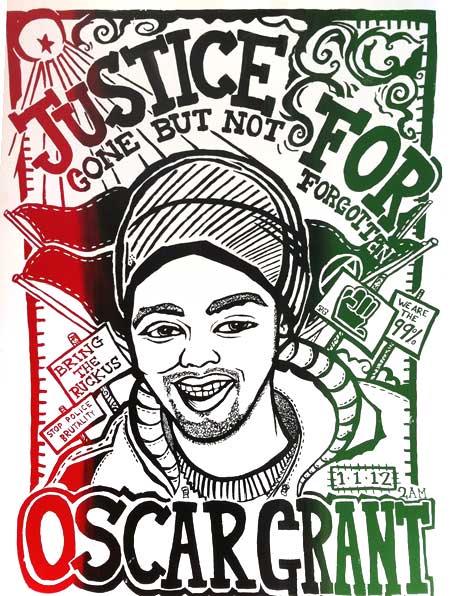 A couple of years ago many people were very upset when Oscar Grant’s killer Johannes Mehserle received a two-year prison sentence for his crime. At the time, I wrote a piece titled “"We Hate Prisons But That Guy Needs To Be Locked Up". I am certain that the post didn’t gain me many new friends and that’s alright.
Yesterday I listened to a piece of a 911 call made by George Zimmerman, a vigilante who seems to have killed 17 year old Trayvon Martin in cold blood. Let me say upfront how incredibly heart-broken I am for Trayvon’s family and friends. I can’t begin to imagine the depth of their grief and sorrow. I have previously written about the tragedy of this case. Second, let me stipulate that I believe that Zimmerman did not shoot the young man in self-defense.
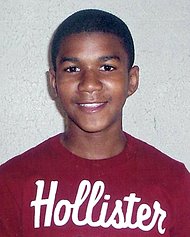
Trayvon Martin
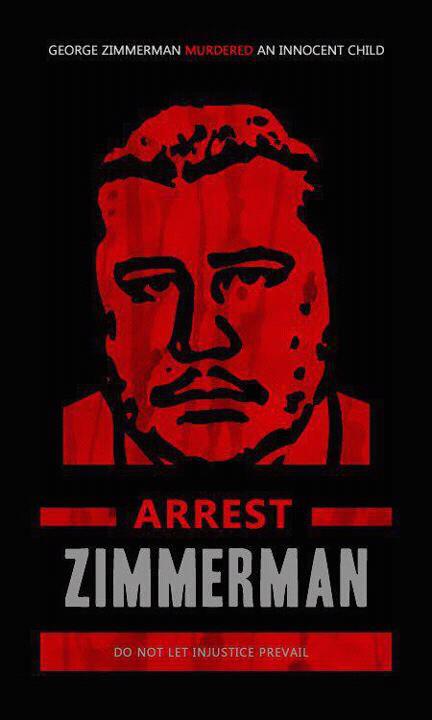 But I worry that all of the black people who are calling for the prosecution and ultimately the incarceration of Zimmerman are facilitating the carceral state. How can you decry the unjustness of the current legal and prison system while simultaneously calling for the prosecution and imprisonment of more people? Is this not contradictory? If you think that prisons are ineffective and counterproductive, then aren’t they going to be the same for Zimmerman and his ilk too?
Will we have addressed why Zimmerman felt that young Trayvon, who was simply walking to and from the corner store, was “suspicious” through prosecuting and locking him up? If you believe as I do that the “justice” system is irrevocably broken, then how can you rely on it to deliver the “justice” that you may rightly crave? Additionally, what exactly do we mean by “justice” when we invoke it?
In our grief and anger, I think that we are conspiring to cement and bolster a more punitive “law and order” climate in the country. That will not help us as black people in the long run. Why? Because that climate is exactly what has helped to funnel millions of black and brown people into the prison industrial complex. We are inadvertently helping to sow the seeds of our own destruction.
I know that many people who read my words will find them infuriating and that others may question my sanity. However, I only ask that you take a step back to consider the questions that I pose. You might come back at me and ask your own questions. Perhaps one of them is: “Well what do we do with people who kill young black men in cold blood?” My answer to you will be, “I don’t know but the killing of young black men in America has been going on for centuries even though some of the perpetrators have been prosecuted and imprisoned for their crimes.” Young black men are still being killed in cold blood so that must mean that prosecution and prison are not acting as effective deterrents.
These words by Crunktastic over at The Crunk Feminist Collective blog are challenging:
As we appeal to the system, signing petitions calling for the prosecution of George Zimmerman, we hope against hope, that the system will not decide that Blackness alone makes one a probable threat, worthy of execution, just a few hundred feet from one’s home. And yet, that decision has been made thousands of times. Will Trayvon be any different?
My question is “what will be different if Trayvon’s case is in fact prosecuted by our current racist legal system?” Will this now mean that blackness no longer makes “one a probable threat, worthy of execution?” Is it our belief that prosecuting and imprisoning every single person who murders someone else addresses the underlying oppression and racism in our society? Once the Department of Justice gets involved in the case as many are now calling for, what then? Are we done until the next Trayvon? Because be assured that there will unfortunately be many more Trayvon’s going forward since we are not addressing the root causes of racism and oppression but simply relying on a racist system for recourse.
We must consider other models perhaps based on transformative justice instead of our current failed system of punitive and retributive justice. Let’s mandate that Zimmerman must take 1000 hours of political education classes at the Highlander School and that he then has to spend another 20,000 hours working in a school in rural South Carolina with black and brown children. After that, if Trayvon’s family would allow it, let’s expect Zimmerman to speak with them about what he has learned about himself, about Trayvon, and about his heinous crime through these experiences. Zimmerman could then be encouraged to take his story on the road and share it with others across the U.S. Some will suggest that this is not “workable” as an alternative to incarceration. I would ask what “works” about our current “justice” model. For those who think this would mean that Zimmerman gets off “lightly,” I would only ask that you examine your own ideas about punishment and retribution.
I know that it may be too soon to broach this subject but I believe that this is the time that we must challenge ourselves to consider what else might be more effective in addressing the problems of oppression, racism and violence.
I remind everyone that nothing good ever comes from prison and retribution. Nothing.
Update: Jasiri X tells the heartbreaking story of Trayvon in this new video.
Uncategorized | prison culture | Comments (9)