Sep 10 2010

Unfinished Business: A Juvenile Justice Exhibit at the Jane Addams Hull House Museum

Earlier this year, I was privileged to be invited to work with my friend Lisa Lee who is the director of the Jane Addams Hull House Museum to help facilitate a community-curated exhibition about the history and current manifestations of juvenile justice in the United States.

A group of terrific community activists, advocates, and juvenile justice professionals met in March to share ideas about what should be included in an exhibition about juvenile justice.  There were dozens of ideas and each one was better than the next.

As part of putting together this exhibit, Lisa very much wanted to incorporate the voices of incarcerated young people as well as youth who have been impacted by the juvenile justice system in other ways.  She embraced an idea that I advanced to work with incarcerated youth on creating mini-zines about their lives while also working with youth on the outside to create a graphic novel about juvenile justice.  We hope to release that book next Spring.  It will be used to educate young people and others about how the system operates and its impact on all involved.  Another part of the exhibit provides an opportunity for direct engagement of the public with youth on the inside through video conferencing.

The Hull House Museum reopened on Wednesday after an $800,000 renovation.  This was the first renovation of the house and museum in 50 years.

Our local ABC affiliate interviewed Lisa about the reopening and the celebrations surrounding the 150th anniversary of Jane Addams’ birth.

Here is another report about the reopening museum that provides a look inside some of the renovated spaces.

Finally, I have been unwell for the past few days and so sadly I missed the People’s Block Party to celebrate the reopening. As such, I have not yet seen the Unfinished Business exhibit. I look forward to seeing it in the very near future. It was truly exciting to be a part of this process.

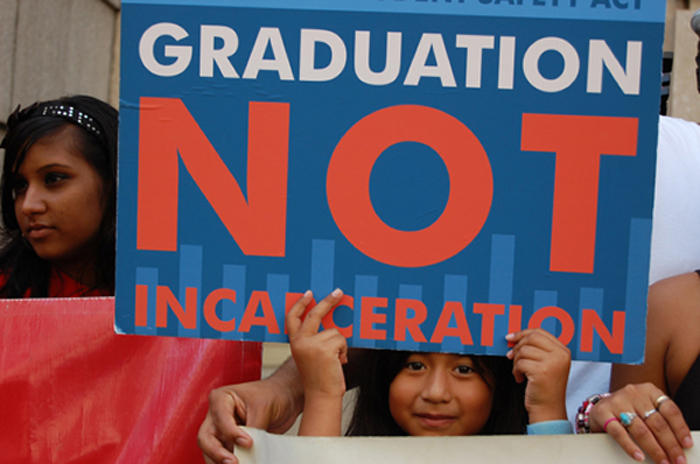
One more terrific feature of this community-curated exhibit involves a series of rotating “action” stations that will feature various campaigns and advocacy efforts currently being undertaken around issues of juvenile and criminal justice. I am proud that my organization is currently featured through our UN-marked campaign that seeks policy changes around the expungement of juvenile criminal records. Here is a great photo that Lisa sent me yesterday of our action station in the Unfinished Business exhibit. I find it poignant and moving to see this young child participating in an exhibit intended to get the public to consider the importance of erasing criminal records.

I encourage all of you who are interested in immigration history, women’s studies, and juvenile justice to stop by the museum to see all of the wonderful artifacts and catch the Unfinished Business exhibit (which will be up for one year).

Sep 10 2010

A Case of Criminal Neglect: Mentally Disabled Youth Prisoners & Juvenile Injustice

Jeremy Price


I read this story yesterday and have to admit that I cried. I cried out of sadness but also because this made me so angry.

Quoting from the story:

A teenager who was charged with manslaughter and had escaped from a mental health facility while awaiting a final resolution on the case was fatally shot Monday night in Mattapan, officials said yesterday.

Police said Jeremy Price, 18, was shot on Astoria Street about 8:30 p.m. Price was taken to Boston Medical Center, where he died of his wounds, police said.

At first blush, this appears to be another story of a young man who is shot on the streets of one of our cities in America. In just these few words, we are made aware of several details that on their own would be tragic. The young man was mentally disabled. He was charged with manslaughter. He was shot dead by an unknown assailant. These are the facts offered.

The story continues:

Price was charged with manslaughter in the 2007 killing of 41-year-old Michael Hansbury, a father from Mattapan, a spokesman for Suffolk District Attorney Daniel F. Conley confirmed yesterday. Price, who had an IQ at the level of mental retardation, was 15 when he allegedly punched Hansbury after being encouraged to strike him by friends.

Hansbury fell into a coma after hitting his head and died a week later.

Asked about the circumstances surrounding Price’s death, spokespersons for Conley and the Police Department would say only that the investigation is active. No arrests have been made.

Heartbreaking. A 15 year old is dared by his friends to punch a stranger who is then killed. Then he himself is killed by an anonymous assailant. Terrible.

Still more from the story:

Price made news in May when he escaped from Tewksbury State Hospital, where he was being held while his manslaughter case was pending. He was apprehended two days later when a cousin, Jessica Lewis, persuaded him to go to her Dorchester home so he could turn himself in.

Price had also escaped from a New Hampshire facility after his arrest and was barred from another program in West Springfield because of his history of fleeing.

Suffolk Juvenile Court Judge Leslie E. Harris dismissed the manslaughter case against Price in July because he was found mentally incompetent to stand trial, the judge said in a telephone interview last night.

Harris said Price was released to the state Department of Children and Families until he turned 18 in late August. Price was released to family members after he turned 18, Harris said. The judge said he thought Price was staying with family in Fall River.

“I really hoped he would stay out of Boston and get himself established,’’ Harris said.

My only comment here is to highlight the fact that he was “released to the state Department of Children and Families until he turned 18 in late August.” I think that our failure as a society to find a way to provide ongoing compassionate support for the mentally ill is CRIMINAL.

Finally:

Lael Chester, executive director of the Boston-based Citizens for Juvenile Justice, an advocacy group for overhauling juvenile justice in the state, said the Price case illustrates the need for early intervention services for children who are mentally disabled.

“What was going on [with Price] in first grade? What was going on in second grade?’’ Chester asked. “Some of these things had to have been known.’’

She also said that while the state Department of Youth Services, which has custody of juvenile offenders, works hard to help children in its care, the agency does not have the resources to help mentally disabled inmates.

“I think with a lot of these cases, the agency is struggling to find a right fit, but it’s really not what they do,’’ she said.

The fact that the juvenile justice system “does not have the resources to help mentally disabled inmates” is NOT what I find appalling. Rather, I agree with Lael Chester who asks the right questions about where the early intervention services were in this case for this young person. We need to invest at the front end rather than relying on the criminal legal system to handle problems on the back end. Instead during this terrible economic climate, states and localities are CUTTING back on preventative services and on intervention services. This will only lead to more tragedies like this one which I believe can and should be prevented. Just awful.

Sep 09 2010

Interrogating the concept of transformative justice in an unjust world…

Vengeance is a lazy form of grief…

Everyone who loses somebody wants revenge on someone, on God if they can’t find anyone else. But in Africa, in Matobo, the Ku believe that the only way to end grief is to save a life. If someone is murdered, a year of mourning ends with a ritual that we call the Drowning Man Trial. There’s an all-night party beside a river. At dawn, the killer is put in a boat. He’s taken out on the water and he’s dropped. He’s bound so that he can’t swim. The family of the dead then has to make a choice. They can let him drown or they can swim out and save him. The Ku believe that if the family lets the killer drown, they’ll have justice but spend the rest of their lives in mourning. But if they save him, if they admit that life isn’t always just… that very act can take away their sorrow.

These words are from a film called the “Interpreter” starring Nicole Kidman and Sean Penn.  The film itself is pretty terrible.  However when I saw it a couple of years ago, I was struck by these words uttered by Nicole Kidman’s character  Apparently, a number of people have tried to unearth whether the “drowning man trial” actually has roots in some African cultures or if it is simply a Hollywood invention.  To me, it doesn’t really matter if this concept is based on a “truth” or a “myth.”  There is a lot to be learned from this anecdote about the challenges and promise of transformative justice.  Incidentally, in Malinke culture, we too have a concept of justice similar to the “drowning man trial” but that is for consideration on another day.

What I want to interrogate today is the idea of “vengeance being a lazy form of grief…”  I believe that our criminal legal system in the U.S. is obsessed with the concept of punishment and getting even.  I don’t think that this is a healthy way to  administer “justice.”  As a survivor of violence, I understand the human emotions that drive us to want to make those who harm us “pay” for their transgressions against us.  I also know, for myself, that this impulse ultimately provided no solace for me.

I am driven to find better ways and solutions to ensure community accountability for violence and crime.  I ponder the words above and ask what  does transformative justice mean if we accept the fictional Ku’s premise that “life isn’t always just.”  If that is true, then how should we  think about concept of transformative justice?  Is it more useful for us to focus on the concept of community accountability as opposed to transformative “justice?”  What does it mean for us to talk about the concept of justice in an unjust world?

I have taken to regularly asking myself whether the work that I do,  in the words of Ruthie Gilmore, “extends or shortens the reach” of the prison industrial complex.  Ultimately any attempt to reform the current system of incarceration that actually contributes to extending the reach of prisons  exacerbates an already untenable situation  As such, I struggle with the concept of collaborating with the state through restorative justice programs that serve as “alternatives” to incarceration.  I don’t want to contribute to the widening of the net of social control by increasing the number of community members who fall under the purview of state supervision.  Currently the work of my organization is challenged by these real tensions.

Theorist and co-founder of Incite! Women of Color against Violence, Andi Smith has written that:

“Simply adding RJ (restorative justice) to the present criminal justice system is likely to further strengthen the criminal justice apparatus, particularly in communities of color that are deemed in need of restoration (p.266).”

So where does this leave us?  Vengeance is indeed a lazy form of grief. And yet we need some way to provide community accountability for violence and crime…

Andi Smith suggests that in order to live up to the promise of transformative justice we must “seek to address violence from a political organizing perspective rather than using the criminal justice  or RJ model (p.267).”  She posits that only if we consider political organizing and base building as strategies for ending violence can we achieve transformational justice.  Perhaps this is the place to begin…

Cited: Smith, Andi (2010). “Beyond Restorative Justice: Radical Organizing Against Violence” in Restorative Justice and Violence Against Women. Edited by James Ptacek.

Sep 08 2010

NYC Students Rally Against Criminalization…


I missed this yesterday because I am so swamped with work. Apparently hundreds of NYC students rallied in support of the Student Safety Act.

According to the NYCLU website:

Hundreds of New York City students and parents today joined local lawmakers and the Student Safety Coalition in front of Tweed Hall to rally support for the Student Safety Act, legislation being considered by the City Council that will bring transparency and accountability to NYPD activity and Department of Education suspension practices in the city’s schools.

This is incredibly encouraging. Public schools in the U.S. have been transformed into high security environments, complete with surveillance technologies, security forces, and zero tolerance policies. I know that I write a lot about this but I don’t think that it can be overstated. As educator and theorist Henry Giroux has persuasively argued, youth are living in a “suspect” society. Angela Davis has suggested that “when children attend schools that place a greater value on discipline and security than on knowledge and intellectual development, they are attending prep schools for prison.

So it is encouraging to me to see that young people are resisting their criminalization by institutions like schools.

Quoting once again from the NYCLU website:

With more than 5,200 uniformed officers, the NYPD’s School Safety Division is the nation’s fifth-largest police force – larger than the police forces in Washington D.C., Detroit, Boston, Baltimore, Dallas, or Las Vegas. There are more police in our schools than there are guidance counselors.

NYPD School Safety Officers have the authority to detain, search and arrest children, yet they receive only 14 weeks of training—compared to six months for police officers. All too often, this police presence has led to interventions by law enforcement situations that should be handled by educators.

Take, for example, Denis Rivera, a 5-year-old special education student who was handcuffed for throwing a temper tantrum in his kindergarten class. The NYPD handcuffed and arrested 12-year-old Alexa Gonzalez in school for scribbling on her desk in erasable marker. And Mark Federman, a principal at East Side Community High School, was arrested for trying to prevent the police from humiliating his honor roll student.

The escalation of police activity in the schools has also created a de facto zero tolerance policy in schools serving the city’s poorest neighborhoods. In these schools, which often have permanent metal detectors, students are suspended and even arrested for minor disciplinary infractions.

“The Student Safety Act will help students stay in school and ensures that we have some place to go if we have problems with school safety issues,” said Nazifa Nahbub, a 17-year-old senior at Long Island City High School and a youth leader for DRUM, Desis Rising Up and Moving.

“We need the Student Safety Act passed by the end of 2010 so no more students will be criminalized,” said Praz Barua, a youth leader for DRUM and the Urban Youth Collaborative. “This bill will create the transparency that we desperately need in our schools.”

Sep 08 2010

Understanding the Relationship between Slavery, Coerced Labor and the Current Prison Industrial Complex

One of my favorite recent books is Slavery by Another Name by Douglas Blackmon. Here he is on NPR back in 2008 talking about the central premise of his work.  Blackmon’s book helped me to truly understand the connections between slavery, prison labor in a historical context.

You can read the story and listen to audio by clicking on this link.

Or I am going to try to embed the audio here again…

Sep 07 2010

Incarcerated Women’s Wisdom: What Girls in Trouble with the Law Need to Stay Out of Prison

One of my main areas of interest with respect to the juvenile legal system involves how girls and young women are treated. For years, I have been an advocate of “gender-responsive” programming within the juvenile legal system. Over the years, I have found myself thinking seriously about what the content of such gender-responsive programming should be. I have offered my own ideas and been involved in crafting programs for girls in trouble with the law. And yet here we are in 2010 and we are still struggling to figure out what would work best in terms of intervening with girls in the system.

In the 11 years between 1998 and 2007, the number of arrests of girls increased at a faster rate (or decreased more slowly) than those of boys for robbery, assault, burglary, drug violations, and driving under the influence. A number of researchers have suggested that this increase in young women coming to the attention of juvenile justice authorities has to do with a change in the way that young women’s behavior is policed. Criminologists like Meda Chesney-Lind have attributed the increase in two phenomena called “upcriming” and “relabeling.” Physical altercations which would have been handled by the principal or parents in the past are now being referred to law enforcement and the courts and are labeled as serious “violent” offenses.

Because young women still only make up a minority of those in the juvenile system, in 2008 they represented 22% of juvenile arrests for example, much of the programs and interventions are still very much boycentric.

I was reading a fascinating article this weekend which really got me thinking about the issues facing young women in trouble with law more immediately. The article titled “Looking in the Rearview Mirror: What Incarcerated Women Think Girls Need From the System” seeks out the opinions of women prisoners (who were involved in the juvenile justice system as girls) to learn about what they believe girls in the juvenile justice need in order to ensure that they do not end up behind bars as adults. This is super interesting because few studies actually focus on the opinions of prisoners to ascertain the effectiveness of programming and criminal legal interventions.

What a novel approach… Perhaps we should actually ask prisoners opinions and seek their guidance when we are developing policies to address crime and delinquency. It seems so common-sense and yet researchers and policy makers rarely rely on the experiences and expertise of current or former prisoners.

Anyway, the female prisoners in this study underscored a number of key things that girls need from the juvenile justice system in order not to graduate into the adult system as they themselves did.

Quoting from the article:

[T]he women argued for highly structured placements that use female staff that are caring and professional, the importance of female role models/female mentors, and to provide girls a voice in the proceedings against them and in the development of their treatment plans.

Also, as has been indicated in the literature, a large proportion of girls have been victimized and faced serious trauma in their lives. Some have faced sexual, physical, and/or emotional abuse. Others have faced seriously dysfunctional and chaotic family lives, poor parenting, parental loss (whether by death, incarceration, or abandonment), and neglect. Because of these factors, the women in this study argued persuasively that correctional programming for girls should include parenting classes, independent living skills, and self-esteem building components. These programmatic “prescriptions” also appear in the gender-specific literature for girls. The literature also indicates, as did the women in this study, that families (when appropriate) should participate in the girls’ treatment, with the goal of repairing the family relationship in mind.

Moreover, some women pointed out the need for girls to learn to become self-sufficient, some by vocational training and job placement, and others by finishing their education or going on to college. Thus correctional programming needs to identify educational deficits that can be corrected and current skills that can be strengthened. Other important types of counseling that the women indicated as crucial to help girls get over their traumatized pasts were sexual abuse, substance abuse, grief and loss counseling….Finally, the women noted that healthy relationships are virtually nonexistent in these girls’ lives. They underscored the need for programming to teach girls how to develop and sustain healthy relationships. This is especially true when one considers that the literature has established that relationships are one of the major ways girls develop their sense of identity.

Many of us who work as researchers or “experts” get paid money to come up with information that is accessible and available if we were to pay more attention to people who are actually impacted and affected by systems of oppression. This article is an important reminder of that truth.

Article cited: “Looking in the Rearview Mirror: What Incarcerated Women Think Girls Need From the System” by Crystal A. Garcia and Jodi Lane in Feminist Criminology, 2010 5: 227.

Sep 06 2010

Could this EVER Happen in the United States? Netherlands Closing 8 Prisons…

According to Life Means Health:

The Dutch government has announced that it does not have enough prisoners to fill its prisons, and as a result is closing down 8 prisons. Currently, the Netherlands has the capacity for 14,000 prisoners, but only has 12,000 people to fill those jails. The shutting down of these prisons are being attributed to an ever decreasing crime rate in the Netherlands.

The Netherlands has a population of 16.6 million and a prison population of roughly 12,000, putting its percentage of prisoners as 0.07%, whereas the UK’s own prison population is nearly 94,000 (!!!) with a population of 62 million, leaving its percentage as 0.15%, just over twice that of the Netherlands.

The United States has a population of 310 million people and at last count we had over 2.3 million people in our prisons and jails.

The article continues by explaining that the Netherlands lenient drug laws are actually contributing to their steep drop in crime as opposed to the laws in the UK and the US which contribute to a growth in the prison population:

[I]t is estimated that as much as 40% could be in prison for small-time drug crimes which are costing taxpayers billions of dollars every year. In stark contrast, the US is finding that it has to actually open MORE prisons each year while we see the Netherlands is actually being forced to close them. With incentives like Proposition 19 gaining significant traction, and other countries outside the States stating that if Proposition 19 is passed drug reform in the country would occur, a repeat of the events happening in the Netherlands could actually happen in similar smaller countries.

The reason for this would be because state-controlled distribution of marijuana at subsidized prices would cut into illegal drug activites, where huge amounts of crime occur all the way from the cartels to the streets. Violent drug dealers and similar criminals would be driven out of business by the safe, cheap, high quality dispensaries and the community would benefit all round from this.For example, taxing and regulating cannabis would generate up to $1.4 billion in revenue per year for California. Similarly, $200 million of taxpayer money will be saved, due to less inmates in local jails. It is also estimated that California will generate $12-18 billion in spinoff industries such as tourism and coffee houses. The figures would be similar to what Amsterdam currently gets! All these savings could be put towards creating jobs, as it’s estimated that if Prop 19 passes, approximately 100,000 jobs will be created. Passing it would also help fight the Mexican drug cartels and stop the 6k death toll that has occurred this year as a direct result of their actions, as it is estimated that 60% of their income comes from marijuana trafficking.

Sep 06 2010

The Impact Incarceration Program: Photographer Julia Rendleman Documents Boot Camp in Illinois

(h/t Lois Aherns The Real Costs of Prisons)

Photographer: Julia Marie Rendleman
Project Title: “The Impact Incarceration Program”

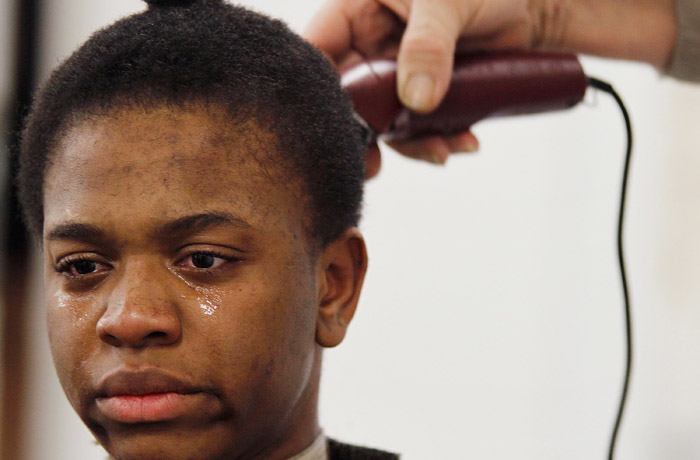
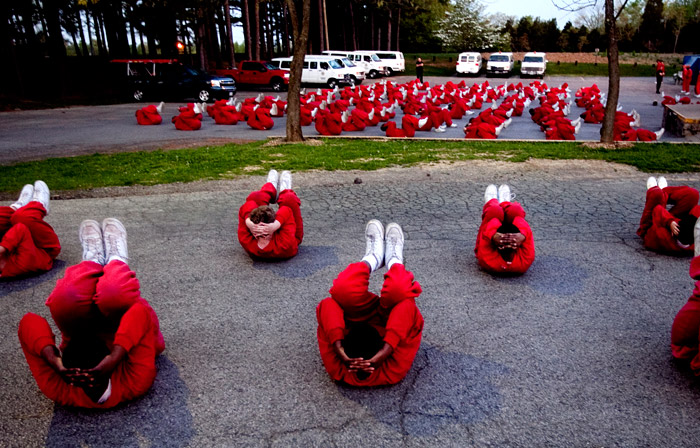
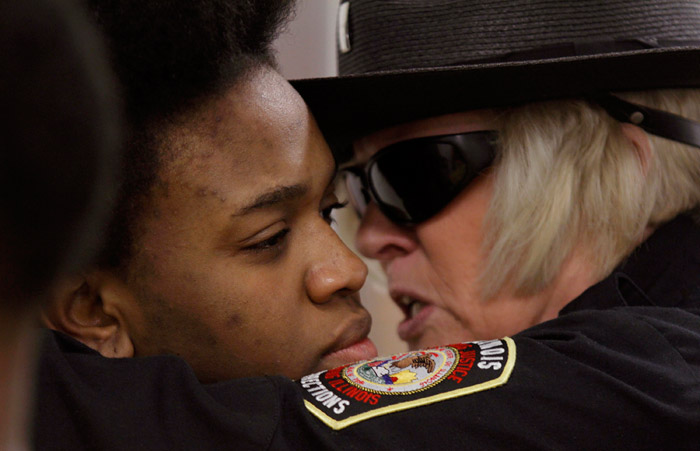
The Impact Incarceration Program at the Dixon Springs Boot Camp in Southern Illinois is a 120-day program where inmates participate in a military-like boot camp instead of serving their judge-mandated sentence, usually between three and seven years. While the facility primarily houses male inmates, there are currently 22 female inmates.

“I think the program can be a real benefit to the women because there are so few of them – they get very personalized attention,” said Officer Teresa Robinson.

The graduation rate for the female inmates is over 95% and the recidivism rate for three years with no new felony convictions is 23.3%, compared to 32.9% at a traditional correctional facility.

This project considers the development of five women as they go through the boot camp program at Dixon Springs. All five women are first-time offenders with sentences under seven years. Forty-five days into the project, one inmate, Catherine Thomas, “quit”, or was kicked out of the program for slapping another female inmate. She will return to Dwight Correctional Facility to serve her full sentence of four years.

“She (Thomas) wasn’t taking it seriously,” said inmate Robin Johnson. “That means you not taking your life serious, and everything’s not a joke.”

Of the remaining four women, three are at Dixon Springs for aggravated assault. These women, in only six weeks, express a gratitude for the program that is hard to explain since the majority of their day is spent doing hard labor under rigorous scrutiny.

“You get more out of this than you ever would at prison. Prison, compared to this is the Hotel Paradise,” said inmate Courtney Andrews.

The final inmate this project follows is 29-year old Marita Sanders, who has a four-year college degree and was incarcerated for embezzling $70,000 from her accounting firm in Chicago. Unlike the other three women, Sanders is, admittedly, not focused on changing but wants to get in and get out in 120 days.

click here to see a slide show of her moving and infuriating photographs.

Sep 06 2010

Great Resource: I got arrested! Now What? A Youth Guide to the Juvenile Justice System…

A group of young people from the Youth Justice Board partnered with the Center for Urban Pedagogy to create a terrific comic/guide to the NY Juvenile Justice System.

I wish that we had a similar resource here in Chicago. It is difficult for young people and their families to understand and navigate the complicated juvenile justice system.

I ordered several copies of the comic and plan to use them with youth as a popular education tool.  It will be a good research project for them to look for the commonalities and differences between the Chicago and NY juvenile justice system.

Here is the comic_book.

Sep 05 2010

Sunday Musical Interlude…Because We Can Always Use Some Peter Tosh…

I used to think that I would be married to Peter Tosh so deep was my love for him.  God rest his soul.  Here is one of my favorites..
“Cuz I don’t want no peace, I need equal rights and justice.”