Dec 27 2010

Hallelujah: Jeremy Marks is Out of Jail!

A couple of weeks ago, I wrote about the case of Jeremy Marks.

Jeremy, a high school senior, was arrested and charged with “attempted lynching” for using his cell phone to capture an altercation between a police officer and one of his classmates. For over 8 months now, young Jeremy has been behind bars because his family could not afford to post his bail.

Thankfully, a good Samaritan posted Jeremy’s bail last week so that he could spend Christmas with his family.

A Google engineer from San Francisco heard about Marks’ plight, in an exclusive story by Katharine Russ for LA Weekly that created widespread outrage. Here’s why the Google engineer, Neil Fraser, posted $50,000 to get the 18-year-old out of the tough, adult, Pitchess Detention Center:

Neil Fraser is tentatively slated to appear Sunday, Dec. 26 on MSNBC to talk about why he helped a stranger — a boy with a troubled background whose parents transferred him to Verdugo Hills to help him get a fresh start. Fraser also put $1,500 toward Marks’ defense, which was matched by Google.

In Mr. Fraser’s own words:

Short version of the story:

1. Cop catches 15 year old kid smoking at a bus stop in LA.
2. Cop beats up kid, slams his head into the bus and uses pepper spray.
3. More cops arrive. Kid is released without charge.
4. During the incident, several bystanders start recording videos of what the cop is doing.
5. Cops pick Jeremy Marks, a 17 year old student, and arrest him at gunpoint (destroying the evidence on his phone in the process).
6. Since photographing police is still legal in California, they charge him instead with “attempted lynching of a police officer”.
7. The prosecutor makes an offer: plead guilty and he’ll only serve seven years. He declines.
8. Jeremy is thrown in jail, bail is set at an extortionate amount his family can’t afford.
9. He sits in jail for seven months awaiting trial.
10. I hear about the case on Reddit and provide the collateral to get Jeremy out of jail and back to his family for christmas.

First a word to Mr. Fraser… God Bless YOU for stepping up in this way on behalf of a young black man. This gives me hope that it absolutely is possible to build multi-racial coalitions for social change and justice.

Next a word about the issue of bail in our current criminal legal system. I do not think that it can be overstated how UNFAIR the bail system is in this country. If you have resources you get out of jail, if you do not you stay in jail. This is patently and wholly UNFAIR. Recently Human Rights Watch took this issue on in New York City by releasing the results of a two-year study. Some of the study’s key findings are below:

87 percent of defendants whose bail was set at $1,000 or less were jailed following their first court appearance for arraignment and remained incarcerated for an average of almost 16 days. Their crimes: shoplifting, prostitution, turnstile jumping, marijuana, possession of small quantities of drugs, trespassing. None were violent, and none involved weapons. In effect, these people served their sentences before ever being tried, much less convicted, since in many of the cases, the sentences eventually imposed would likely have been less than the time they spent at Rikers Island. These non-felony defendants awaiting trial constitute approximately one quarter of the population on Rikers.

According to Jamie Fellner, senior counsel at the U.S. Program at Human Watch who conducted the study and wrote the report, “Bail punishes the poor because they cannot afford to buy their pretrial freedom.” Fellner found that judges sitting in Criminal Court tend to set bail at amounts that are unaffordable for indigent defendants.

“The pretrial incarceration of persons presumed innocent of minor crimes is a disproportionate and needless curtailment of liberty that is difficult to square with fundamental notions of fairness,” Fellner’s report concludes.

While the report did not provide a breakdown for the races of people affected by the bail policy it noted, “Although blacks and Hispanics combined constitute only 51 percent of New York City’s population population, aggressive law enforcement in minority neighborhoods has led to them comprising 82.4 percent of all arrestees and a similar percentage of all criminal defendants.”

It also cites city Department of Correction figures that 88 percent of people held on bail of $1,000 or less are black and Hispanic.

How can one avoid spending time in jail if you are poor in NYC? That’s simple… Plead Guilty. From the HRW study:

The only way a defendant charged with a misdemeanor or violation such as disorderly conduct can get out of jail quickly when a judge sets bail he or she cannot raise, is to plead guilty. Pleading guilty can mean walking out of the courthouse — particularly if this is the first person’s first arrest — since many of the minor offenses do not carry any jail time, and the defendant has already served 24 hours by the time he or she appears in court. Others pleading guilty may get an Adjournment in Contemplation of Dismissal, meaning if they don’t get arrested again within the next six months their case is automatically dismissed and sealed or they may receive a conditional or unconditional discharge.

Meanwhile, the defendant who asserts the presumption of innocence remains behind bars. Of the 19,137 non-felony defendants arrested in 2008 whose bail was $1,000 or less, 87 percent were not able to post that and had no one else who could. This helps explain why 99.6 percent of the convictions for misdemeanors are by guilty plea.

In the Jeremy Marks case, because his family could not afford his bail, he has already spent 8 MONTHS in a terrible jail. Remember that he has not been convicted of a thing.

The prosecutors still want this young man to plead guilty and serve 32 months in prison. This is pure INSANITY and his family should take their chances in court. Hopefully others will take Mr. Fraser’s lead and will contribute to help defray some of the court costs associated with this debacle to allow this young man to clear his name and save his life. This is an injustice that the state of California should not be able to get away with. Kudos to L.A. Weekly by the way for shining a bright spotlight on this travesty of injustice.

Dec 26 2010

Sunday Poem: Observations at a Poetry Reading, Women’s Detention Center

(OBSERVATIONS AT A POETRY READING, WOMEN’S DETENTION CENTER, SUMMER ’75)

by Michelle Parkerson

Bitch Butch Black

but
women all
Ladies in waiting
for sentences or
paroles
Look through bars for eyes

Skepticism as a way of life
Crime as survival
Prison as the payback
Hard knocks make hard hearts that don’t beat to art

Light, angels of mercy
poets
come to read you free
confront a wall of blank stares
that know too well do-good haste

The griots call: Do our words touch you?
The women’s response: Do you care?

Dec 24 2010

Rosa Parks: Criminal Legal Reformer & Practitioner of Transformative Justice

Something needs to be said…about Rosa Parks…other than her feet…were tired…Lots of people…on that bus…and many before…and since…had tired feet…lots of people…still do…they just don’t know…where to plant them… [From Harvest (for Rosa Parks) by Nikki Giovanni]

Chances are that most people who read this will have heard the name ‘Rosa Parks.’ She is remembered for her courageous refusal to give up her seat on a Montgomery bus in 1955. This act of resistance sparked the Montgomery bus boycott which launched a little known minister named Martin Luther King Jr. into national attention and prominence.

Yet Mrs. Parks’s life is misunderstood as is her over 60 years of activism. Chances are that if you know something about Mrs. Parks, you may have heard that the reason she refused to give up her seat was because “her feet were tired.” This mythology or urban legend has been perpetuated by politicians and others over the years as a way to de-radicalize the movement for black freedom in the U.S.

Interestingly the mythology was also abetted by organizers of the boycott themselves who wanted to have a “poster child” for the movement who would be beyond reproach. Prior to Mrs. Parks, 15 year old Claudette Colvin as well as other Montgomery women had refused to give up their seats and were subsequently jailed. However movement leaders worried about their backgrounds and decided against launching a campaign on their behalf. The concern was that these young women would not engender sufficient public sympathy and outrage. Former Southern Christian Leadership Conference (SCLC) organizer Andrew Young explained: “She was not the first but when she was thrown in jail it said to all of Montgomery that none of us is safe (Theoharis, p.117).”

Downplaying Mrs. Parks’ previous history of organizing and political engagement was seen as important to the movement. By scrubbing her record and downplaying her radicalism, organizers of the boycott were able to portray Mrs. Parks as a non-threatening and more importantly for the time “respectable” black middle-aged woman. Mrs. Parks’ true self had to take a back seat to the mythology.

Mrs. Parks spoke to this herself:

“I didn’t tell anyone my feet were hurting. It was just popular. I suppose because they wanted to give some excuse other than the fact that I didn’t want to be pushed around…And I had been working for a long time…a number of years in fact – to be treated as a human being with dignity not only for myself, but all those who were being mistreated. (Interview of Rosa Parks by John H. Britton for the Civil Rights Documentation Project, September 28, 1967)”

Rosa Louise McCauley was born in 1913 in Alabama. Her grandfather and mother were Garveyites. Marcus Garvey was a black leader who was a believer in black self-defense and self-determination. In fact when Klan violence worsened in Tuskegee Alabama when Rosa was a little girl, her grandfather would sit up all night on his porch with his rifle. In 1932, she married political activist Raymond Parks who was already organizing to free the Scottsboro Boys (I hope to write something about this case in the near future).

Mrs. Parks was a radical, in the best and truest sense of the word. She was a big supporter of Malcolm X and Robert Williams. She eschewed the concept of gradualism. In 1967, she said “I don’t believe in gradualism or that whatever should be done for the better should take forever to do.” Mrs. Parks had been an activist for two decades before the bus boycott. She had been the secretary of her NAACP chapter and was considered its best investigator. Below is an example of the type of cases that Ms. Parks investigated over 10 years before the Montgomery Bus Boycott:

In 1944 Taylor, a 24-year-old mother and sharecropper, was walking home from an evening of singing and praying at the Rock Hill Holiness Church in Abbeville, Ala., when she was kidnapped by seven white men with shotguns and knives, raped and left for dead.

The Montgomery branch of the NAACP dispatched its best investigator and organizer, Rosa Parks — yes, Rosa Parks — to Abbeville. Despite a confession, corroborating testimony, affidavits from at least three eyewitnesses and overwhelming evidence, two all-white, all-male grand juries refused to issue any indictments.

After this incident, Mrs. Parks helped form the Committee for Equal Justice for Mrs. Recy Taylor. According to Jeanne Theoharis (2009):

“Using the networks built through the Scottsboro case, the committee reached out to labor unions, African American groups and women’s organizations to draw attention to the case and to pressure Governor Chancey Sparks to convene a special grand jury.”

Another case that animated Mrs. Parks was that of Jeremiah Reeves, a 16 year old black young man who was having an affair with a white woman.

“When a neighbor discovered the couple, the white woman cried rape. The Montgomery NAACP worked for years to free Reeves. Parks personally corresponded with him and helped get his poetry published in the Birmingham World. But on March 28, 1958, Reeves was executed. ‘Sometimes it was very difficult to keep going,’ Parks admitted, ‘when all our work seemed to be in vain.’ (Theoharis, p. 120).”

Mrs. Parks called her own arrest on the Montgomery bus in 1955 “one of the worst days of my life.” She explained: “There were other people on the bus whom I knew. But when I was arrested, not one of them came to my defense. I felt very much alone.” Mrs. Parks was organizing for the rights of black people in the criminal legal system even while she herself was jailed.

“One of the women in her cell had been in jail for nearly two months. The woman, who had picked up a hatchet against her boyfriend after he struck her, had no money to post bail and no way to let her family know where she was. Parks smuggled out a piece of paper with the woman’s brother’s phone number. ‘The first thing I did the morning after I went to jail,’ Parks recalled, ‘was to call the number the woman in the cell with me had written down on that crumpled piece of paper.’ A few days later, she saw the woman on the street, out of jail and looking much better. (Theoharis, p.124)”

For those who are interested in better understanding what Mrs. Parks and her family endured during the Bus Boycott, I strongly recommend Douglas Brinkley’s book, Rosa Parks: A Life. It chronicles the death threats, lost jobs and income, and ultimately the jealousy of some of the black ministers towards Mrs. Parks. Ultimately, she and her family moved to Detroit after the Boycott ended in 1957.

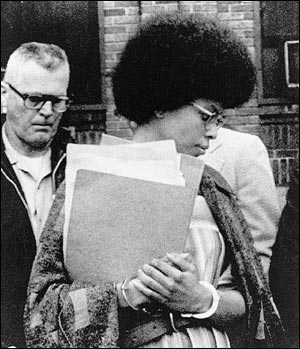
In Detroit, Mrs. Parks continued her activism on behalf of human rights. Particularly interesting to me is her work in addressing the case of Joanne Little. Mrs. Parks was one of the founders of the Joanne Little Defense Committee in Detroit. “The mission statement of the Detroit organization affirmed the right of women to defend themselves against sexual attackers (Theoharis, p.131)”

According to Jeanne Theoharis (2009):

“Parks also campaigned vigorously on behalf of Gary Tyler, a sixteen-year old black teenager who had been wrongfully convicted of killing a thirteen-year old white boy. The youngest person ever given the death penalty, Tyler was riding a school bus when it was attacked by a white mob angry that schools were being desegregated in Louisiana. Police boarded the bus and pulled Tyler off for allegedly shooting a boy outside the bus, even though no gun was found on the bus. Parks gave the keynote address at a packed meeting in Detroit in June 1976 on behalf of Tyler and worked to see his conviction overturned. However, Tyler was never freed (pp.131-132).”

I want to conclude with an anecdote that I believe encapsulates how Mrs. Parks saw and lived in the world. In September 1994, an 81 year old Rosa Parks was mugged and beaten by a black man in Detroit. Here is how Bob Herbert of the New York Times commented on the incident:

Early last week came the astonishing news that a black man had put his hands on Rosa Parks. Some moral cipher, reeking of alcohol, had invaded the home of the 81-year-old mother of the civil rights movement, had pummeled her until she gave up her money and then fled, leaving her bruised and shaken but no less stoic and dignified than in 1955 when a bus driver in Montgomery, Ala., told her to get up and give her seat to a white person and she softly replied no, there will be no more of that.

Notice even in Herbert’s column that he calls Mrs. Parks “the mother of civil rights movement,” a title she never asked for and didn’t feel she really embodied. Anyway I digress… Herbert went on to write:

We are in the dark night of the post-civil rights era. The wars against segregation have been won, but we are lost. With the violence and degradation into which so many of our people have fallen, we have disgraced the legacy of Rosa Parks.

Instead of succumbing to hopelessness and rage, Mrs. Parks decided to take a different approach. She asked that “people not read too much into the attack” and prayed for the man “and the conditions that have made him this way.” As Jeanne Theoharis writes, “To the end, Parks remained focused on changing the conditions that limited black people’s ability to flourish (p.133).” I would add that Parks was a practitioner and proponent of transformative justice.

I will end as I began with the words of the amazing Nikki Giovanni from her poem “Harvest:”

They always tell us one…person doesn’t make any difference…but it seems to me…something…should be done…In all these years…it’s strange…but maybe not…nobody asks…about my life…If I have children…why I moved to Detroit…what I think…about what we tried…to do…somehow…you want to say things…are better…somehow…they are…not in many ways…People…older people…are afraid…younger people…are too…I really don’t know…where it will end…Our people…can break…your heart…so can other…people…I just think…it makes a difference…what one person does…young people forget that…what one person does…makes a difference.

Dec 23 2010

Songs about Prison/Jail

One of the most entertaining parts of starting this blog is the requests that I receive for various posts. Interestingly I have been getting quite a few requests for information from high school and college-aged young people. About three weeks ago, a young man e-mailed to ask me for my list of favorite songs about prison or jail. I have to admit that I had never thought about this before. I don’t know that I really had any “favorite” jail or prison themed songs. But in thinking about it for the past couple of weeks, I came up with this list of songs that I like.

Sam Cooke’s Chain Gang

“That’s the sound of the men working on the chain gang…”

One of my favorite songs about anything…period.

Black Steel in the Hour of Chaos by Public Enemy

“I got a letter from the government the other day. I opened it and it said they were suckers….”

I can’t say anything about PE except that they are geniuses.

16 on Death Row by Tupac

This is a song that I have listened to 100 times and I get something new from it EVERY TIME. Tupac is another genius.

Dear mama, these cops don’t understand me
I turned to a life of crime, cause I came from a broken family
My uncle used to touch me, I never told you that
Scared what you might do, I couldn’t hold you back
I kept it deep inside, I done let it fuel my anger
I’m down for all my homies, no mercy for a stranger
The brother in my cell, is 16 as well
It’s hard to adapt, when you’re black and you’re trapped in a livin Hell
I shouldn’ta let him catch me
Instead of livin sad in jail I coulda died free and happy
And my cellmate’s raped on the norm
And passed around the dorm, you can hear his asshole gettin torn
They made me an animal
Can’t sleep, instead of countin sheep, niggaz countin cannibals
And that’s how it is in the pen
Turn old and cold, and your soul is your best friend
My mama prayed for me
Tell the Lord to make way for me, prepare any day for me (why?)
Cause when they come for me they find a struggler
To the death I take the breath from your jugular
The trick is to never lose hope
I found my buddy hangin dead from a rope, 16 on Death Row

Folsom Prison Blues by Johnny Cash

“I hear the train a-comin’…”

A classic song…

Behind Bars by Slick Rick

An amazingly creative music video…

Out on a Furlough bu WC and the MAAD Circle

I love this song, always have. The entire album is terrific.

Locked up by Akon

Honorable Mentions:

Jail House Rock by Elvis Presley

Classic…

Jail House Rap by the Fat Boys

I had to include this because it reminds me of growing up and the video is really funny to me (sorry Fat Boys).

What are your choices?

Dec 20 2010

To The Young Who Want To Die…

I am struggling with a couple of difficult cases (personal and professional) of young people who are feeling overwhelmed and hopeless. This time of year exacerbates any underlying depression or anxiety that some people experience.

As I walk down the street and see some people smiling at each other, I am also confronted by the deep and abiding sense of loneliness and stress that haunt others during the holiday season.

For many of the young people who I work with, Christmas and New Year’s are often times when they are acutely reminded of what they “lack” in their lives. It is a time to reflect on loss. Many don’t have close ties with their families anymore (if they ever did in the first place). They lack the financial resources to participate in the rampant consumerism of this season. They are sometimes locked behind bars, abandoned and unloved. They watch the world from the outside in.

I have spent most of my day writing cards to various people that I correspond with who are currently locked up. I am also writing cards to some people who I am especially worried about as Christmas approaches. For a couple of these young people, I am including a poem by native Chicagoan Gwendolyn Brooks in their card. I will share the poem called “To The Young Who Want to Die” with all of you too.

As Christmas and New Year’s approach, I hope that you will all take a moment to think about the young people all across the country who find themselves in conflict with the law as well as ALL of the people who will be spending this season locked up behind bars and offer them positive energy, compassion, and love.

Merry Christmas to all who celebrate that holiday. Prison Culture will be taking a few days off to recover from what has been a truly amazing year.

TO THE YOUNG WHO WANT TO DIE
By Gwendolyn Brooks

Sit down. Inhale. Exhale.
The gun will wait. The lake will wait.
The tall gall in the small seductive vial
will wait will wait:
will wait a week: will wait through April.
You do not have to die this certain day.
Death will abide, will pamper your postponement.
I assure you death will wait. Death has
a lot of time. Death can
attend to you tomorrow. Or next week. Death is
just down the street; is most obliging neighbor;
can meet you any moment.

You need not die today.
Stay here – through pout or pain or peskyness.
Stay here: See what the news is going to be tomorrow.

Graves grow no green that you can use.
Remember, green’s your color. You are Spring.

(Image by Chris Stain “Damned Right I’m Somebody”)

Dec 19 2010

Punishing Women: A Very Short History 1600s-1873

Last week, I wrote about the gendered nature of prisoners' resistance against the backdrop of coverage about the Georgia prisoners’ strike. I received a couple of e-mails from readers who wanted to know about some good books that address women in prison. This is an area of particular interest to me so I was happy to share some of the books that I have read and found helpful over the past 15 years.

The questions that I received lead me to believe that others might be interested in a short history of punishing women. I have previously addressed the history of capital punishment for black women here and here.

I taught a class a few years ago where I shared the story of Mary Dyer with my students. None of them had of course heard of her. However she is emblematic of how white women came to the attention of authorities in Colonial America. Most white women of that time who got in trouble with the law were singled out for religious transgressions or “crimes” of some sort. Dyer was a puritan woman who came to sympathize with Quakerism. She was convicted and banished in 1659 and chose to defy her sentence by returning to Boston. For her crime, she was hanged in 1660.

White women in New England were subjected to witchhunts when they challenged the male power structure in any way. Think about the Salem Witch Trials as an example of this. In the 1600s at least 36 New England women were executed for the crime of being a “witch.”

Early in American history, women were not subjected to long term imprisonment. Capital and corporal punishment were more common for women who committed any “crimes.” Most of these crimes revolved around sex (adultery) and religion (witchcraft). I have already addressed the types of crimes that black slave women were accused of and punished for in the colonial era and beyond in the posts that I referenced earlier.

In the 19th century, only a small number of women were imprisoned. As such, they were considered as an after-thought.

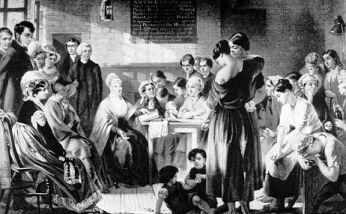
Fry Visits Newgate Prison

In 1813, British reformer Elizabeth Fry visited Newgate prison in London. She wrote that the women there had been reduced to ‘riot, licentiousness and filth.’ Fry’s concern as a Quaker woman of her time was to help the “fallen” women prisoners to become domesticated women. Fry provided clothing but also started sewing classes for prisoners (Ash, 2010).

Across the pond, at the Auburn State Prison in New York, at one time there were 70 women prisoners housed in a one-room attic (Shelden, 2010). The prison chaplain, the Reverend B.C. Smith, remarked on the conditions at Auburn after visiting: “To be a male convict would be quite tolerable; but to be a female convict, for any protracted period, would be worse than death” (Rathbone, 2005).

Cristiana Rathbone (2005) in her excellent book “A World Apart: Women, Prison, and Life Behind Bars” writes that some women at Auburn spent “as long as fourteen years locked inside (p.68). The conditions for women prisoners at Auburn were harrowing to say the least:

“So many went mad that workers in the prison began to complain about their shrieking. When a group of inspectors were sent to investigate, they found that the women’s room presented ‘a specimen of the most disgusting and appalling features of the old system of prison management at the worst period of its history. We know of no subject of legislation which, in our opinion, calls more loudly for immediate action than this.’ (Rathbone, 2010)”

Randall G. Shelden (2010) writes about how female prisoners were treated in the 19th century:

“The conditions of the confinement of women were horrible — filthy, overcrowded, and at risk of sexual abuse from male guards. Rachel Welch became pregnant at Auburn while serving a punishment in a solitary cell; she died after childbirth as the result of a flogging by a prison official earlier in her pregnancy. Her death prompted New York officials to build the Mount Pleasant Prison Annex for women on the grounds of Sing Sing in Mount Pleasant, New York in 1839. The governor of New York had recommended separate facilities in 1828, but the legislature did not approve the measure because the washing, ironing, and sewing performed by the women saved the Auburn prison system money. A corrupt administration at the Indiana State Prison used the forced labor of female inmates to provide a prostitution service for male guards (p.134).”

The guard who beat Rachel Welch so brutally was named Ebenezer Cobb. He was convicted of assault and battery and fined $25. He was allowed to keep his job.

The Mount Pleasant Prison Annex for Women unfortunately “quickly proved defective (Rathbone, p.69). According to Cristina Rathbone (2006):

“Though under the nominal supervision of a female warden, Mount Pleasant, as it was called, remained under the real control of Sing Sing’s male administrators. Thus windows in the women’s building continued to be sealed for fear of male prisoner’s morals. Punishments were corporal, frequent, and harsh; food was poor; and the lack of adequate hospital and nursery facilities meant mortality rates remained extraordinarily high.

Conditions became so bad so quickly, in fact, that less than five years after it opened — and after a riot during which women threw food at the warden and seemingly worse, ‘made the air ring with ribald songs and lusty yells’ — inspectors recommended that the place be shut down. The problem was that no one wanted the women. If nothing else, Mount Pleasant had at last freed the state’s male prisons from the ordeal of housing what one official called those ‘purveyors of moral pestilence.’ With little alternative, then, administrators were forced to keep Mount Pleasant in operation. Desperate, they hired Eliza Farnham to run it (p.69-70).”

Eliza Farnham was a remarkable woman who fought for changes in how women prisoners were treated. Ultimately, she was forced to resign in 1848 after a concerted effort to discredit her. After Farnham’s Mount Pleasant experiment, it would be years before another women’s facility would open in America. It wasn’t until 1873 when the first prison for women, the Indiana Women's Prison, opened in the U.S.

Dec 18 2010

Prison Food, Social Control, and the Reach of the PIC

This post is inspired by an article that I read yesterday (h/t solitary watch).

Apparently prisoners who “have been behaving poorly” at the Santa Cruz County Jail are treated to a “diet loaf.” From the article:

The loaf, by most accounts a highly effective measure in getting inmates to follow rules, is the only example of food being used as discipline in the correctional system, and has been challenged under the Eighth Amendment as cruel and unusual punishment in several U.S. states.

The exact origin of the idea to serve meatloaf as a punishment is unknown, however the practice goes back to at least the early ’80s, when the state of Arizona was sued over a bland meatloaf served to misbehaving inmates for five days at a time. Arizona eventually lost that case because it was applied too indiscriminately, but a version of the loaf is still served there for disciplinary purposes.

Before reading this article, I must admit that I had not thought very much about the use of food as punishment. Earlier in the week, I wrote about prison clothing as the embodiment of punishment. Yet thinking about food in a similar way had not really occurred to me until I read the article.

Many people joke about how awful prison food usually is. The very concept of “prison food” denotes something unappealing. However this case of the diet loaf is something more than just terrible prison food. It is about using something as basic as food to control behavior and people. Over the past few years, prisoners have resisted this type of control. I did not know it but there is a coterie of lawyers who are dedicated to addressing prison food.

Court challenges to the use of the loaf as punishment have come up in Vermont, Illinois, Nebraska, Pennsylvania, Washington and West Virginia, among other states. Typically its use has been upheld, although some states have placed narrow stipulations on its implementation, such as using it only in cases where the prisoner acts out with food or utensils.

“With the Eighth Amendment, the law on prison conditions is looking at a baseline, not the ideal,” said Mona Lynch, professor of criminology, law and society at UC Irvine and the director of the school’s Center in Law, Society and Culture. “It’s a fairly tough hurdle to claim something is unconstitutional…. Courts don’t necessarily look at psychological effects, they look at if it will make you physically ill. Courts traditionally look at things like: Is it too hot or too cold? Is there rampant pestilence, rampant infestation of rodents? Is nutrition below what is needed to survive and maintain adequate body weight? Is water drinkable and potable? It’s very, very basic stuff. As long as its not killing them its should be OK.”

One case brought in Oregon made it to the United States Court of Appeals, 9th Circuit, where the judges argued in their 1993 decision that “[t]he Eighth Amendment requires only that prisoners receive food that is adequate to maintain health; it need not be tasty or aesthetically appealing.”

Some states, such as New York, Massachusetts and Minnesota, have banned the loaf, and using food for punishment in general, from their prisons. The California Department of Corrections and Rehabilitation does not use it in the prisons it runs, but locally managed facilities are free to serve it, as both the Santa Cruz and Los Angeles County jails do.

I am a foodie. My favorite thing to do on a weekend is to visit a new restaurant with friends in order to sample a new cuisine. As the Christmas and New Year holidays approach, think of how central a role food will play for you and your family. Across most cultures, food plays an important role in shaping our interactions with others. For those of us privileged to live in the West, it is often about more than simple sustenance. This is the cultural context in which prisoners in the U.S. are presented with disciplinary diet loaves described as follows:

The County Jail loaf looks like it is constructed from layers of particle board, and little kernels of corn and slivers of carrot jut out from the insides when its is bisected. It does not taste bad, but rather is so dry and lacking in flavor as to be at best unappetizing and at worst better used mixed with milk to make a nice spackle. It is served with two slices of wheat bread and, instead of the typical serving of milk, a cup of water.

The article got me interested in learning more about what role food plays in prisons and jails. I came across this article by a dining critic in Chicago Magazine about Nutraloaf at the Cook County Jail.

Nutraloaf, a thick orange lump of spite with the density and taste of a dumbbell, could only be the object of Beelzebub’s culinary desires. Packed with protein, fat, carbohydrates, and 1,110 calories, Nutraloaf contains everything from carrots and cabbage to kidney beans and potatoes, plus shadowy ingredients such as “dairy blend” and “mechanically separated poultry.” You purée everything into a paste, shape it into a loaf, and bake it for 50 to 70 minutes at 375 degrees. Eat two a day and, boom, all your daily nutrients, right there. If you want the recipe, ask me.

Or just get yourself tossed into Cook County Jail, where an inmate who causes serious food-related problems buys himself a one-way ticket to Nutraloafopolis. Get caught making homemade hooch in your cell toilet? You get Nutraloaf. Hurl food at a guard or stab someone with a spork? Nutraloaf. Of the jail’s 9,000 inmates, 21 have endured the Nutraloaf program since it began in June. One begged—No! Anything but Nutraloaf!—and another went on a hunger strike. Both men, and virtually every other Nutraloafer, straightened up enough to get back to the usual diet of oatmeal and processed bologna.

This sounds thoroughly disgusting to me.

In July, I took the afternoon off from my job as Chicago magazine’s dining critic and drove to 26th and California to dine on Nutraloaf. Cook County’s stridently gray-brown cafeteria would never be mistaken for Naha, and the dish’s presentation aims less for the wow factor than the break-your-spirit factor. An employee from Aramark Correctional Services—a branch of the Philadelphia-based company that also provides fare for college dorms and NFL stadiums—presented me a Styrofoam container sagging with a blunt ginger-toned mass roughly the size of a calzone and with the appearance of a neglected fruitcake. It had nothing else in common with either.

The mushy, disturbingly uniform innards recalled the thick, pulpy aftermath of something you dissected in biology class: so intrinsically disagreeable that my throat nearly closed up reflexively. But the funny thing about Nutraloaf is the taste. It’s not awful, nor is it especially good. I kept trying to detect any individual element—carrot? egg?—and failing. Nutraloaf tastes blank, as though someone physically removed all hints of flavor. “That’s the goal,” says Mike Anderson, Aramark’s district manager. “Not to make it taste bad but to make it taste neutral.” By those standards, Nutraloaf is a culinary triumph; any recipe that renders all 13 of its ingredients completely mute is some kind of miracle.

I ate two-thirds and gave up, longing for any hint of flavor, even a bad one. That night, my stomach’s rebellion against the loaf was anything but neutral. I felt so full and lethargic that I skipped dinner and the following breakfast. And let’s just say I finally had a lot of time alone to catch up on my New Yorker reading.

Even though inmates in several states, including Illinois, have sued over Nutraloaf, alleging cruel and unusual punishment, correctional departments everywhere are introducing their own versions of the “disciplinary loaf.” None of the lawsuits have been successful. “We’re not trying to dump Tabasco sauce on their tongues or anything like that,” Dart says. “It just tastes like nothing.” In other words, they found a loophole: Nutraloaf is not cruel; it’s just unusual. Soon it may cease to be either.

The name Aramark is ubiquitous in the corrections industry. It is unsurprising to find the company in the middle of this story as well. This is one of the reasons that I always stress the “industrial” aspect of the PIC. One cannot understand the explosion of the prison population without focusing on who benefits from this phenomenon. For example, Texas prisoners spent 95 million dollars at commissaries in 2009. Most of that money was spent on food items:

* The inmates bought $18 million in “chips and snacks,” as the department categorizes them, during fiscal year 2009. They spent another $15 million on “assorted drinks,” including 3.5 million cans of Coca-Cola.

* Ramen noodles are a staple. The prison system sold a whopping 33 million 25-cent packages during that period. The cost: $8.3 million.

You can see a chart and a tree map of what else prisoners spent their money on.

Finally, please take 4 minutes to watch the following video of a prison food convention… Just another cog in the wheel of the prison industrial complex. The exhibitors are very focused on making sure that the hot dogs have no sticks:

Dec 16 2010

Dr.King’s Fear of Solitary Confinement and Bradley Manning

I have received a couple of e-mails from readers of this blog sharing information about the Bradley Manning case. Reportedly this military officer at the heart of the Wikileaks scandal is being held in solitary confinement. I have previously blogged about my belief that solitary confinement is torture.

I am a student of history. I think that we have a lot to learn from our past in the continuing struggle for social justice. I have read extensively about the life of Dr. Martin Luther King Jr. I read his autobiography while I was in high school. His experiences have a direct bearing on the current debate about solitary confinement as an instrument of torture.


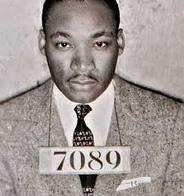
In 1963, Dr. King moved the site of the civil rights struggle to Birmingham, Alabama, a manufacturing city and one of the richest in the South. The two-month campaign was as rough and as risky as King had anticipated. Hundreds were arrested. An injunction was granted forbidding marches and demonstrations, but King decided to break it. He dressed in denims and a workshirt – his jail clothes — and led a march on Good Friday, April 12, 1963. Again he was arrested, this time placed in solitary confinement.

Historian Adam Fairclough (1995) writes about this incident in his book Martin Luther King Jr:

King dreaded solitary confinement. Separated from Abernathy after his arrest on April 12, “those were the longest, most frustrating and bewildering hours I have lived,” he remembered. “You will never know the meaning of utter darkness until you have lain in such a dungeon, knowing that sunlight is streaming overhead and still seeing only darkness below.” A gregarious man, he hated being alone. He ached to see his new daughter, born a few days earlier. He worried about the bail money. And he experienced straightforward fear. (p.77)”

It’s worth hearing about this entire episode in Dr. King’s own words. From the Autobiography of Martin Luther King, Jr:

We rode from the motel to the Zion Hill church, where the march would begin. Many hundreds of Negroes had turned out to see us and great hope grew within me as I saw those faces smiling approval as we passed. It seemed that every Birmingham police officer had been sent into the area. Leaving the church, where we were joined by the rest of our group of fifty, we started down the forbidden streets that lead to the downtown sector. It was a beautiful march We were allowed to walk farther than the police had ever permitted before. We were singing, and occasionally the singing was interspersed with bursts of applause from the sidewalks.

As we neared the downtown area, Bull Connor ordered his men to arrest us, and somebody from the police force leaned over and reminded Mr. Connor, “Mr. Connor, we ain’t got nowhere to put ’em.” Ralph (Abernathy) and I were hauled off by two muscular policemen, clutching the backs of our shirts in handfuls. All the others were promptly arrested. In jail Ralph and I were separated from everyone else and later from each other.

For more than twenty-four hours, I was held incommunicado, in solitary confinement. No one was permitted to visit me, not even my lawyers. Those were the longest, most frustrating and bewildering hours I have lived. Having no contact of any kind, I was besieged with worry. How was the movement faring? Where would Fred and the other leaders get the money to have our demonstrators released? What was happening to the morale in the Negro community?

I suffered no physical brutality at the hands of my jailers. Some of the prison personnel were surly and abusive, but that was to be expected in Southern prisons. Solitary confinement, however, was brutal enough. In the mornings the sun would rise, sending shafts of light through the window high in the narrow cell which was my home. You will never know the meaning of utter darkness until you have lain in such a dungeon, knowing that sunlight is streaming overhead and still seeing only darkness below. You might have thought I was in the grip of a fantasy brought on by worry. I did worry. But there was more to the blackness than a phenomenon conjured up by a worried mind. Whatever the cause, the fact remained that I could not see the light.

When I had left my Atlanta home some days before, my wife, Coretta, had just given birth to our fourth child. As happy as we were about the new little girl, Coretta was disappointed that her condition would not allow her to accompany me. She had been my strength and inspiration during the terror of Montgomery. She had been active in Albany, Georgia, and was preparing to go to jail with the wives of other civil rights leaders there, just before the campaign ended.

Now, not only was she confined to our home, but she was denied even the consolation of a telephone call from her husband. On the Sunday following our jailing, she decided she must do something. Remembering the call that John Kennedy had made to her when I was jailed in Georgia during the 1960 election campaign, she placed a call to the President. Within a few minutes, his brother, Attorney General Robert Kennedy, phoned back. She told him that she hay learned that I was in solitary confinement and was afraid for my safety. The attorney general promised to do everything he could to have my situation eased A few hours later President Kennedy him self called Coretta from Palm Beach, and assured her that he would look into the matter immediately. Apparently the President and his brother placed calls to officials in Birmingham; for immediately after Coretta heard from them, my jailers asked if I wanted to call he: After the President’s intervention, conditions changed considerably.

I wanted to highlight Dr. King’s experience with solitary confinement to provide more testimony about the horrific nature of being held in isolation. I wanted convey the sense of fear and hopelessness that is nothing less than actual torture. I hope that as people think about Bradley Manning and the millions of other people across the globe currently being isolated in this way, that they will think about Dr. King’s words. We must do better than this. We must reclaim our humanity.

NOTE:
Prison Culture will be on hiatus for the next couple of days as I focus on the stack of work that I have to get through. I am very grateful to all of the readers who stop by this blog and also to those who reach out to me via e-mail. Your e-mails often provide the inspiration for the posts that I write. So thank you.

Dec 16 2010

The Gendered Nature of Prisoner Resistance and the Invisibility of Women Prisoners’ Organizing

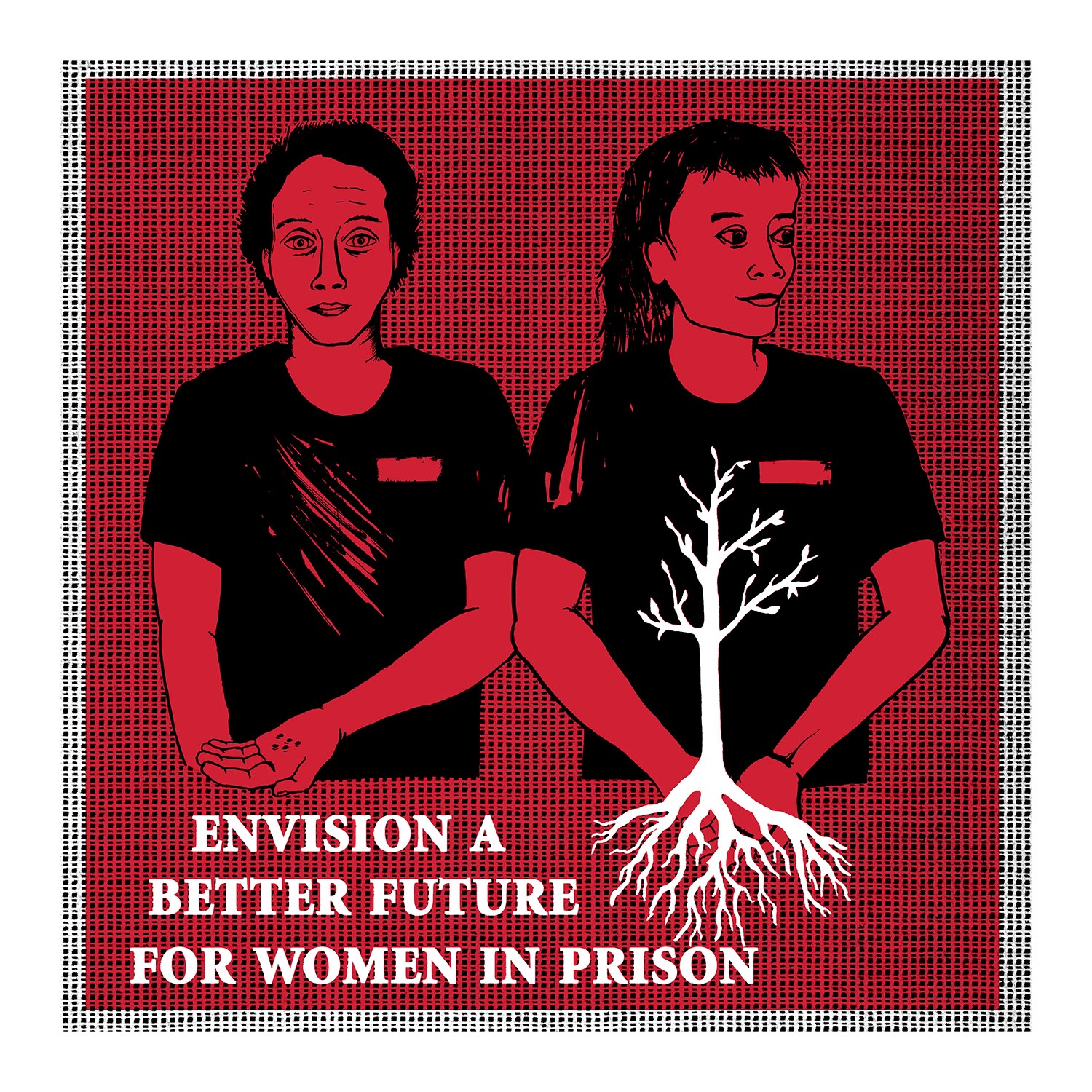
From the Just Seeds Artists' Cooperative - Critical Resistance Portfolio

In light of the Georgia prisoner protest and uprising, I thought that this would be a good time to address the gendered nature of prisoner resistance. The most well-known and well-publicized examples of prisoner resistance are decidedly male-centric. Many people, even those who are unfamiliar with prison activism, can name the Attica Rebellion, George Jackson and others. When we think of prisons and prisoners in general in the U.S., we tend to think of men and in particular men of color. Women prisoners are rendered pretty much invisible in the public imagination. And yet, there have been numerous acts of resistance by incarcerated women over the years. The reasons for the invisibility of these acts of resistance are many and I won’t address those today. Instead, I hope to answer the following question: How have women prisoners individually and collectively challenged the conditions of their incarceration?

Victoria Law, in her book Resistance Behind Bars: The Struggles of Incarcerated Women, provides the most comprehensive account of the history of women prisoners’ resistance. Law presents the case of Carol Crooks as one such example of resistance:

“In the 1970s, Carol Crooks, a prisoner at the maximum-security Bedford Hills Correctional Facility in New York, initiated a lawsuit against the prison, its warden and several staff members. She claimed that the prison’s practice of placing women in segregation without a hearing and refusal to provide 24-hour notice of charges violated their constitutional rights. On July 2, 1974, a court agreed with Crooks, issuing a preliminary injunction, prohibiting the prison from placing women in segregation without 24-hour notice and a hearing of these charges.

The next month five male guards beat Crooks and placed her in segregation. Her fellow prisoners protested by holding seven staff members hostage for two and a half hours. However the “August Rebellion” is virtually unknown today despite the fact that male state troopers and (male) guards from men’s prisons were called to suppress the uprising, resulting in 25 women being injured and 24 women being transferred to Matteeawan Complex for the Criminally Insane without the required commitment hearings.”

Assata Shakur

Women prisoners’ resistance often looks different from that of men. However there are and have been countless examples of individual and collective actions by women to challenge the conditions of their incarceration. A powerful way that women prisoners have resisted has been through their writing and creation of media. The following words by Assata Shakur provide a good example of this:

“There are no criminals here at Riker’s Island Correctional Institution for Women (New York), only victims. Most of the women (over 95 percent) are black and Puerto Rican. Many were abused children. Most have been abused by men and all have been abused by “the system.” There are no big time gangsters here, no premeditated mass murderers, no god mothers. There are no big time dope dealers, no kidnappers, no Watergate women.

There are virtually no women here charged with white color crimes like embezzling and fraud. Most of the women have drug related cases. Many are charged as accessories to crimes committed by men. The major crimes that women here are charged with are prostitution, pickpocketing, shop lifting, robbery and drugs. Women who have prostitution cases or who are doing “fine” time make up a substantial part of the short term population. The women see stealing or hustling as necessary for the survival of themselves or their children because jobs are scarce and welfare is impossible to live on.”

This is an excerpt from a longer essay by Assata Shakur published in the Black Scholar in 1978 called Women in Prison: How It Is With Us. Resistance comes in many forms. It is important for us to underscore women prisoners’ resistance too.

Dec 15 2010

The Toll It Takes: Activism and the Need for Healing Justice

This post is prompted by the recent news of Lt. Dan Choi's emotional collapse and involuntary confinement. He sent the following e-mail to a couple of his friends and asked that it be shared with others:

I wanted you to know because you are important to me and I think you can explain my situation best to those in our community who may be still interested. I was involuntarily committed to the Brockton MA Veterans Hospital Physchiatric Ward on Friday Morning after experiencing a breakdown and anxiety attack. …

I did not initially want to publicize this but I now realize it is critical for our community to know several things: veterans gay or straight carry human burdens. Activists share similar burdens, no activist should be portrayed as super human, and the failures of government and national lobbying carry consequences far beyond the careers and reputations of corporate leaders, elected officials, high powered lobbyists, or political elites.

They ruin lives. My breakdown was a result of a cumulative array of stressors but there is no doubt that the composite betrayals felt on Thursday, by elected leaders and gay organizations as well as many who have exploited my name for their marketing purposes, have added to the result. I am certain my experience is not an isolated incident within the gay veteran community.

At the same time, those who have been closest to me know that I truly appreciate their gracious help and mentorship. I am indebted to their hospitality and leadership.

A few words about why I felt it important to share these words here on this blog…

First, I want to extend my deep appreciation and my love for Lt. Choi as he recuperates. I would like him to know that his activism has not been in vain and that so many of us who do not know him still love and admire him for his perseverance and for his commitment to justice. I know that my liberation as a straight black woman is integrally tied to his liberation as a gay Asian American man. I want him to know that many, many people in this country have his back. He is not alone.

Next I want to share a few words about my own journey in activism and social change work. I have been an organizer and activist for almost my entire life. I started organizing as a teenager and have continued uninterrupted since that time. I have organized around issues of racism, sexism, economic justice, prison abolition, violence, etc… In general, I believe that we have to dismantle oppression wherever it exists. Lt. Choi’s current situation is one with which many of us can empathize. Those of us who refuse to be blind to injustice are in a position to have to act. This action takes a physical, emotional, mental, financial, and spiritual toll. We also feel ourselves to be isolated from others. We wonder if we are truly making a difference. This situation is often exacerbated by the fact that as Dr. King has written:

It may well be that the greatest tragedy of this period of social transition is not the glaring noisiness of the so-called bad people, but the appalling silence of the so-called good people.

It is true that the “appalling silence of the so-called good people” often leaves people like Dan Choi and others feeling like the hill of social justice that they are fighting to climb is even steeper than they imagine. The loud, noisy voices of the detractors and the bigots overwhelm the deafening silence of the majority who yearn for a more just society.

This is why it is so critical for organizers and activists to build communities of support for ourselves. It is why I am so excited by the emergence of the concept of healing justice.

Healing Justice asks us as organizers and activists to focus on our self-care. It is also explicitly political in nature with a focus on uprooting the internalized oppression that so negatively impacts our own movements for social justice. Organizer and activist Cara Page offers a definition of healing justice as:

a framework that identifies how we can holistically respond to and intervene on generational trauma and violence and to bring collective practices that can impact and transform the consequences of oppression on our bodies, hearts and minds.

Some friends of mine have just launched a terrific new center here in Chicago that is dedicated to advancing the concept of healing justice. You can read an interview with one of them, Tanuja Jagernauth here. Tanuja expands on the concept of healing justice:

The way I understand it, healing justice acknowledges and addresses the layers and layers of trauma and violence that we have been living with and fighting for generations. And, it asks us to bring collective practices for healing and transformation INTO our work. It recognizes that we HAVE bodies, minds, emotions, hearts, and it makes the connection that we cannot do this work of transforming society and our communities without bringing collective healing into our work. People have been asking more and more questions about “sustainability” in the work. I think that working within a healing justice framework is a way to institutionalize sustainability in our work.

So, we are asking ourselves after and before actions, for example, what was the impact on our bodies, minds, and emotions? What came up for us? What tools do we need or do we have to address what came up and the impact? And the actions themselves address trauma and violence as they are addressing systemic oppression. So the work is necessarily creating intersections between what tend to be separate issues.

I think that practitioners of healing justice are helping all of us as organizers and activists to reprioritize self-care even as we continue to dedicate ourselves to the fight for social justice and transformation.

In closing, I want to share some words from the Dalai Lama. I found these instructions for life in the new millennium and I really like them:

1. Take into account that great love and great achievements involve great risk.
2. When you lose, don’t lose the lesson.
3. Follow the three R’s: Respect for self, respect for others, responsibility for all your actions.
4. Remember that not getting what you want is sometimes a wonderful stroke of luck.
5. Learn the rules so you know how to break them properly.
6. Don’t let a little dispute injure a great friendship.
7. When you realize you’ve made a mistake, take immediate steps to correct it.
8. Spend some time alone every day.
9. Open your arms to change, but don’t let go of your values.
10. Remember that silence is sometimes the best answer.
11. Live a good, honorable life. Then when you get older and think back, you’ll be able to enjoy it a second time.
12. A loving atmosphere in your home is the foundation for your life.
13. In disagreements with loved ones, deal only with the current situation. Don’t bring up the past.
14. Share your knowledge. It’s a way to achieve immortality.
15. Be gentle with the earth.
16. Once a year, go someplace you’ve never been before.
17. Remember that the best relationship is one in which your love for each other exceeds your need for each other.
18. Judge your success by what you had to give up in order to get it.
19. Approach love and cooking with reckless abandon.

I dedicate these words to all of my fellow travelers on the road to social justice and most of all today to Lt. Dan Choi. Peace to you.