Dec 18 2011

Washing Feet and Telling Stories…

I spent my afternoon giving pedicures to incarcerated girls. I am not a Christian but I remember something about Jesus washing the feet of his disciples on the night that he was betrayed by Judas. Supposedly this act was meant to convey his humility and his abiding love for his disciples. There is something moving about the act of touching feet. Particularly if those feet belong to people who you know have experienced profound suffering.

As I massaged the feet of girl after girl, we would talk. Mostly, we spoke about how long they had been incarcerated and about when they would be released. Some girls asked whether I was a professional nail technician and when I said that I was just a volunteer, their eyes would widen and they would thank me for being there. “God bless you,” a young woman said. “No one has ever done something so nice for me.”

That is a travesty. If the nicest thing that you’ve ever had done to you in 17 years of living is a pedicure inside a prison, then your life must have been pretty awful. And that’s just it. As I listened to the young women talk about having been incarcerated for 7 months, 1 year, 24 months, I felt a heaviness settle in my heart. Prison is no place for children. It is no place for anyone really.

The heaviness of my heart co-exists with the constant (if sometimes fleeting) hope that I also carry within me. I looked around the room where I was sitting and saw my friends and some strangers also painting nails. Most importantly, I listened as they spoke with care and love to the young women who were receiving manicures and pedicures from them. The older I get, the more convinced I am that nothing worthwhile can be done in isolation. I am thankful for the community of women who I am blessed to share space with on this planet. I don’t think that women only hold up half of the sky; I think that we carry at least 3/4 of it. Time and again, when I put out the call for support it is my sisters in struggle (friends and strangers) who answer. They give of their time, they contribute money, they donate items, they organize, they nurture… and basically they just SHOW UP. As I recover from organizing these two self-care events this weekend, this is what continues to inspire me and give me fuel for the next endeavor. My profound gratitude to everyone who helped make these two days wonderful.

Dec 17 2011

Small Miracles in a Juvenile Detention Center…

People still laugh in jail… This seems a trite thing to say. However it never ceases to amaze me. I have been inside enough prisons and jails to last me a lifetime. I have always had the option to leave.

The saddest places on earth to visit are juvenile detention facilities and youth prisons. No matter how many painted murals are on the walls, no matter how many colorful works of art hang in the classrooms, they are awful places to be. When you think of the fact that young people under the age of 18 reside there, how can they be anything else?

Yet today I was reminded that people still smile in these places. I am thinking about this tonight after having spent a couple of hours at a self-care event at my local juvenile jail earlier in the day. I was speaking with a couple of the incarcerated girls and we were laughing together. I glanced over and another young woman sat stone-faced. No smile on her face.

I thought to myself: “That’s how I would be if I were locked in this place for God knows how long.” I wouldn’t be laughing. I would be sitting in a corner looking devastated. Yet for the majority of the girls today, there were smiles and there was banter. They are after all still children even if the world treats them like adults.

For a few hours this afternoon, volunteers (each an amazing woman in her own right) did yoga and aromatherapy with the girls. They offered intuitive readings and painted fingernails. They massaged the girls’ hands and spoke with them. And yes, we even laughed. Thank God for small miracles.

Dec 16 2011

Criminalizing the “Underclass” in the Public Imagination

From Chicago Magazine (1/12)

I am serving on the advisory board for an upcoming exhibition about the history of the Conservative Vice Lords in Chicago. This will be a community-based exhibition in North Lawndale and is being curated by former CVL members, other partners and the Jane Addams Hull House Museum. So I have been thinking a little about the concept of “gangs” and their connection to violence lately.

Yesterday, Davey D shared some new music videos addressing current social issues. One of these is by Lupe Fiasco titled “Double Burger with Cheese.”

Davey D had this to say about Lupe’s new video:

His newest offering is to a song called Double Burger w/ Cheese where he goes in the power of images and how they may have impacted several generations of Black Youth.. The video starts off by showing footage from the 1965 Watts Riots and then juxtaposes it with an array of videos and images from movies in the early to mid 90s that focus both on South Central LA and the crack era..

We see footage from everything like; Juice, Menace II Society, Boyz N The Hood, New Jersey Drive, Poetic Justice, Dead Presidents, South Central, Sugar Hill, New Jack City, Paid In Full, & Colors. Although many of the movies shown have strong anti-gang messages, many of us have come to romanticize and glorify the gang drama and trauma shown in them..

I want to pick up on Davey D’s last point because I think that it is a particularly interesting one. If it is true that some people of color have internalized and romanticize gang drama and trauma, what impact does this have in our communities? Is the argument that these images make young people of color more prone to turn to violence themselves? Do the images have a desensitizing effect on those who watch them?

I actually think that these images have more impact on the dominant culture than on marginalized young people. Robin D. G. Kelley (2000) has written that:

“The mainstream media have [sic] employed metaphors of war and occupation to describe America’s inner cities. The recasting of poor urban Black communities as war zones was brought to us on NBC Nightly News, Dan Rather’s special report “48 Hours: On Gang Street,” Hollywood films like Colors and Boyz N the Hood, and a massive media blitz that has been indispensable in creating and criminalizing the so-called underclass (p.24).”

In other words, according to Kelley, the very images referenced in Lupe Fiasco’s video, were critical to creating and criminalizing the underclass in the American public imagination. These images help to legitimize the militarization of police forces and to justify tough-on-crime policies. Sociologist Zygmunt Bauman correctly points to the futility and vicious cycle of increased police repression in marginalized communities: “The sole effect of extemporary police actions is to render the need of further police actions yet more pressing: police actions, so to speak, excel in reproducing their own necessity.” A far better approach would be to address the root causes of violence in marginalized communities. Yet this gets short-shrift.

When I discuss gangs with my students, I often screen a documentary titled “Crips and Bloods: Made in America.” In particular, I like to show a clip that makes explicit the connection between economic disinvestment and the rise of gangs.

Commenting on the street violence in South Central LA in the film, Tom Hayden says: “It’s been defined as a crime problem and a gang problem, but it’s really an issue of no work and dysfunctional schools.” This is basically where I come down too. However, I know that others would offer their own ideas about the root causes of gang culture. If you have the chance, I highly recommend watching the entire documentary.

Dec 15 2011

Making Prison More Bearable?

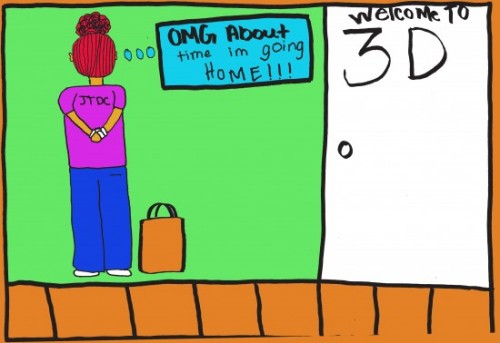
By a young woman at JTDC (August 2010)

I have spent a big chunk of this week organizing two self-care events for incarcerated girls that will take place this weekend. I am doing this as part of a great program called Girl Talk.

One might wonder what it really means to “care for oneself” while locked in a cell. If you are a prison abolitionist, as I am, you might even bristle at the idea of organizing a “self-care” day for incarcerated girls. It seems like a contradiction. Our goal as abolitionists should not be to make prisons more livable; it should not be to make prison a more bearable place. As abolitionists, we know that prisons cannot be reformed; they must be abolished.

So why have I spent countless hours organizing these two days of pampering and self-care for incarcerated girls, you might ask. It is because as my friend Erica often points out: “there are real people and real bodies behind bars.” Abolishing prisons is a long-term project. It is likely not to happen in my lifetime. In the meantime, though, millions of people pass through prisons and jails across the country every year. These people need to know that those of us on the outside care about their well-being. They need to know that they are not forgotten.

So the best that I can do, as the holiday season approaches, is to call on my friends and some volunteers to come in from the outside to offer their many talents & skills in the service of incarcerated girls. I am blessed to know people who are healers, bodywork therapists, yoga instructors, and just genuinely caring. We are planning to offer manicures, pedicures, yoga and stretching classes, reiki, chair massages for a few hours this Saturday and Sunday. Is this contributing to dismantling the prison industrial complex? No, not in a structural way. However, I believe that it helps to create relationships between those of us on the outside and those who are locked up. This connection helps to reduce isolation and makes it harder for our politicians to demagogue issues of crime. However this is not the real reason to organize such events. We should offer self-care days for incarcerated girls because they deserve them. They deserve to be reminded of their humanity when everything on the inside offers the opposite. They deserve to be touched in ways that are not about abuse but instead focus on healing and love. We all need these things. We all deserve them.

So as I head out to a local discount store to buy some mixing bowls that will hold ingredients to make homemade lip gloss, I look forward to the weekend and to connecting with the girls.

Dec 14 2011

A Tour of Police Brutality Through Hip Hop

The quintessential anthem against police brutality is NWA’s “Fuck the Police.” The lyric that always hits me is when Easy E says: “My identity by itself causes violence.” My personal favorite song describing police abuse is “War on Drugs” by 2 Black 2 Strong MMGs which came out in the early 90s. The key lyric in that song for me is “the war on drugs is a war on just us.” The main complaint of the song is that people of color and poor people’s civil rights are being violated to justify the war on drugs while “Scarface is sitting up in the White House.”

Rappers have been describing the fragile and usually antagonistic relationship between people of color and law enforcement for decades. Usually, they rely on imagery about war and characterize the police as an occupying force. I have received several e-mails over the past few months since I started this blog asking for my favorite hip hop songs that address police violence. Below is a partial list:

Batterram by Toddy Tee
I was a teenager when this song came out in the 1980s. It was prescient in its discussion of the militarization of the police.

Mayor of the city, what you’re tryin to do?
They say they voted you in in ’82
(But on the next term) huh, without no doubt
They say they gon’ vote your jack ass out
Because you musta been crazy or half-way wack
(To legalize somethin that works like that)
And the Chief of Police says he just might
(Flatten out every house he sees on sight)
Because he say the rockman is takin him for a fool
And for some damn reason it just ain’t cool
And when he drives down the street, I tell you the truth
He gets no respect, they call his force F Troop
He can’t stand it, he can’t take no more
And now he’s gonna have you all fall into the floor
And Mister Rockman, you better stop some day
Hang it up homeboy, your house will pay

MC and the MADD Circle “Behind Closed Doors”

Kid Frost “I Got Pulled Over”

KRS-One “Sound Of Da Police”
“Yeah, officer from overseer / You need a little clarity? / Check the similarity!”

Dead Prez “Police State”
FBI spyin on us through the radio antennas
And them hidden cameras in the streetlight watchin society
With no respect for the people’s right to privacy
I’ll take a slug for the cause like Huey P
.”

Cypress Hill “Pigs”

Ice Cube “Endangered Species (Tales from the Darkside)”

KRS-One “Who Will Protect Me From You?”

J Dilla “Fuck the Police”

“Now tell me who protects me from you? / I got people that buy TECs and weed from you.”

Ice-T “Escape the Killing Fields”

2 Black 2 Strong “Iceman Cometh”

Jasiri X “Oscar Grant”

Metro P “Price Tag”

Fly Benzo “War on Terror”

B. Dolan et al. “Film the Police”

Dec 14 2011

Re-Considering Prisoners as “Agents” not “Casualties” of the System

I heard Angela Davis give a presentation at a conference in October. She made many salient points in her critique of mass incarceration but one point stood out in particular. She mentioned that “we talk about prisoners as though they were only the recipients of our charity as opposed to agents in their own rights.” I could not agree more with her characterization.

The histories that have been written about prisoners often treat them merely as “casualties of the system.” It is worthwhile, I believe, to reclaim some of the histories of resistance by prisoners. We just commemorated the 40th anniversary of the Attica prison rebellion in September. I spent a chunk of my summer re-reading a lot of books about Attica and produced (with contributions from some friends) a primer and zine about the uprising. It was my small way of trying to re-insert the idea of prisoner agency and resistance within the stories that we tell about the carceral state. As part of my research about Attica, I came across many incidents of prisoner resistance. One of these took place over the course of three months in 1973 “when prisoners ran walpole.”

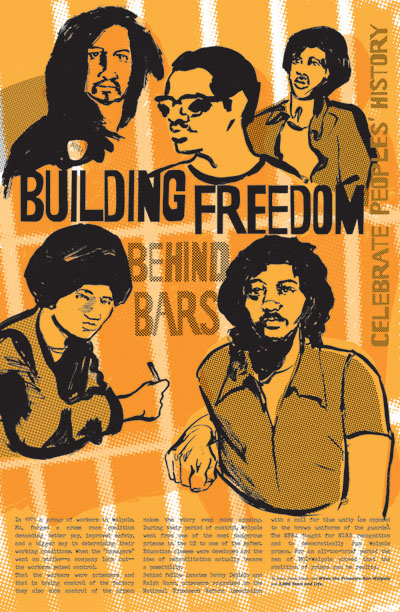
by Alexander Dwinell & Sanya Hyland

In March of 1973, guards decided to walk off the job at Walpole State Prison in Massachusetts. For three months, Walpole was run by prisoners who moved “freely throughout the prison, establishing programs, and democratically determining policy and the structure of their day-to-day lives (p.12).” The prisoners at Walpole were able to successfully self-govern for over three months because they already had the experience of organizing. In 1971, prisoners had established a chapter of the National Prisoner Reform Association (NPRA) at Walpole.

This historical moment is recounted by Jamie Bissonette and her co-authors in their book “When The Prisoners Ran Walpole.” The authors describe the mission and goals of the NPRA:

The NPRA defined prisoners as workers. Using a labor-organizing model, the NPRA intended to form chapters in prisons throughout the country. The goal of the association was to organize prisoners into labor unions or collective-bargaining units. Prisoners’ unions could then act as a counterbalance to the notoriously powerful guards’ unions in negotiations with prison authorities about how the prisons were run. Prisoners throughout the country began to look at prisoners’ unions as a catalyst for prison reform. But only at MCI Walpole did the NPRA become a recognized bargaining unit, democratically elected by prisoners — the workers — to lead their struggle for reform within the prison.

The NPRA at Walpole remained the recognized representative of the prisoners for two years, and sought State Labor Relations Commission certification along the way. Even after its petition for recognition as a labor union was denied, the NPRA continued to exercise its power as the prisoners’ elected representative for an additional two years (p.11-12).”

For those who are loathe to read books, the history at Walpole is also dramatized in a good documentary titled: “Three Thousand Years and Life.” A couple of clips from the film are below and the whole documentary can be watched on YouTube:

At this historical moment when the Occupy Movement is nascent, it is worth remembering that prisoners are still a marginalized part of the 99%. We need to incorporate the concerns and the needs of prisoners in our calls for economic justice and transformation. The history of prisoner resistance at Walpole points the way.

Dec 11 2011

In Alabama, First They Came For Blacks, Then Immigrants, Now Prisoners…

I write a lot about the history of the convict leasing system on this blog. I don’t think we can properly consider U.S.labor, racial, or penal history without a thorough understanding of that pernicious system.

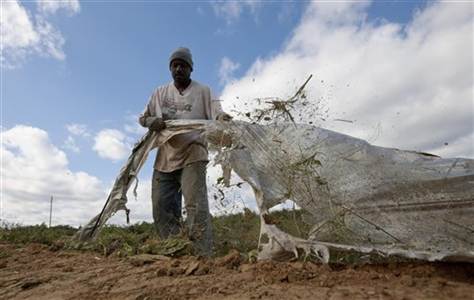
After chasing many immigrants off resulting in tons of agriculture jobs being unfilled, the state of Alabama has a bright new/old idea. The state is considering using prisoners to fill the void left by the flight of immigrant labor:

“Agriculture officials in Alabama are looking into using prisoners to fill a labor shortage that the agency blames on the state’s controversial new law targeting undocumented immigrants.

The Alabama Department of Agriculture and Industries is meeting with south Alabama farmers and businesses in Mobile on Tuesday. Deputy commissioner Brett Hall says the agenda includes a presentation on whether work-release inmates could help fill jobs once held by immigrants.

Hall says planting season is coming up, and some growers fear most of their workers are gone. The agriculture agency says the new law has caused a chronic labor shortage on Alabama farms.”

Anyone who knows anything about Alabama’s sordid history of convict leasing should not be surprised that the state would turn to prisoners to do the back-breaking work that others will not do.

Mary Ellen Curtin’s excellent study about black prisoners in late 19th century Alabama illuminates episodes in American history that are pretty much unknown to us. Curtin contends that Alabama Democrats in the late 1800s turned to the convict lease system to address the state’s financial troubles. Coal companies were happy to make use of this convict labor but they were not the primary force pushing the practice. Curtin suggests that the lease system in Alabama left a lasting legacy:

In the words of Populist critic William H. Skaggs, the lease was ‘vile,’ ‘pernicious,’ ‘excrable,’ ‘venal,’ and ‘brutal.’ It perpetuated ‘despotism’ by binding Alabama’s mineral interests to its political elite. It held the legal system hostage to the crass self-interest of county sheriffs, who collected fees for every prisoner they arrested, and politicians, who refused to forgo revenue paid for in human suffering. It linked race and criminality in a new and powerful way. It generated peonage by forcing convicted individuals to escape prison by allowing a local white landowner to pay their fine and thus control their labor. The lease shaped Alabama’s political economy and contributed to the legalized repression of African Americans during the age of segregation. Government officials and corporations willingly and knowingly traded prisoner’s lives for profit and revenue (p.10).”

Now that the state of Alabama has run off the undocumented workers who were willing to take on back-breaking agricultural work, they are planning to return to their tried and true ways of exploiting prisoners. We should remember Alabama’s history and legacy of convict leasing and we should strongly oppose a reinvented version of that system. We should reject trading the lives of undocumented immigrants for the lives of prisoners.

Dec 11 2011

Sunday Musical Interlude: It’s A Hard Life Wherever You Go

This is one of my all-time favorites from the incomparable Nanci Griffith.

Dec 10 2011

Closing the Cook County Juvenile Temporary Detention Center…

Last week, I wrote about the efforts of a group of youth who are organizing to close the Cook County Juvenile Temporary Detention Center.

For the first time in memory, we have a real chance in Cook County, under the leadership of Board President Toni Preckwinkle, to potentially end juvenile detention as we know it. Ms. Preckwinkle is committed to halving the number of youth at JTDC within two years and hopes to eventually move to a system of secure community-based alternatives to detention. This is an incredibly positive development. However, it is important that the requisite amount of resources be redirected into communities in order to address the needs of youth in conflict with the law.

Ms. Preckwinkle recently toured the JTDC and a report about this appeared on WGN-News (VIDEO). I highly recommend the story.

Preckwinkle is quoted in a Chicago Tribune article published on Friday as saying after touring JTDC on Thursday: “I think we need to do everything we can to empty this building out.” The article goes on to expand on the solutions that she offers:

That means putting children in group homes, monitored home confinement and other community-based programs where advocates say youths have better opportunities for counseling, job training and other life-skill instruction.

“What we need to do is have a number of smaller, secure safe homes for kids scattered around the county rather than having one huge juvenile prison,” Preckwinkle told the Tribune. “It’s a prison for kids. It’s an inappropriate setting for almost everybody who’s here.”

I agree with Ms. Preckwinkle, prison is “no place for kids.”

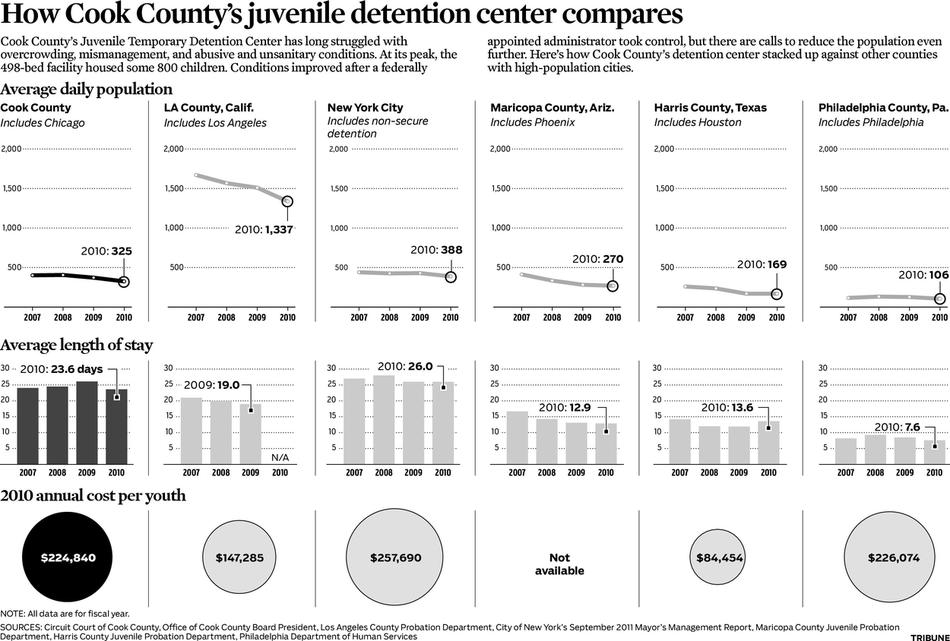
Click HERE to see a larger version of this infographic.

Click HERE for a fact sheet that I created about the JTDC relying on 2010 data.

Dec 09 2011

A Faustian Bargain: Mumia Abu Jamal and Life Without Parole…

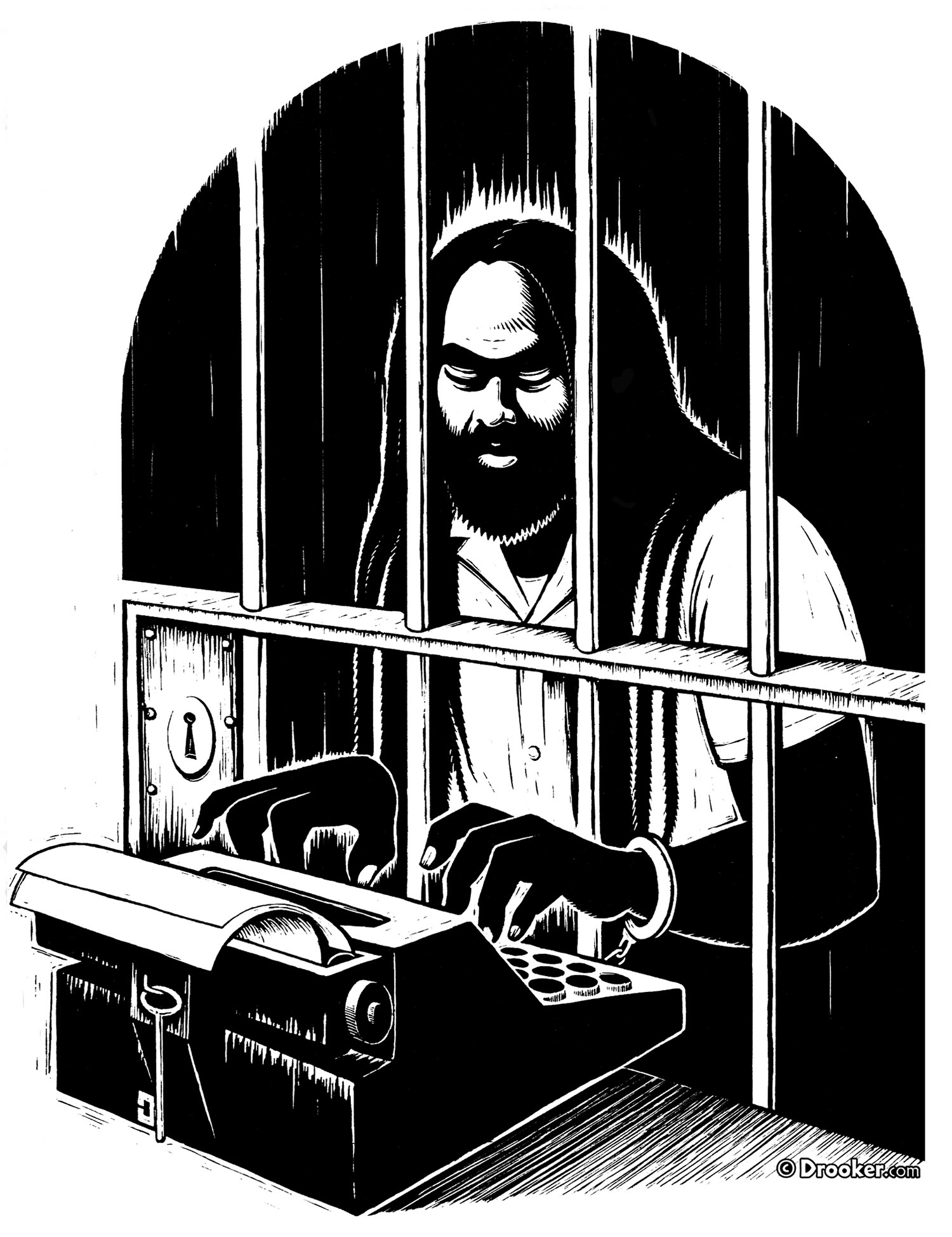
by Eric Drooker

Yesterday came the news that the prosecution has decided to drop the death penalty against Mumia Abu Jamal. For many who have been working on his case for decades, I know that there is a mixture of relief mingled with sadness. After all, he will now have to spend life in prison without the possibility of parole. In my opinion, this is still a capital sentence and the state has once again prevailed in sanctioning death.

I am not an expert in Mumia Abu Jamal’s case. From the limited amount that I do know, there seems to be reasonable doubt about his guilt. My purpose here is not to litigate the facts of his case. Instead, I want to suggest that the sentence of life without the possibility of parole is more insidious than and as detrimental as capital punishment. This may strike some readers as an absurd assertion but bear with me as I explain my rationale.

The following is a paragraph from a Washington Post article about the prosecution’s decision in the Abu Jamal case:

While the decision follows decades of protests and public appeals, Wednesday’s decision appears not to be a result of activist or lawyer action. Instead, the widow of slain officer Daniel Faulkner has reportedly persuaded prosecutors to stop pushing for the death penalty, saying she was tired of the constant reminders of her husband’s death.

So in order to move on with her life, Ms. Faulkner convinced prosecutors to drop the death penalty against Mumia Abu Jamal. The Post article provides more context for her decision:

Maureen Faulkner waited nearly 30 years for her husband’s murderer to be executed. But following a seemingly endless cycle of legal appeals, she said she realized it would never happen.

On Wednesday, Faulkner gave her blessing to the decision by Philadelphia District Attorney Seth Williams to stop pursuing the death penalty for Mumia Abu-Jamal, whose claim that he was the victim of a racist legal system made him an international cause celebre.

“My family and I have endured a three-decade ordeal at the hands of Mumia Abu-Jamal, his attorneys and his supporters, who in many cases never even took the time to educate themselves about the case before lending their names, giving their support and advocating for his freedom,” Maureen Faulkner said. “All of this has taken an unimaginable physical, emotional and financial toll on each of us.”

Essentially after 30 years of legal challenges, Ms. Faulkner became convinced that Abu Jamal would never be executed so she has seemingly reconciled herself to the fact that he would instead spend the rest of his life in prison. I have the deepest sympathy for this woman who lost her husband to an unspeakable act of violence. It is awful. Full stop.

I often hear friends of mine who oppose the death penalty argue that prisoners “would suffer more” if they had to spend the rest of their days locked in cells. This argument is used as a way to entice people to support the abolishment of the death penalty which is described as barbaric, capricious, and unjust. The truth is that for me, it is more barbaric to cage people until they die in prison. This is usually an excruciatingly slow and soul-killing way to die. Life without parole is, in my opinion, a de facto death sentence. What is the practical difference between being executed in prison and being condemned to spending the rest of your days in a cage? It appears that Mrs. Faulkner has come to the ultimate decision (after all of these years) that life in prison is basically as good as a death sentence. It has the added benefit of keeping the case out of the headlines for the foreseable future.

In countless cases (less publicized than Abu Jamal’s), prisoners who are sentenced to life without parole do not have international campaigns launched on their behalf. I venture to say that if Mumia Abu Jamal had been sentenced to life without parole in the first place as opposed to death, he might not have gained the international notoriety that he has. Being spared from state-sanctioned murder has a way of diminishing the fervor of crusaders and activists. Usually those sentenced to life without parole (even unjustly) will be forgotten as they are relegated to the unseen caverns of our prisons. Therein lies the horror.