Apr 13 2011

This is all kinds of wrong…A prison-themed restaurant?

On the heels of reading an article about the fact that prisons in Massachusetts were donated “expired” school lunches, I came across this video by accident yesterday.

You have to see it to believe it. The Japanese have launched “Alcatraz Restaurant” complete with staged “jail breaks” and your own handcuffs.

I have previously written about the problematic nature of prison tourism. But this, well… It’s a whole other thing. The “Alcatraz Restaurant” even offers lethal injection drinks. I am NOT kidding!

Apr 12 2011

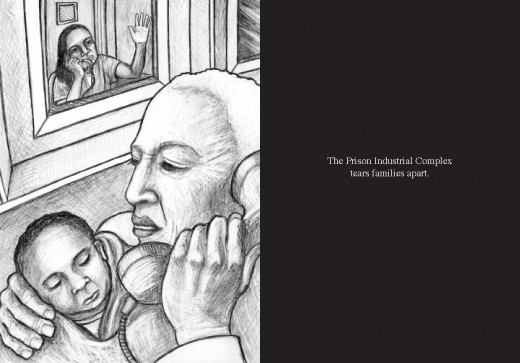
Families in Touch: Reconnecting Families of the Incarcerated By Providing Rides to Prison…

By Billy Dee

I received a letter from a grandmother on the west side of Chicago last April. I will call her, Mrs. G since she asked for confidentiality. I spoke with her over the phone and she gave me permission to share her story though she asked that I not identify her family’s name for reasons that may become clearer later.

Anyway Mrs. G had heard about my organization’s work from a neighbor of hers in Austin, a community on the West side of Chicago. I don’t know about how the neighbor heard about us. Mrs. G was writing to ask for our help. Her grandson, who was 15, had committed a violent crime at 13 and he is currently locked up in one of the juvenile prisons in the state. Mrs. G is raising five of her grand kids ranging in age from 4 to 16. She informed me that she is a diabetic and is insulin dependant. Again the relevance of this will soon be clear.

Mrs. G has little social support, particularly since her grandson’s crime. His crime has alienated her even more from her neighbors. She is living on disability and has only a little financial support in the form of food stamps and medical insurance for her grand kids.

She had heard that her grandson was not doing well in prison. Mrs. G has no phone service and cannot easily make any calls to her grandson. He also cannot easily reach out to her. Over the previous 19 months, she had not talked to him at all. She did receive some letters from him but she struggles with literacy and has to dictate her response to one of her grand kids. She really wanted to visit her grandson however she did not have the funds or means of transportation to do so. She was reaching out to me to ask if my organization could either provide her with transportation to the prison or if we could provide any funds so that she could visit her grandson.

Once I received the letter, I got right back to her through her friend and told her that while this is not our regular practice, I would be happy to provide her with the $100 that it would take for her to cover her expenses to go to the prison to visit her grandson.

She got back to me in early June to say that had visited her grandson. She was grateful for our help and said that her grandson was relieved to know that he had not been forsaken or forgotten by his family. For the moment, this was a happy ending but it got me thinking about the hundreds of Mrs. G’s that have to exist just in the Chicagoland area.

What could be done to more systemically address this issue of family visits to youth prisons in Illinois? I know that my tiny, resource-strapped organization certainly can’t afford to provide $100 to each family who might be in a similar situation as Mrs. G was. And yet $100 seems to be such a small sum for the temporary peace of mind that Mrs. G and her grandson now had. I have to admit that I had not really given this issue much thought before my interaction with Mrs. G. But since her letter, I have not been able to stop thinking of the many families who want to maintain contact with prisoners but who are faced with many barriers and obstacles. This has policy consequences especially for issues of successful prisoner “re-entry”. It also has profound moral and social consequences.

Before jumping into a full fledged advocacy campaign on this matter though, I would like to know more about the process of family visits in Illinois youth prisons. I spent a little time last May doing some very preliminary investigation about prisoner family visits in the research literature. Data suggests that more than half of all prisoners do not receive in-person visits from family members (Mumola, 2000). There are a variety of explanations for why families may not visit, including distance of the prison, financial burdens, problems with the prison bureaucracy, and strained or severed relationships with the prisoner (Hairston, 2003). I wrote about some of what I found on this blog back in July of last year.

One of the interns who is working with me this year has taken on the difficult task of creating a volunteer-led and volunteer-run effort to provide free transportation to family members who have youth in Illinois prisons. We are launching this initiative this week with an orientation meeting for interested volunteers who would like to use their own cars to provide rides for our pilot program. My intern, Tobin, has spent several months working with IYC-Warrenville (our youth prison that houses young women in IL) to establish this new initiative. We will start small and will build from there depending on the response that we get from volunteers and from the families who take advantage of the free rides.

I am often asked by people how they can help to address the issues facing youth in conflict with the law. Well, the Families in Touch initiative is an easy and non-time intensive way for Chicagoans to support incarcerated youth and their families.

For information about the upcoming new volunteer orientation meeting taking place this Saturday April 16th, click here. Even if you cannot make this meeting on Saturday, you can still volunteer. Contact Tobin at [email protected].

Apr 11 2011

Searching for Kim Jones a.k.a. Lil’ Kim (continued)…

As promised here are my reflections from the “Searching for Kim Jones” workshop that I ran with Francesca in 2007. I am planning to replicate a similar process this Fall with more of a focus on the criminalization of black girls. I purposely chose this photo of Lil’ Kim to accompany this post because it underscores her complicated role in the culture and our own complicated responses to her.

January 21, 2008

In the fall of 2007, thirteen of us spent seven weeks together sharing what it means to be a Black woman in the 21st century. We were of varied ages from 11 to 40. We were from New York City, Chicago, Nigeria and Haiti. We were in middle and high school, college and graduate school. Initially the only thing that we had in common was our brown skin and the fact that we were women. Ultimately we became students and teachers all of us. We taught each other to share honestly and learned even more as a result. We bonded and became a small community of empowered women and girls.

Over the weeks, we shared personal reflections about our struggles with learning to love our looks in a culture that is hostile to us and sometimes makes us feel invisible. We articulated our desire to be perceived for who we really were rather than as caricatures – finger snapping, head rolling, loud, bad attitude women.

We read poetry together, watched documentaries, deconstructed music videos. We wrote about ourselves – our feelings about what the mirror said about us, what it is like to be a black girl for those who aren’t, we spoke of ourselves affirmatively to say “I AM…”

Our time together was short and we asked a lot of questions of each other and of ourselves. We asked about how Black women are perceived in society and whether this view coincides with our own definitions. We found that society’s view of us in fact does NOT accurately portray our lived experiences. Society’s image doesn’t leave room for us to be vulnerable as Black women, to cry and show emotions besides anger. It confines us like some kind of prison of expectations where we are forced to wear masks and heavy armor or risk being destroyed.

In spite of the historical and societal assaults on our persons, we found that we still maintained our sense of integrity and confidence. Some of us felt comfortable with our bodies. Others not so much. Some of us consistently mentioned our beauty – on the inside and out. Others struggled with feeling unattractive. Some of us were proud of our brown skin. Others embraced our hair in dreadlocks, braids, or straight. Some of us declared boldly that we are NOT our hair. One thing was consistent though — We are NOT what society portrays. The words that we used to describe ourselves included nice, funny, pretty, kind, …

We conjured the spirit of Sara Baartman. We elevated her from the grave of history and shone a light. Through Sara’s story, we discussed how it feels to be on “display.” It is a contradiction – our bodies put out for all to see and yet Black women simultaneously invisible. We called out to the Sara Baartmans of today, the young Black women who make their living dancing in music videos. Young women who seem so plastic, unreal and yet we know they are us too. We puzzled over the thread that connects Sara Baartman and Karin Steffans who calls herself a Video Vixen. What would Sara say if she could speak to Karin from the grave? Would she judge her or be proud? Would she be loving or mean? We believe that she would choose love.

We talked about Lil’ Kim. After all, the title of our workshop is Searching for Kim Jones, Finding Ourselves. One of our members made the point that while we used Lil’ Kim as a way for us to come together to talk, we in fact ended up talking very little about her life and image. We spent more time in self-discovery and self-excavation. Lil’ Kim provided us with a mirror to better see ourselves. Yet, we were conflicted about Kim’s significance to our lives as Black women. Some of us saw her as primarily “nasty” and others acknowledged our fascination with her as an icon of American culture. We felt sadness and confusion. We were hurt and sometimes empowered. We are seeking understanding. Who is Lil’ Kim? Who are we?

Ultimately this time together allowed us to reflect on womanhood, our personal and family histories, our bodies, our appearances, and more. In our second week together, we collaborated to develop a poem called “Woman.” Each of us contributed a line to the final product. We expressed in this collective poem what ended up being at the core of our workshop.

Woman is the basic life giver to me.
Woman is powerful.
Woman is dynamic.
Woman is distinct.
Woman is a catalyst for newfound beginnings.
Woman is brave.
Woman is a strong person.
Woman is a force of nature.
Woman is a loving soul who physically and emotionally cares for others.
Woman is all beautiful, all sense, and strong.
Woman is a gap-toothed smile, a belly laugh and all things generous.
Woman is the creator/the originator/the dominator.
Woman is the essence of everything!!

A wonderful poet named Jessica Care Moore has written a book titled “the words don’t fit in my mouth.” That is a powerful and overwhelming image. So often we as Black women, young and old, find ourselves with so much to say but with no place to say it. Our voices are so often silenced. Sometimes we try to pierce the silence with a loud, booming voice. We have so much to say and to borrow from Jessica, “the words simply don’t fit in our mouths.” We want to speak. We will speak.

This is just the beginning of our project together. We will reconvene in the spring and incorporate the voices of more young Black women and girls in our conversation. This is an ongoing dialogue; One that we hope to continue with others across Chicago, the U.S., and even the world. We will go out and collect the stories of other young Black women and then we will speak to fill the silence. We will speak…. We MUST speak so that the words will fit in all Black women’s mouths.

Apr 10 2011

Searching for Kim Jones (a.k.a. Lil’Kim): Black Girls Behind Bars…

[cross-posted at the Chicago Taskforce on Violence against Girl's Blog]

Recently an article by Rachel Pfeffer titled “In Post-Racial America, Prisons Feast on Black Girls” has been making the rounds on social media. I am glad to see the attention that it has garnered. I hope that this attention translates to action. The article opens with these words:

African American girls and young women have become the fastest growing population of incarcerated young people in the country. Efforts to stop mass incarceration focused on black girls are almost nonexistant in government policy, the media, foundations and academia.

A recent study by Moore and Padavic points to how black girls are discriminated against in the juvenile justice system:

As expected, compared to White girls, Black girls received more severe dispositions even after taking into account the seriousness of the offense, prior records, and age. This finding provides evidence of Black-White racial bias in the juvenile justice system. Hispanic girls, in contrast, were not disadvantaged vis-a-vis White girls.”

The authors acknowledge that their finding that Hispanic girls do not receive harsher punishment than their white peers is surprising in light of previous research that has pointed to Hispanic girls’ disadvantage (Miller, 1994). Other studies have found that 7 out of 10 cases involving White girls are dismissed, compared with only 3 of every 10 cases involving Black girls (Girls Incorporated, 2007, p.3).

Suffice it to say, Moore and Padavic’s research does confirm what we already knew anecdotally: black girls are discriminated against in the juvenile justice system. African American girls bear the brunt of multiple systems of oppression – racism, sexism, and poverty — and among girls, are at greatest risk of entering the juvenile justice system, as well as being treated more harshly once in the system.

I have worked with black girls for over 20 years now. I worked in grassroots organizations dedicated to addressing their needs, I have been on the board of several nonprofits that have focused on girls’ issues, and I have been an adult ally for over 8 years to a youth-led organization of mostly black girls here in Chicago.

A few years ago, I developed and ran a workshop for young black girls using Lil’ Kim as a window for opening up discussion about their own identities and inner lives. I ran this program for several weeks with my friend Francesca. It held some promise and I hope to return to it in the near future. This time, I want to include more discussion about the criminalization of black girls in the workshop. I also want to make the literacy improvement aspect of the workshop more explicit. In other words, a large part of the new workshop will be devoted to us reading together.

Sociologist (actually social psychologist) Charles Cooley invented the concept of the “looking glass self” and that idea is what animates my interest in Lil’ Kim. Cooley emphasized that other people represent the mirror or looking glass through which we perceive ourselves. This idea has significant implications for young Black women who seem to be particularly despised within the culture. In fact, I once read an interview conducted of R & B singer Jill Scott where she spoke about the general disregard with which Black women are treated in American society. She is quoted in Essence Magazine (August 2004) as saying: “Black women. We are so out of style…the problem is, it doesn’t seem like anybody’s loving sisters anymore. What happened?.”

A 2004 study by MEE productions found that:

Black females are dissed by almost everyone. Young African American females hold little status within their communities, reflected in the name-calling and devaluing of young girls. Not only do males not trust females, but overwhelmingly, girls reported that they do not even trust each other.

The sense that nobody loves Black women and young black ones in particular is pervasive. It is not surprising then to find that black girls who are considered disposable by everyone find themselves increasingly criminalized in the culture.

Tomorrow, I will post some reflections from the Lil’ Kim Workshop that Francesca and I facilitated in 2007. As I refine that workshop and hopefully run it again this Fall, I hope to continue to blog about it here. I welcome any ideas that readers want to share for the workshop curriculum.

Note: Here is a more involved definition of the Looking Glass Self concept that I referenced above:

Looking Glass Self- the process of developing a self-image on the basis of the messages we get from others, as we understand them. There are three components to the looking glass self: 1.We imagine how we appear to others; 2. We imagine what their judgment of that appearance must be; 3. We develop some self-feeling, such as pride or mortification, as a result of our imagining others’ judgment.

Apr 08 2011

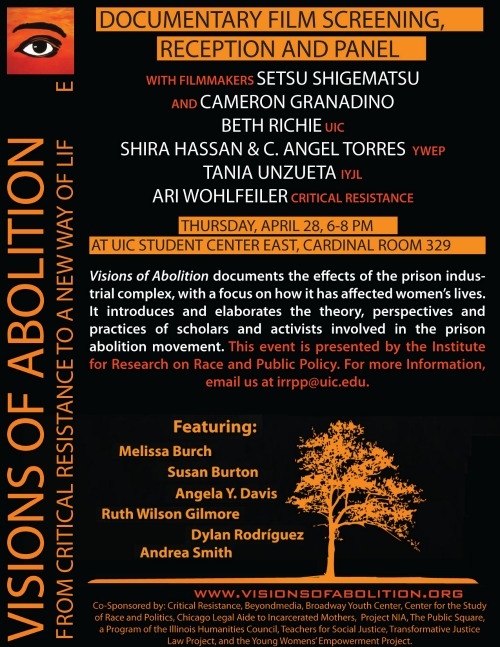
Free Screening and Panel Discussion: Visions of Abolition, April 28

I have written quite a bit about the concept and idea of prison abolition on this blog. I still get many questions from people about it. You can read some of my previous posts about abolition here, here, and here.

For those of you who live in Chicago, you will be interested to attend a screening of a new film by Critical Resistance called “Visions of Abolition.”

The film will be followed by a terrific panel discussion.

Thursday, April 28 · 6:00pm – 9:00pm
UIC Student Center East, Cardinal Room 329
740 S. Halsted St. #10
Chicago, IL

*Visions of Abolition* documents the history and effects of the prison industrial complex with a particular gender lens. Please join us for a reception, screening, and a special discussion including:

*Director and Producer Setsu Shigematsu
*Beth Richie, UIC
*Shira Hassan and C Angel Torres, Young Women’s Empowerment Project
*Tania Unzueta, Immigrant Youth Justice League
*Ari Wohlfeiler, Critical Resistance

for more info email [email protected]

Apr 08 2011

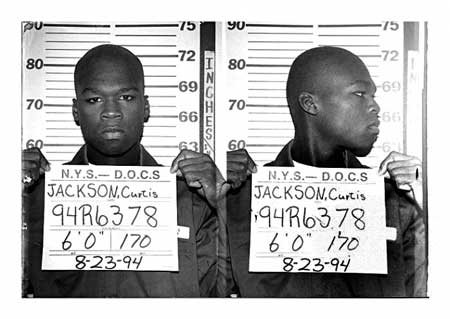
Why Exactly Is This The Photo of the Day?

I am trying something new today. Play along with me. I would like readers of this blog to please offer your answers to the following question:

Why is the Sky Valley Chronicle publishing 50 cent’s mug shot as its “photo of the day?”

The photo appears in the paper’s “breaking news” section. Sky Valley is a constellation of small overwhelmingly white towns in Washington State.

The best answers to the question will receive one of the following prizes and will also be posted on the blog:
1. a new hardcover copy of the book Texas Tough: The Rise of America's Prison Empire
2. a copy of the chapbook “Until I Am Free: Voices of Youth Sentenced to Life Without Parole” Edited by Kevin Coval.
3. a new hardcover copy of Hard Time Blues: How Politics Built A Prison Nation by Sasha Abramsky
4. A new hardcover copy of I'll Fly Away: Further Testimonies From the Women of York Prison by Wally Lamb
5. A new hardcover copy of The Other Wes Moore: One Name, Two Fates by Wes Moore

Note: My blogging will be sporadic over the next couple of weeks. I have hit another crazy busy stretch with a couple of court cases coming up, several events, and a lot of grantwriting. I will post when I can during this period.

Apr 07 2011

The Unbearable Awfulness of Days Like Today…

by Billy Dee

Today was a bad day. It didn’t start off that way. It started with a circle of high school students who were funny, passionate, and eager to learn about my organization’s work. By 3 p.m., I was sitting in a courtroom listening to a judge hand down a 5 year prison sentence to a young man who I know. I have to admit that I just felt numb. Over the course of a day, I witnessed the promise and the pitfalls of youth.

I can’t write about the case of the young man who was sentenced today. I don’t have his permission and I just don’t want to. This is a post instead about the struggle to hold on to a sense of outrage and indignation in the face of routine injustice. I want those of you who are reading these words today to know that I am really emotionally spent. So I don’t know if what I am writing now will be true for me tomorrow. But that is OK. It is true for me today and that is good enough.

I hate going to court. I really do. I am always uncomfortable there. The judge at the front of the room, the family members and other assorted observers in the back…. The adversarial system in full bloom. Listening to the prosecutors, always so certain that they have the “truth” on their side. Why are prosecutors always so smug sounding?

By Josh MacPhee

Today again, I sat there silently. I was holding this young man’s little sister’s hand. Her hands were freezing. Fear can do that to you. We just stared ahead. The judge issued his decree. His sister bowed her head. She was crying. I was not. My eyes were dry. I realized that I was squeezing this young woman’s hand too tightly. She said nothing. I let up on my grip. What was going through my head? I am not sure. Maybe I was thinking that I would be back here again next Wednesday.

I have nothing helpful to say to the young man’s sister. I hug her. I tell her that we will appeal. I have no idea if the young man even wants to appeal. Why am I saying that we will appeal? What the hell am I saying? The words don’t match my feelings. I am just numb.

I come straight home. I don’t want to talk to anyone. I sit silently and the minutes pass. I look up and an hour has passed. What am I thinking? I don’t know. I need to eat something. I haven’t eaten anything. I have to respond to e-mails. There are too many to count today. I had turned off my phone. It is still off. I decide to keep it off for tonight. I need a break.

I turn on my computer. I get on this blog and I am typing. Not sure any of this is making much sense. I don’t really care. Something keeps getting repeated in my brain. It’s on a constant loop. “Somebody Better Say Something.” “Somebody Better Say Something.” Why am I thinking about the spoken word piece by Mama Brenda right now. “Somebody Better Say Something.” This is repeated over and over again in my mind.

SOME BODY BETTER SAY SOMETHING about the fact that our young are being fed to the lions every second, every minute, every hour, every day.

SOME BODY BETTER SAY SOMETHING about the numbness that threatens to consume so many of us who can’t seem to absorb the magnitude of the systemic violence that is being perpetrated against certain people in this country.

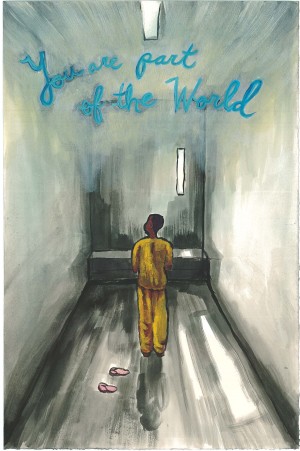
SOME BODY BETTER SAY SOMETHING about the unbearable awfulness and inhumanity of committing people to little concrete boxes where they are expected to remain out of sight and out of mind.

SOME BODY BETTER SAY SOMETHING. Unfortunately, today, that somebody can’t be me.

Apr 06 2011

“Joe’s a Good Boy Underneath:” Framing Juvenile Delinquency in the 1940s

If you are interested in how people have historically viewed the causes of “delinquency” among American youth, then I have just the film for you. I came across "That Boy Joe" a couple of years ago when I was looking for information about the history of juvenile justice in the U.S. The film is basically an infomercial that was produced by the National Woman's Christian Temperance Union in 1944. It is unintentionally hilarious but also very instructive about some of the reasons that were advanced in the mid-twentieth century to explain youth crime.

Joe is a teenager who is facing criminal charges for stealing cigarettes while intoxicated. He is arrested while running away from the scene of the crime. He is transferred to juvenile court where he appears in front of a grandfatherly judge. Judge Dunn asks Joe to explain his actions and then proceeds to moralize about the young man’s misbehavior. Judge Dunn offers several possible reasons for Joe’s delinquency including permissive parents, lack of religious instruction, failure to be involved in the Boy Scouts but most importantly the use of alcohol. You will not soon forget that this was a film produced by the temperance movement because the viewer is bludgeoned with the “scientific” evidence about the evils of alcohol.

As I mentioned earlier, this film is unintentionally funny in 2011. I wonder if youth who were made to watch it in the 1940s had a same reaction. Some of the gems in the film include the following quotes by Judge Dunn:

“In all of my experience, I have had no boy scouts or girl scouts in my court.”

“I agree with J. Edgar Hoover that all children need to learn the golden rule.” Any sentence that starts with I agree with J. Edgar Hoover is pure comedy gold…

“Do you know that J. Edgar Hoover says that there will be practically no crime among youth if young people attended Sunday school regularly during their formative years?”

In the end, the Judge presents Joe with the conditions of his probation and also talks to his parents about their critical role in his life. The scene with the parents is painful to watch because the acting is scary bad and the dialogue is a train-wreck. Nevertheless, the film is a specific historical document that sheds some light about how the juvenile court was initially envisioned for white juvenile delinquents. The following quote from the Judge is illustrative:

Young people don’t want to get into trouble. They want fun and companionship. A boy like Joe isn’t really underneath a bad youth. Often he’s very good. He has courage, imagination, sensitivity.”

I guess that we would call this view of youth in trouble with the law an asset-based or strength-based one. Judge Dunn focuses on the resilience of youth. It would be the rare juvenile court judge today who might utter these same words about youth in conflict with the law.

The film is 20 minutes long. If you are interested in juvenile justice issues, I recommend it (if only for the end when Joe returns after a few weeks to visit the judge as a changed man…). Pure comedy gold with historical significance…

That Boy Joe (1944) on Vimeo.

Apr 05 2011

Black Panthers Speak Out About Police Brutality & Criminal Injustice

I came across the Black Panther Party’s 10 Point Plan again last week in the course of doing some research on a different topic. I stopped to re-read the points and I was struck by two things. The first is that the plan is as relevant today as when it was unveiled in 1966. The second is how many of the points address themselves to the criminal legal system.

7. We want an immediate end to police brutality and murder of black people.

We believe we can end police brutality in our black community by organizing black self-defense groups that are dedicated to defending our black community from racist police oppression and brutality. The Second Amendment to the Constitution of the United States gives a right to bear arms. We therefore believe that all black people should arm themselves for self defense.

8. We want freedom for all black men held in federal, state, county and city prisons and jails.

We believe that all black people should be released from the many jails and prisons because they have not received a fair and impartial trial.

9. We want all black people when brought to trial to be tried in court by a jury of their peer group or people from their black communities, as defined by the Constitution of the United States.

We believe that the courts should follow the United States Constitution so that black people will receive fair trials. The 14th Amendment of the U.S. Constitution gives a man a right to be tried by his peer group. A peer is a person from a similar economic, social, religious, geographical, environmental, historical and racial background. To do this the court will be forced to select a jury from the black community from which the black defendant came. We have been, and are being tried by all-white juries that have no understanding of the “average reasoning man” of the black community.

Interestingly, the demands articulated in the plan with respect to the criminal legal system are pretty conservative. They do not challenge the existence of prisons. They are not calling for the abolition of prisons. At the time, mass/hyper-incarceration had not yet reached the epidemic proportions of our current historical moment. I have no doubt that were he alive today, Huey P. Newton would be a prison abolitionist.

I don’t have a particularly deep knowledge or understanding of the Party. I suspect that I am like many other people who have formed their impressions of the Black Panthers through watching Eyes on the Prize and other documentaries or perhaps by reading a biography of one of its leaders. I’ve decided that I really need to learn much more about the historical significance of the Black Panther Party. Alas, I now have yet another summer project.

In the meantime, I found some fascinating footage of Huey P. Newton speaking from Alameda County Jail about police brutality and the unjust criminal legal system. My friend Frank has just introduced me to video ripping and so I will now be unstoppable in terms of uploading video clips on Youtube. Beware :). You should all expect a ton of video clips to appear on this blog in the coming days (just kidding!).

I uploaded this footage which also features Eldridge Cleaver and Bobby Seale. In fact, Seale is shown reading the 10 point plan at a meeting. The clip is 15 minutes long and I encourage everyone to watch the whole thing. You won’t be sorry. Their words are a reminder that our current problems are rooted in a historical context of inequality and injustice. They also provide continued inspiration to keep fighting for justice. La lucha continua!

Apr 04 2011

The Orphans of the Mass Incarceration Epidemic

"Damn Right, I'm Somebody" by Chris Stain

I received an e-mail from a young man who was a stranger to me about a month ago. I haven’t written about it until today because I have been trying to address some issues that arose from the communication.

The young man is 14 years old and he came across this blog by doing a google search about boys with incarcerated fathers. He wrote to me to tell me his story. I have his permission to share some of it with you. I promised that I wouldn’t quote directly from the first e-mail that I received from him. I want to honor the trust that he has bestowed. I will call him Darius.

Darius has been raised for the past 4 years by his paternal grandmother. Both of his parents were addicts and he never really knew his mother who died of AIDS when Darius was only 3 years old. The two constants in his life have been his father and his grandmother. Four years ago, Darius’s father caught another drug charge and he is currently serving a 10 year prison sentence. There is some hope that his father might be paroled within the next couple of years but Darius is not getting his hopes up.

Darius reached out to me because he wanted to let me know that he feels alone even though his grandmother is doing her best by him. He wanted me to know that he never talks to any of his friends about his father. He doesn’t talk to anyone about his father. He is unable to visit his father regularly because he is incarcerated over 100 miles from where Darius lives. His grandmother has no means of transportation. Even if she did, she works as a nurse’s aide and has very inflexible hours. Darius confided in me that he is struggling a great deal right now. He wrote that he feels like he might “explode.” He doesn’t understand why he feels so angry all of the time. He said that he doesn’t want to cause any “trouble” for his grandmother. I can understand that.

I wrote back to Darius and asked if he had any other trusted adults in his life who he might turn to. I offered a list of possibilities (a pastor, a coach, a neighbor, a teacher). He replied that there is no one who he can turn to. He apologized for “bothering me.” He didn’t know why he had written to me in the first place. He said that he had read a blog post that I had written about another young man who I know named Jamal. He said that perhaps I would also understand his situation.

I wrote back to Darius to tell him that he was not “bothering” me and that I was honored that he would reach out to me. I told him that I would be privileged to be his e-mail pen pal and that he could write to me whenever he felt that he needed an ear. Over the past 4 weeks, we have e-mailed each other quite a bit and I am so incredibly impressed by Darius’s intelligence, his resilience, and his courage. Since Darius lives in a city where I happen to know several people, I asked him if he would be willing to receive a call from a male friend of mine who might be a good ally for him. A couple of weeks ago, the two had a phone call and this weekend, they met for the first time. I am happy to report that they have hit it off famously as I suspected they might. My friend is an attorney and he is also someone who has quite a bit in common with Darius.

Yesterday, I received an e-mail from Darius who wanted to give me the 411 on his lunch with my friend on Saturday. He told me that my friend was “funny.” Apparently, they found quite a bit to laugh about together. He was excited because my friend offered to give him and his grandmother a ride to see his father when they wanted. Darius says that he can’t believe that a person like my friend would take any interest in him. I know that this reflects the sense of apprehension that he feels about having been let down a lot. We will all have to take great care not be disappointments to him. We have a lot to live up to but I think that we will be equal to the task. This is not a happily ever after story. None of us knows where any of this will lead. However, for the time being, a young man has a couple of people who he can talk to. We will listen. That’s easy to do.

I wanted to share Darius’s story here because I think that the individual stories of the impact of incarceration provide the fuel that is needed to incite all of us to greater action. There are millions of young people like Darius across the U.S. They are the orphans of this mass incarceration scourge. Many, many of these young people are in pain and they don’t have the voice to express what it is that they are even feeling. How are we going to address this as a society? These are all of our children. Darius had the motivation to go to his local library to use a computer to research resources to help himself. He did that at 14. That is extraordinary and we should not expect children to have to do this. I also honestly don’t know if I am the only stranger who he wrote to. I haven’t asked. Perhaps he sent a number of e-mails out into the interwebs… I just happened to respond. Yet I know that I can’t respond to the millions of other voiceless children and youth who also need an ear, some encouragement, and important resources. So unfortunately this is an incomplete story; one to be continued…