May 18 2011

Voices on Juvenile Justice: A Youth-Created Film by Joshua Jackson
I was privileged to meet a talented young man named Joshua Jackson earlier this year. Joshua reached out to me because he was producing a short film about juvenile justice for his senior project at North Lawndale College Prep. He was creating this film as part of a program run by Free Spirit Media. FSM is one of my very favorite organizations in Chicago. They teach young people media-making skills and so much more. I have been lucky to work with youth from FSM over several years now.

Anyway, I invited Joshua to participate in a youth-led teach in about juvenile justice that I co-organized this past March. He took full advantage and was able to conduct some interviews of people who were attendance there. I was also happy to contribute some terrific photos about youth-led social action to his project.

Joshua has created a poignant, informative, and powerful short film about juvenile justice. He is graduating any day now from high school. I have no doubt that he will go on to do great things in the world, he has already accomplished so much. I think that it is important to remember how many young men of color are positively contributing to social justice all across this country. Congratulations Joshua, you did good!

Take 10 minutes to watch his film:

May 18 2011

Hail Mary: “Cracking Up” in Prison

I have written in the past about the stigma of mental illness among young black men through the lens of DMX’s struggles. I want to return to that idea again today. A young man who I visited in jail last week spoke to me of feeling like he was “cracking up.” Those were his words “cracking up.”

I think that one of the most neglected aspects of the incarceration experience is the mental torture that many prisoners experience while locked up. I have not read a lot of prose that speaks to this reality. However, I have heard this idea expressed in some rap music over the years. I am particularly thinking of the song “Hail Mary” which was posthumously released by Tupac. Below are some of the relevant passages:

Penitentiaries is packed with promise makers
Never realize the precious time the bitch niggaz is wastin’
Institutionalized I lived my life a product made to crumble
But too hardened for a smile, we’re too crazy to be humble,
we ballin’, catch me father please, cause I’m fallin’

In the liquor store, that’s the Hennessee I hear ya callin’,
Can I get some more? Hail ’til I reach Hell, I ain’t scared
Mama checkin’ in my bedroom; I ain’t there
I got a head with no screws in it, what can I do
One life to live but I got nothing to lose, just me and you

On a one way trip to prison, sellin’ drugs
We all wrapped up in this livin’ life as thugs
To my homeboys in Quentin Max, doin’ they bid
Raise hell to this real shit, and feel this
When they turn out the lights, I’ll be down in the dark
Thuggin eternal through my heart, now Hail Mary, nigga

The video for the song focuses on revenge but it also captures the sense of someone going out of his mind as he is locked up.

While many (including me) have written about the fact that prisons have become warehouses for the already mentally ill. Much less is written about the fact that prison can precipitate depression and mental illness in people who were not previously ill. This is an area that deserves much more attention.

I want to end with a spoken word piece called “My Mind’s Playin’ Bricks On Me” that I have previously shared on this blog. It comes from a young man who participated in the Free Write Jails Arts and Literacy Program at the Cook County Juvenile Temporary Detention Center. Listen to his words (MP3) which I think movingly convey the mental strain of being incarcerated. I don’t know if that poem is inspired by the Geto Boys’ searing portrayal of a man descending into the depths of mental illness in their song “My Mind’s Playing Tricks on Me” but it’s worth sharing that song here too.

May 16 2011

The Lost Years: The Elderly in Prisons

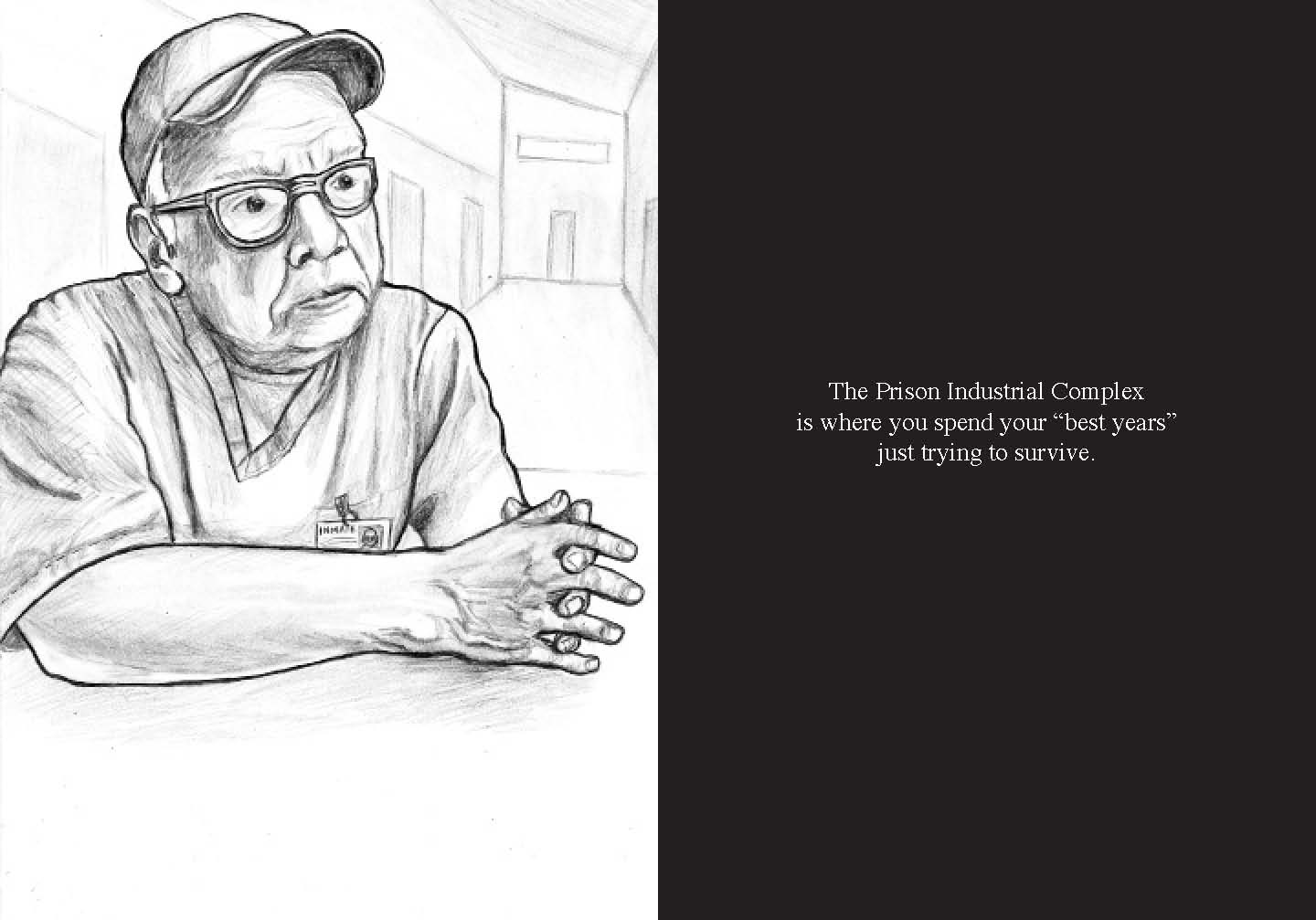
Last week, I went to Cook County Jail to visit a young man who is currently being detained there. I absolutely hate that place but that is a story for another day. Anyway, as I was meeting with this young man, I noticed an older black inmate who was talking with a younger woman. This man looked to be at least 65 years old and I just felt sad.

by Billy Dee

I have previously written about the plight of elderly prisoners on this blog. Today another interesting article about this topic was published in Corrections Magazine.

The following paragraphs are the most interesting parts of the piece to me:

As of 2010, 13% of inmates in our prison system were over 55 years old.(1) This number is predicted to increase between four and seven times in the next 20 years, becoming the fastest growing prisoner age group.(2) By 2030, it is estimated that 1/3 of the entire US prison population – currently estimated at 1.6M – will be 55 years or older.(2)

In addition, studies have found incarceration accelerates the aging process by an average of 11.5 years.(3) Compared to younger prisoners; older inmates have higher rates of mild and serious health conditions. Due to deteriorating health, aging inmates have special needs. These needs range from medication and special diets to round the clock nursing, driving costs of managing an elderly prisoner to an estimated $70,000 annually – this is 3x the cost of regular inmates.(4)

These are staggering numbers.

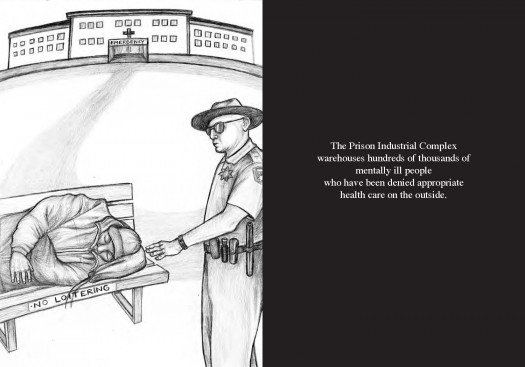
Note: The illustration in this post is from a new zine called “the PIC Is” which can be downloaded for free here.

May 13 2011

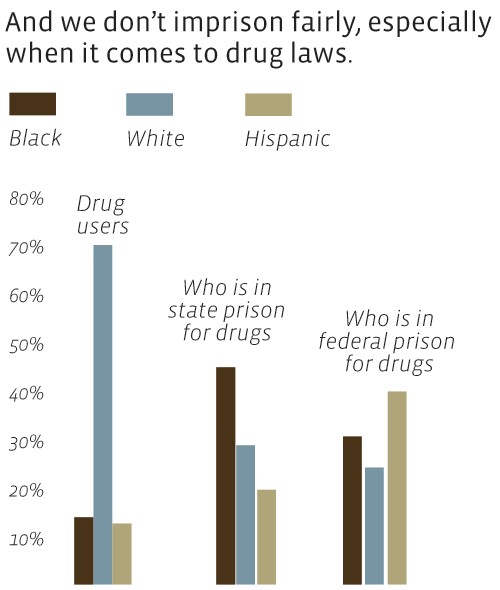
Crazy PIC Fact of the Day: War on Drugs Edition 5/13/11

Sometimes charts tell the best stories:

Source: Yes! Magazine (May 2011)

May 12 2011

Announcing the Release of the Cradle to Prison Zine Series!

By Rachel Williams (Cradle to Prison Project)

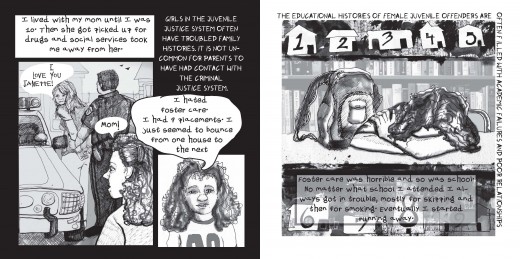
Over the past few months, I have previewed a series of zines about juvenile justice issues that my organization has been collaboratively creating. I am proud to let everyone know that they were officially released yesterday. I invite anyone interested to visit the juvenile injustice site to download a copy of one of 4 zines available there. You can also visit the Cradle 2 Prison site for documentation about the youth workshops that formed the basis of this project.

This collaborative experience was a truly rewarding and wonderful one. When I approached my friend Lisa Lee, of the Jane Addams Hull House Museum, with the idea of creating a graphic novel about the history and current manifestations of juvenile justice, I could not have imagined where we’d end up today. We both agreed that this project would only make sense if we centered the voices of incarcerated youth as well as young people on the outside. We knew that we wanted to find partners who would share our vision and would have the skills to execute it. We found those partners and you are now able to review the results of our collaboration.

The “Youth Stories” zine was created by teaching artist Elgin Smith. While Elgin himself is a young man, he has extensive experience working with incarcerated youth. We were lucky that he agreed to run a comic arts workshop for young men and women at the Cook County Juvenile Temporary Detention Center last August. That workshop forms the basis of the “Youth Voices” zine. The zine underscores the art and words of the incarcerated youth while also offering Elgin’s personal insights about being a teaching artist inside a youth jail. This is a unique publication and I have no doubt that all who read it will be fascinated and moved by it. Thank you Elgin for your diligence, your generosity, and your sincere care for young people!

The three other zines were created by teaching artist Rachel Williams. We were so incredibly lucky to meet Rachel and to be able to work with her. Rachel is an artist, an educator, and a passionate anti-prison organizer. All of these aspects of her being are reflected in the publications that she created. Rachel spent 5 weeks teaching a group of 9 youth on the outside about comic arts. We are grateful to her for her respectful and energetic interactions with the young people. On a personal note, I feel that I have made a new friend through this experience. That is rare and therefore deeply treasured by me. Words cannot express my gratitude to Rachel for her tireless, poignant, and breathtaking work.

We were also blessed to partner with the Chicago Freedom School which provided a meeting space for youth and with Eva Nagao, the Freedom School’s new board co-chair, who took it upon herself to recruit young people for this project. Eva handled all of the logistics for the 5 weeks of the comic arts program for youth on the outside. I feel very lucky to call Eva a friend, she is a committed activist and one of the very best humans that I know. Special thanks also to Rachel Shine who volunteered her time with the youth as they learned about juvenile justice and drew their own images.

The Cook County Juvenile Temporary Detention Center (JTDC) welcomed us for 4 weeks in August 2010 to work with the young people who were incarcerated there. We are indebted to the youth for sharing their stories and talents with us.

This project would not have been as seamless or as enjoyable as it was without the presence and guidance of Teresa Silva. Teresa’s steady hand and her soft touch moved us along and helped bring the project to completion. Thanks to Teresa for all of her contributions.

There are few people in the world as unique and inspiring as Lisa Lee. Over the years, Lisa has fostered opportunities for youth and adults across Chicago to learn about history, art, and social justice. She does this without fanfare but always with unmatched generosity of spirit. This project would not have happened without her. I am eternally grateful to Lisa for all that she has done and will undoubtedly continue to do in the future.

Finally, a point of personal privilege… I am committed to using art as a tool for social transformation and justice. I believe that art has the capacity to speak across difference and to help educate and incite people to action. I hope that those individuals who read these zines come away asking the question: How can I contribute to dismantling the prison industrial complex? If even only one person asks, then we will have done our part.

In Peace and Solidarity.

May 11 2011

This photo speaks volumes and none of it is good…

You can read the context for the photo here.

May 06 2011

A Short Hiatus…

Over the next few days, Prison Culture will be on a short break from blogging. At the end of June, it will be a year since I started this blog. I have loved every minute of writing but most importantly I have been so happy to “meet” so many amazing people through this endeavor.

I am in another crunch with respect to work and life so I am going to unplug from here for a few days. I will be back soon with a lot more to share about the projects that I am working on. I can’t wait to fill everyone in on those. I’ll post next week (Thursday) about the release of a series of zines about juvenile justice that I think everyone will LOVE.

In the meantime, enjoy this, one of my favorite, favorite songs….

May 05 2011

Introducing the PIC Is Zine: An Illustrated Exploration

There are times when words are very limiting. This is one of those times. I am incredibly proud to have been part of a team that has created a wonderful publication titled “The PIC Is.”

Over the past few months, I have previewed the zine on this blog by offering my thoughts about the importance of popular education in the movement to dismantle the PIC. I have also written often about my belief in the power of art to foster and sustain social change.


Before going any further however, a word about my friend, the amazing and super talented Billy Dee. Billy illustrated and designed “the PIC Is” zine. As an artist, activist, and person, Billy is generous in spirit and always open to collaborate. A self-described “enthusiast,” I can tell you that it is a true joy to work with Billy on anything and I (and the organization that I founded) have been blessed to be the beneficiaries on more than one occasion of the product of Billy’s artistic talents. Thank you Billy for all that you do and are. I am certain that every single person who looks at this zine will be moved by your illustrations and compelled to ask themselves: “How can I contribute to the movement to dismantle the inhumane PIC?”

The Chicago PIC Teaching Collective spearheaded this project. I am indebted to all of its members. Thank you for participating in this journey.

My friends Lisa and Teresa at the Jane Addams Hull House Museum also provided a critical eye for this work. Special thanks to the Museum for covering the printing costs for a first-run of the zine. We will now be able to distribute some hard copies of the publication throughout Chicago and to some prisoners as a result.

Finally a few words about what I hope happens to this zine now that we have released it into the world….

This publication is offered as a gift. The topic is tragic and deadly serious. However those of us who worked collaboratively to create this zine envisioned it as a crie de coeur and as something to be shared. We expect that those who care about issues of justice, equality, and humanity will use it as a teaching tool and as an organizing tool. We invite you to reproduce it as often as you would like. We invite you to forward the PDF version to everyone you know. We invite you to use the images in your outreach, education, and organizing efforts [if you need higher resolution images please let us know]. This is intended as a strictly non-commercial endeavor and we ask that those who use the publication adhere to the same spirit.

More important for us though, this zine is meant to be passed along to people in your life who may not think that they care about prisons or feel that they are not impacted by the PIC. You can help by passing it along to one other person in your life who you think might be open to learning more about how the PIC operates in 21st century America. Then I hope that you will engage that person in a conversation about the nature and impact of the PIC. If you are an educator, please feel free to use this publication with your students and share it with your colleagues. If you think of creative ways to incorporate it into your curriculum, please contact us at [email protected] to let us know about it. We would love to post it on our site and share it with others.

I have no doubt that someone, somewhere will find something to criticize about this publication. That is fine. It is not offered as THE definitive document for understanding the PIC. That is not its intent. Ta-Nehisi Coates recently wrote that “creation is the ultimate critique.” He was likely inspired by Michelangelo who wrote “Critique by creating.” I completely co-sign this idea. I’ll end with a few more words from Mr. Coates in response to the inevitable criticisms or complaints about omissions etc… If you don’t like this publication, “Make another one. Make a better one. Start now.” And I will add: Send us a copy too!

You can download the zine from the Chicago PIC Teaching Collective’s site HERE. It is offered in peace and solidarity.

NOTE: If you are in Chicago next week on May 12th, join us at the juvenile justice zine release party from 5:30 to 7:30 p.m. at the Hull House Museum, 800 S. Halsted St (Resident’s Dining Hall). Guests will receive a hard copy of the “PIC Is” zine as well as two others (one about the School to Prison Pipeline and a Know Your Rights zine created by Models for Change).

Three other juvenile justice-focused zines (History of Juvenile Justice in Illinois, Youth Stories of the Incarcerated, and Girls in the System) will be released online at the end of May.

May 04 2011

“Babysitting These Kids On Their Way to Juvie”

Peter Yahnke -- Just Seeds Portfolio Project

A teacher-friend recently told me a story about one of her colleagues. Her colleague is a beleaguered relatively novice educator who is teaching in an urban school in Boston. Her friend offered the following lament: “I feel like I am just babysitting these kids on their way to juvie.” I share these words not to inpugn the character of this young teacher nor to judge her. I personally know how difficult teaching is and can be. I know something about the sense of isolation that a teacher can experience once you are behind those closed doors and facing 30 elementary or high school students by yourself. I imagine that this situation is even more fraught if you are a young white woman teaching in an inner city school. My own disastrous early high school teaching experience belies the difficulty of doing this work well even when you look like the students who you are meant to educate.

I have been thinking a lot lately about the role that some teachers play in greasing the wheels of the school to prison pipeline. My respect for teaching as a profession and an avocation is unlimited. I know how critical teachers are to ensuring student success. Henry James has written that a “teacher affects eternity, he never knows where his influence ends.”

There is something deeply wrong though about assuming that the young people who have been entrusted to you are on their way to prison anyway. This sense of resignation is toxic and contributes to a self-fulfilling prophecy. If you are convinced as an educator that the youth who you are teaching won’t be successful, well then they won’t be. This attitude has disastrous consequences for students and our society as a whole. These young people are labeled as uneducable and therefore pushed out of school. They are consigned to a type of social death.

So I have been thinking a lot over the past few years about the importance of teaching about prisons in our schools of education. I think that every teacher should understand what the school to prison pipeline looks like and how they can actively participate in dismantling that pipeline. I want to make sure that teachers see themselves as part of the SOLUTION to abolishing prisons rather than being resigned to “babysitting kids on their way to juvie.”

May 03 2011

Raping Little Girls, Restorative Justice, and Community Accountability

[Skip this if you dislike complexity and are prone to knee-jerk reactions]

Some of these black men are going to prison. There is no question about it. These men will be locked up in cages for a very long time and I will be confronted again with the question of how it is possible to be a prison abolitionist in the face of such horrors.

I have waited a while before writing about this tragedy. However I have been following the terrible case of the 11 year old girl from Cleveland, Texas who was allegedly gang raped by 18 men ranging in age from 14 to 27. I want to put my hands in front of my eyes, I want to plug my ears with my fingers, I want to bury my head in the sand. There are no words to fully convey the horror of what was allegedly done to this young woman; to this little girl really. No adequate words except perhaps I am so sorry.

I want to focus on the community’s reaction to this brutal assault in order to say something about why it is so difficult to address the issues of community accountability and transformative justice in the face of such events. Akiba Solomon did a terrific job of summarizing the community’s response in an article a few weeks ago:

Cleveland has a population of 7,675 people. It’s 46 percent white, 28 percent Hispanic and 24 percent black. Now, if the media coverage truly reflects conventional wisdom among its 1,819 black folks, many in it don’t see what happened to this girl as an alleged gang rape but a case of consensual group sex gone wrong.

Relatives of the accused and a double agent ridiculously incompetent defense attorney James D. Evans III have focused on her ‘much older’ appearance, her ‘attention-seeking,’ rumors of a previous sexual history in the Quarters, her alleged aspirations of porn stardom, a Facebook page where the child reportedly bragged about sex, alcohol and drugs, and her mother’s neglect (not the father’s; never the father’s). In an interview on the local news, Anita Ellis Hancock, the mother of a 19-year-old suspect, exemplified this attitude. If you can’t watch the video, an alarming excerpt:

FOX 26: What did you do? Did you talk to your son?

Hancock: Yes I did. Yes I did. I said, ‘Baby, I’m your momma. You can talk to me.’ (The victim) said she was 17 years old and that’s what he told me.

FOX 26: But Anita, a lot of people would say, ‘This is an 11 year old child. Even if she lied, she’s eleven.’

Hancock: I understand that. I understand that. I’m not defending him. I’m not defending her. I’m not defending no child because if it were my child, I would feel the same way. My point is, where was her mother?

FOX 26: If this was reversed. If your son wasn’t your son, but you were the mother of this 11 year old, what would you do? What would you say? What is justice?

Hancock: First of all, I would know where she was. That’s the justice. Not knowing where your baby is is not justice. I feel like she should be accounted for not knowing where your baby at.

FOX 26: What lesson does you son need to learn?

Hancock: ID. Identification. This (holding up nametag and picture) is what you ask for baby.

FOX 26: So you’re going to tell your son, next time he meets a girl to ask for her ID?

Hancock: Identification.

When I read Ms. Hancock’s words, I could feel the anger rising up in my body. I wanted to scream at her. I wanted to tell her that it is not OK to try to protect your own son by shifting the blame from his vile actions to others (especially to the victim and her family). I was disgusted and I could not find any compassion for Ms. Hancock. Here’s what I wanted to hear her say:

I believe that my son was not involved in such a heinous act. I want to believe that. I don’t know him to be able to engage in such terrible behavior. But first and foremost, I want to extend my deepest regrets to the young woman who was allegedly harmed. I want to tell her family that I am praying for them. I am a mother. I don’t even know how I would react to this if it had happened to my daughter. I hope that everyone will reserve judgment on my son until all of the facts are in.

That would have been enough. It is understandable that she would not want to believe that her son could be capable of such an act. But her willingness to blame the young woman for her own assault is unacceptable and immoral.

So we are left with many questions and concerns. But the overriding one seems to be: “If not, prison, then how do we hold perpetrators accountable for causing this type of massive harm?” Secondary questions include “how can we practice community accountability for violence when our “communities” are so often overrun with victim-blaming and often crippled by oppression?” and “Is it even possible to rely on a restorative justice model in instances like this?” I will try to offer my best thinking about all of these questions.

My friend Andy Smith, who is a co-founder of Incite! Women of Color against Violence and of Critical Resistance as well as one of the most brilliant people I know, argues that there are real limitations to restorative justice models for addressing violence. She writes:

“The problem with these models is that they only work when the community unites in holding perpetrators accountable. However, in cases of sexual and domestic violence, the community often sides with the perpetrator rather than the victim (Smith 2010, p. 259).

Andy’s words resonate with Ms. Hancock’s response to learning that her son had been accused of raping a young girl. Her response as well as that of the community-at-large was to rally around the young men who were accused of the crime. So where then does that leave those of us who eschew using prisons to punish such violence? Andy captures our dilemma:

“On the one hand, the incarceration approach for addressing sexual/domestic violence promotes the repression of communities of color without really providing safety for survivors. One the other hand, RJ models often promote community silence and denial around issues of sexual/violence without concern for the safety of survivors of gender violence, under the rhetoric of community restoration (Smith 2010, p.260).”

So there it is in a nutshell: prisons don’t keep victims of violence safe but one of the main alternatives to prison being advanced to address such violence also has its limitations. One might be tempted to throw one’s hands in the air and say, you know what, the devil you know is better than the devil you don’t. In other words, we remain stuck with the ineffective prison system as the remedy when sexual violence is perpetrated. This is not viable in my opinion. Andy agrees and suggests that “our challenge is to develop community-based models of accountability in which the community will actually hold the perpetrator accountable (p.260).”

And so for those of us who want to abolish prisons, our project MUST be to develop such community-based models of accountability. We must test them in real-time and in real-life. We must do this not because we want to “prove” that these models “work.” Instead, our charge is to develop such models because we actually do care about addressing harm caused to real people by violence and crime. I came to my anti-prison activism through my anti-violence work. I am passionate about supporting survivors of violence. I count myself among those survivors so I have a personal stake in these issues.

I started learning and reading about the concept of “restorative justice” in the mid-90s. However, I had already begun to understand what it meant earlier in my life. I was initially attracted to the concept of RJ because I was interested in finding a way that would allow for addressing violence without relying on the criminal legal system. Over the years, I have understood both the limits and the promise of RJ. Restorative justice interventions only work when we can get everyone involved in the situation to agree that a harm was done and that this was wrong. In these instances, RJ is a powerful option. I think that using restorative justice practices (with a keen awareness of their limitations) is worthwhile and I advocate this in my own work.

Yet about 10 years ago, it became clear to me that RJ would not be the vehicle through which we might eradicate violence. The main reason was that the RJ movement became content to be co-opted by the criminal legal system. Around 2002, I started learning more about the work of Incite!; its emphasis on the role of the state as a purveyor and perpetrator of violence provided an explanatory framework for what I felt was lacking in RJ. It turns out that what I wanted was not restorative justice but rather TRANSFORMATIVE justice. TJ suggests that while we are all subjected to interpersonal violence, people of color and other marginalized people are also the victims of state violence. For example, the criminal legal system itself causes harm to people. Institutional violence can have as much of an impact on our lives as interpersonal violence does. Incite! also offered the idea that we who want transformative justice to take root must guard against romanticizing the notion of “community”. Cleveland Texas is a case study of why this is important.

So what I am after is something more transformative rather than restorative. Developing community-based models of accountability provide a strategy for achieving truly transformative justice. Restorative practices have a role to play within community-based models of accountability to be sure. However, we must also steep these models in an anti-oppression framework. The models will also only emerge out of political and community organizing. Ultimately, this is how I believe that we will eradicate violence. It is the only way. It is our best hope for truly ensuring that we can be safe in our communities. Prisons won’t do it. They haven’t so far and won’t in the future. This is because as arms of the state, prisons, themselves are purveyors and perpetrators of violence.

In conclusion, let me return to the beginning, to the question about how I can be an abolitionist in the face of cases like Cleveland Texas. It is simple. I will once again lean on Andy, who perfectly expresses what is also true for me:

“[A]n abolitionist perspective is a positive rather than a negative project. That is, rather than argue that all prisons should be dismantled tomorrow, our task is to crowd out prisons with other forms of justice-making that will eventually demonstrate both the ineffectiveness and the brutality of prisons (p.267).”