Dr. Margaret Burroughs: Prison Educator & Reformer
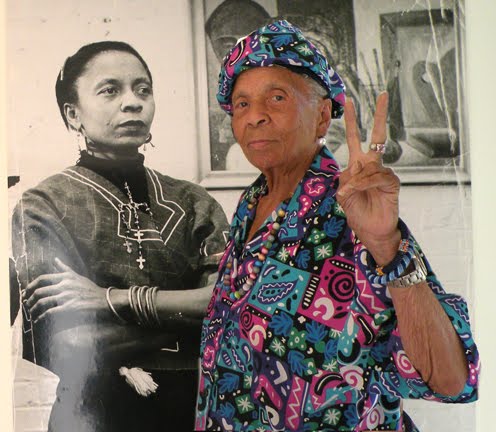
Dr. Margaret Burroughs
Dr. Burroughs was born in Louisiana in 1917. She moved to Chicago as a child. She was an artist who studied at the Art Institute of Chicago, a historian, an educator, and an activist. Basically, Dr. Burroughs was a powerhouse and a Chicago legend.
I learned something new about her a couple of months ago. Thanks to a young woman named Glenance who did some research for the Black/Inside exhibition, I discovered that Dr. Burroughs was also a prison educator and reformer. Glenance spent several months volunteering with an educational program at Stateville Prison last year. Through that experience, she heard many stories from the prisoners about their love and respect for Dr. Burroughs who taught Creative Writing and Creative Arts at Stateville for over 30 years. She donated art supplies and regularly brought in books for the prisoners. One inmate named Delandis said, “Any artwork hanging around here, she inspired somebody to do it.”
She died in 2010 yet her legacy still permeates Stateville Prison. February 1st is Dr. Margaret Burroughs day at Stateville; an annual memorial service has been held for the past two years. One prisoner suggested: “We want her canonized.” In addition to her work at Stateville Prison, for the last 35 years of her life, she and the Rev. Jesse Jackson spent Christmas Day at the Cook County Jail.
Glenance conducted a discussion circle about Dr. Burroughs’ role and impact at Stateville a few weeks ago. I wanted to share some of what the prisoners had to say about her:
That’s major! For me, inspiration. Every time she saw me, she would tell how beautiful my eyes were. She would always ask me about the legacy that I would be leaving. She was a living legend amongst us. I was in my 20s when I met her. I loved her, in life and in death. All of the guys who took her class, everyone who came in touch with her you, you saw a change/difference in their lives. – Delandis
Some people believe that when you come to prison life is over with but when she stepped inside of the prison, she became one of us. She was always moving, doing stuff. No matter what race or nationality you were, you were always expected to be doing something with your life. She was real strong. One day they shot the gun and she didn’t even move. – Demetrius
She constantly told me that even though they locked up your body doesn’t mean that they locked up your mind. She was special, one of the most humble people that I have ever met. She had an amazing memory. She could recall conversations that we had 17 years before. It made me feel special. I prayed for her daily. I love the woman because of her spirit. I don’t think that a spirit like that could be in a person without a love for God. I loved her. She was amazing. They didn’t want her here. Many times they banned her from this place and she turned it around. Who fights to get into prison? *incessant laughter* She was steel.
– EddieShe was a spirit of encouragement and inspiration.
– DariusTwo words to describe Dr. Burroughs: self-sacrificing and humility. She was a walking and living legend. She would often take public transportation here to see us. People’s families don’t even come visit them but she – a stranger – would.
– AndreShe considered and accepted all of us as family. She would leave her own church to come to ours.
– DonaldThe guys really had an appreciation of her. Even in midst of the security here, she had no fear.
– EdgarThe effect that she had on individuals, she was a beacon of light. She was hope. I would think, “Wow, how is this woman doing this?”
– NachoShe had been in the whole I.D.O.C. for about 35-40 years. One thing that she said to me is, “you always draw with dark colors. It reflects depression from deep within.” I learned a lot about myself. She had a good spirit. She would say, “I ain’t gon give you no more dark colors. I’m going to give you bright colors.” And she did. I would color and smile.
– Stan
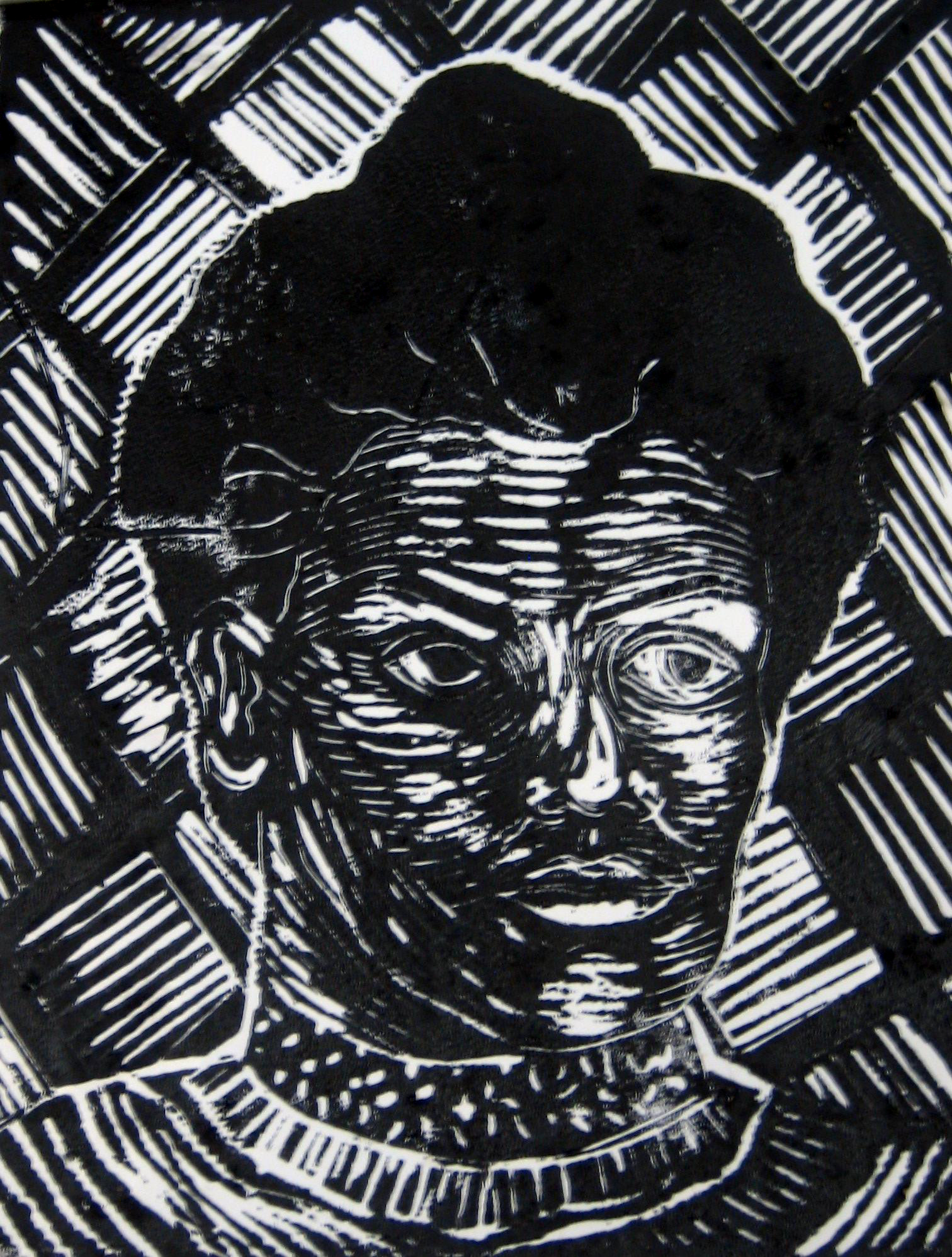
Ida B. Wells by Dr. Margaret Burroughs
 Uncategorized | prison culture | 10 October 2012 |