May 20 2013

Thurgood Marshall and Prison Cruelties…

I’ve been reading some of the letters published in the book “Marshalling Justice: The Early Civil Rights Letters of Thurgood Marshall” by Michael G. Long. Long (2011) writes that: “Marshall dealt with prison abuse claims frequently in his early years at the NAACP (p.27).”

One example from the book is below:

On July 2, 1937, an inmate in the Texas state prison system sent the NAACP an anonymous letter requesting assistance for combating cruel prison conditions: “Please hear our cries…These officials are sure cruel to us, we have in each building two prisoner as building tenders they is allowed to kill you if they see fit. They have whips with iron handles and dirka knives. Each one of these buildings tenders are first grade student and they will do what the captains and guards tell them.”

Below is a letter of protest that Marshall wrote to the governor of Kentucky about these complaints:

July 31, 1937

Dear Governor Allred:

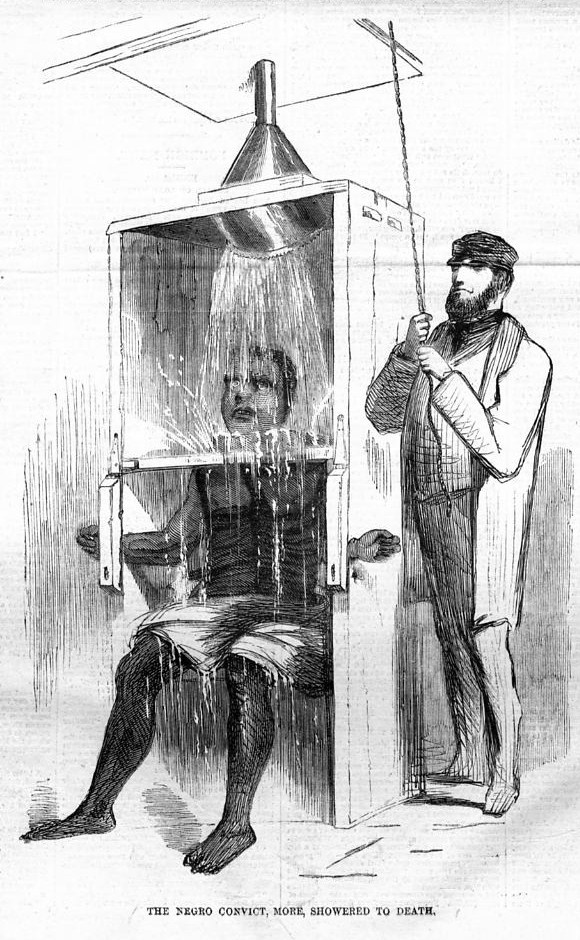
We have received complaints concerning the treatment of Negro prisoners on the Ramsey State Farm, Camp #1, near Houston, Texas. We are informed that the Negro prisoners are beaten and, in many cases, killed for trivial reasons.

We are informed that on July 28th of last year, one Booker Smith, in charge of prisoners, killed a prisoner and claimed it was in self-defense. We are also informed that Captain Shaw chained a prisoner with a quarter-inch chain around his neck and fastened it to his feet so that his neck was pulled down to his knees and that the same Booker Smith whipped this prisoner, whose name was James Brown, to death.

We cannot too strongly urge upon you the seriousness of such offenses which, even though committed by persons in charge of a prison, are, nevertheless, brutal murders. These are only a few examples of the intolerable conditions reported to us in the prison camps in Texas, and we urge you to immediately cause an investigation to be made.

Very sincerely yours,

Thurgood Marshall

In reply, Governor Allred simply asked for more information and added: “I am sure that neither the Manager of the State Prison System nor the members of the Prison Board, as well as myself, will tolerate any brutality if they can find evidence that it exists anywhere in the System.”

Share
May 11 2013

“Creeping Dehumanization” and the Capacity to Change…

“Emaciated and frail, more than 100 men lie on concrete floors of freezing, solitary cells in Guantánamo, silently starving themselves to death.

Stripped of all possessions, even basics such as a sleeping mat or soap, they lie listlessly as guards periodically bang on the steel doors and shout at them to move an arm or leg to prove they are still conscious.”

These are the opening words of an article that I read last weekend about Guantanamo prison hunger strikers. I felt sick to my stomach as I continued to read but made myself do it anyway.

Then I came across an article about Willie Manning’s impending execution in Mississippi:

“Mississippi is still scheduled to execute a convicted murderer Tuesday despite a lack of physical evidence tying him to the crime and a new admission from the Department of Justice that the forensic investigation was severely flawed.

Willie Jerome Manning, a 44-year-old African-American man, has been in prison for almost 20 years after being convicted for the 1992 kidnapping and murder of Jon Steckler and Tiffany Miller, two white college students in Mississippi.”

At the last minute, a court granted Mr. Manning a temporary stay of execution. I took a deep breath and exhaled conscious of the fact that his state-sanctioned murder was only postponed for the time being.

Read more »

Share
May 07 2013

Host A Teach-In About Assata Shakur: June 2 through 9

I’ve been restless since Thursday. A lot of other people have been too. We want to DO something about the fact that the FBI has revived its pursuit of Assata Shakur by adding her to its most wanted terrorist list and increasing the bounty for her capture.

I signed a petition demanding that the government re-investigate her case and exonerate her. What else is there to do?

So on Sunday, I put a question to my Facebook friends: “Would you host a teach-in about Assata in your home, workplace, house of worship, or community?” There was a lot of interest in the idea.

So in record time with the help of my friends Dara, Shonettia, and Nicole, there’s a site where anyone can sign up to host a teach-in about Assata’s life and case during the week of June 2 through 9, 2013.

On the Assata Teach-in site, you can fill out a form with relevant information about your planned teach-in, you can find a curriculum template for a youth teach-in and next week for an adult teach in. You can find resources about Assata’s life and her case.

Additionally, there’s a call for artists to submit posters with the message “Assata is (STILL) Welcome Here” in time for her birthday which is in July.

Anyone can participate in the week-long series of teach-ins this June either by hosting one or perhaps attending one. Anyone can participate in our attempt to replace the government’s billboard branding Assata as a terrorist with a poster welcoming her into our spaces instead.

AssataBillboards

I know that many have felt helpless and I hope that these actions are small ways to help us engage in solidarity work with each other and with Assata. I hold on to these words by Alice Walker, they serve guideposts for me:

“I have learned to accept the fact that we risk disappointment, disillusionment, even despair, every time we act. Every time we decide to believe the world can be better. Every time we decide to trust others to be as noble as we think they are. And that there might be years during which our grief is equal to, or even greater than, our hope. The alternative, however, not to act, and therefore to miss experiencing other people at their best, reaching toward their fullness, has never appealed to me.”

So I hope that you will choose to act. Please visit the Assata Teach-in site and share it with others who you think would be interested too.

Share
May 06 2013

A Thank You From Assata On The Occasion of Her 60th Birthday…

Stay tuned in the coming days for details about how those of you in Chicago and across the country can participate in a week-long (June 2-9) series of teach-ins about Assata Shakur.

In the meantime, I am honored to share some words written by Assata Shakur to her supporters (members of the Hands Off Assata Campaign) who organized actions to celebrate her 60th birthday. Much appreciation to my friend Dara Cooper who shared these words with me and who points out that these are the most recent direct words from Assata to the public. The letter was received in July 2007.

assatachild

First of all, let me say thank you, to the many people who have helped me to celebrate my 60th birthday. Thank you for your beautiful birthday cards and for your warm and eloquent messages. Thank you for your activism, your radiant energy and most of all for your love. I am sincerely grateful for your support and for your commitment to social justice, truth and freedom.

It is somehow surprising for me to realize that I have lived on this planet for 60 years. I never imagined that I would live this long. Some of those years were very hard years, other years were happier, but I have never forgotten who I am or where I came from. For as long as I can remember, I was acutely aware of my oppression and of the oppression of my people.

In some ways it was easier for my generation. Racism was blatant and obvious. The “Whites Only” signs let us know clearly, what we were up against. Not much has changed, but the system of lies and tricknology is much more sophisticated. Today young people have to be highly informed and acutely analytical, or they will be swept up into a whirlpool of lies and deception.

Freedom, justice and liberty are words that are thrown around a lot in the United States, but for most of us, it is empty rhetoric. With each and every passing day the country becomes more repressive, the police more viciously aggressive and the so-called constitutional guarantees obliterated by scare tactics. The so-called ‘Conservatives’ are only interested in conserving their privileges and power and helping their rich friends to become richer. Black ‘Conservatives’ serve their “masters” and are basically interested in grinning, shuffling and ‘Uncle Tomming’ all the way to the bank. This is the most corrupt administration that has ever existed. They have blatantly stolen not millions, but billions of dollars. They are actively seeking to preserve the old colonial order with a new face, where the oppressed people of Asia, Africa, Latin America and the Middle East are expected to suffer happily, and sing praises to imperialism to the tune of the star spangled banner.

Read more »

Share
May 01 2013

On “Wishing People Out of Existence” & GITMO

guantanamo The Guantanamo Bay prison camp has been in the news lately because of prisoners’on-going hunger strike there. In fact, just this week, the U.S. government has ordered medical reinforcements to the prison in order to assist with the force-feeding of Guantanamo hunger strikers. The hunger strike began in early February with a couple of dozen people and has spread to over 100 men now. The New York Times editorial page characterized the strike as “a collective act of despair.” The prisoners are being held, some innocent and many without charges, at Guantanamo indefinitely.

I was recently brought to tears in reading an op-ed in the New York Times written by Samir Naji al Hasan Moqbel. al Hasan Moqbel has been a prisoner at Guantanamo for over 11 years and is one of the hunger strikers. He wrote:

“I’ve been on a hunger strike since Feb. 10 and have lost well over 30 pounds. I will not eat until they restore my dignity.

I’ve been detained at Guantánamo for 11 years and three months. I have never been charged with any crime. I have never received a trial.”

Read more »

Share
Apr 04 2013

Black Peons in the 20th Century: A (Mostly) Untold Story of Captivity, Brutality, & “Free” Labor

Because this is a blog about mass incarceration, its roots and how to intervene in the epidemic, I write a lot about black people and also about the concept of “captivity.” This necessarily leads me to consider slavery and its outcomes but also other social arrangements that have harmed, confined, and imprisoned black folks. Our captivity has usually been connected to capitalism’s need to exploit our labor (for free).

Peonage was a lot more prevalent in the U.S. than is commonly acknowledged. It lasted well into the mid-20th century. Some have called it “slavery by another name.” The truth is however that slavery was/is slavery and peonage was/is forced labor or “debt servitude.” Below, historian Pete Daniel offers a good definition and description of peonage:

Watch What is Peonage? on PBS. See more from Slavery by Another Name.

Read more »

Share
Apr 01 2013

We Who Believe in Freedom: Closing Prisons in Illinois…

photo by Sam Love – Protesting to Close TAMMS

When the news first broke, I didn’t believe it. Frankly I still don’t. It’s taken me a few weeks to write this post. I am still in a bit of shock.

After years of organizing and struggle in Illinois, TAMMS Supermax is closed. As of last Friday, so too is Dwight Prison. These are tenuous victories to be sure because there are many who continue to believe that prisons must remain a permanent fixture.

There are still some who continue to call for Dwight to remain open citing prison overcrowding. But this is surely not the solution to address overcrowding. Instead the state should develop or expand the use of initiatives such as good time credits or diversion programs. More importantly, we should reduce our prison population while improving public safety by investing in communities to ensure that people do not end up behind bars in the first place.

In communities all across Illinois, women and men are caught in a vicious cycle of arrest, conviction, prison, surveillance and re-arrest, making it nearly impossible to maintain housing, health, jobs, and relationships. Rather than contribute to this tragedy, we must invest in prison alternatives and community-based services, while addressing the root causes of incarceration. We need to rebuild the social infrastructure rather than spend more on a failed prison system. Closing Dwight and other prisons in Illinois will help us to find new resources to invest in these better options.

The shuttering of Dwight follows the closing of two youth prisons: Murphysboro and Joliet. Last month, Vikki Law wrote about the activism that helped lead to the closure of the two youth prisons. Regular readers of this blog know that I have been working for years to close youth prisons in this state. You have read some of my rants over the past couple of years. We finally have our first victories and I have found it difficult to articulate my feelings. I am overcome.

So many people have had a hand in these victories but I want to specifically single out my friends and allies at TAMMS YEAR 10. For over a decade now, this dedicated group of organizers, educators, activists, family and community members has been calling for the closure of the torture chamber formerly known as TAMMS Supermax. They organized direct actions, lobbied legislators, hosted countless workshops, created art, wrote letters and so much more. Most importantly, they were a voice for those who didn’t have a public one: the men who were locked up at TAMMS.

Prison destroys lives. This is a fact. I am thinking today of James who spent time at IYC-Joliet and came out scarred and damaged seemingly beyond repair. I am thinking of another young man who told me that IYC-Joliet was a living hell for him.

There are still about 50,000 adults and nearly 1,000 youth locked up in prisons across Illinois. I know that closing four prisons is only one part of a long struggle to decarcerate Illinois. All of the people who are still locked up today in prisons need our advocacy. We must and will continue to press for their freedom. We have some encouragement in our work. We know that it is possible to close prisons in Illinois. We must build on these victories and remain in the fight for the long haul. One of my favorite poets, Gwendolyn Brooks, is someone I always turn to when words fail me. So today I rely once more on her wise words:

Say to them,
say to the down-keepers,
the sun-slappers,
the self-soilers,
the harmony-hushers,
“Even if you are not ready for day
it cannot always be night.”
You will be right.
For that is the hard home-run.
Live not for the battles won.
Live not for the end-of-the-song.
Live in the along.

Speech to the Young, Speech to the Progress-Toward (Among Them Nora and Henry III)
by Gwendolyn Brooks

La Lucha Continua! La Lucha Continua!

Share
Mar 14 2013

Image of the Day: Lynching Map

lynchingmapfinal.jpg.CROP.article920-large

Learn more about the origins of this lynching map here

Share
Mar 03 2013

Image of the Day: Girls in Solitary, 1946-49

New York State, 1946-49, Hudson School for Girls, "reformatory" by Marion Palfi

New York State, 1946-49, Hudson School for Girls, “reformatory” by Marion Palfi

Suffer Little Children by Marion Palfi

Suffer Little Children by Marion Palfi

Share
Feb 07 2013

Clyde Kennard, Political Prisoner: Victim of Another Kind of School-to-Prison Pipeline

Every day is Black History day on the Prison Culture blog. But I do want to acknowledge February as Black History Month. Unlike others, I am not ambivalent about the month. I think that it is a good thing that we have it and I acknowledge that it took over 100 years of work by scholars like Carter G. Woodson among others to make it a reality. I am one of the beneficiaries of that hard work, organizing, and scholarship. I am grateful. I’ve settled on Thursdays as my regular day for posting something related to the history of the PIC on the blog. I will of course continue to weave historical moments in other posts but you can always be assured of finding something history-related on Thursdays here.

That there was no simple crime with one indictable perpetrator makes it all the more universal.” – Ron Hollander

kennard There once lived a man. He was a very good man. If he were alive today, Tom Brokaw would be touting him as one of the “Greatest Generation.” His name was Clyde Kennard and he was killed by the state. His story has been called by historian John Dittmer “the saddest of the whole [Civil Rights] Movement.”

Mr. Kennard is not a household name even among those who know a lot about the Black Freedom Movement. He should be. I only learned about Clyde Kennard’s story in 2000 when I read David Oshinsky’s “Worse Than Slavery: Parchman Farm, & the Ordeal of Jim Crow Justice.” I then heard more about the case in 2006 when the Center on Wrongful Convictions at Northwestern University Law School won his posthumous exoneration with the help of three local high school students: Mona Ghadiri, Agnes Mazur and Callie McCune.

Born in Hattiesburg Mississippi in 1927, Kennard was according to all who knew him quiet and smart. At 12, he moved to Chicago and at 18 he joined the Army where he spent 7 years as a paratrooper. He served in Germany and in Korea. After he was honorably discharged from the Army, he used some of his savings to buy a chicken farm for his parents in Hattiesburg. In 1952, Clyde moved back to Chicago and enrolled in the University of Chicago.

After three years at U of C, his stepfather died. Clyde decided to move back to Mississippi to help his mother with the chicken farm. Because he had already finished three years of his political science degree requirements, he decided that he would enroll at Mississippi Southern College (now called University of Southern Mississippi) to complete his studies.

Read more »

Share