Feb 01 2013

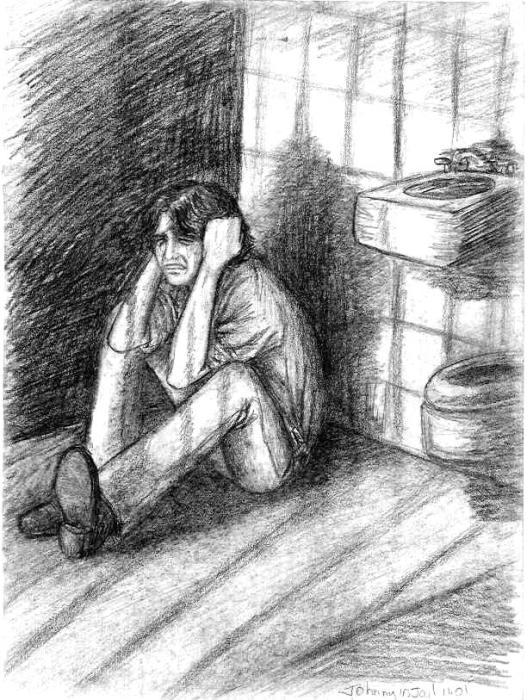
Infographic: Anatomy of the Supermax Prison

Supermax

Source

Share
Nov 30 2012

Help Us to Close TAMMS & IYCs in Illinois…

Illinois Residents, We need your HELP!

Just a couple of days ago, Governor Pat Quinn’s vetoes of funding for several correctional facilities in Illinois were overridden in the Illinois Senate.

Now advocates are pressing hard to prevent an override in the House. We would ask that you contact as many House members as you can over the next three business days (11/30, 12/3, 12/4) and ask them to vote NO on an override.

Here is a fact sheet on the facility closures for you to share with legislators. The basic argument is that these facilities are underutilized and empty. For instance, Murphysboro contains no youth, and Tamms only contains 200 inmates. Existing facilities can absorb and manage these populations. Keeping these facilities open will result in the layoff of 530 DCFS employees, while all Department of Corrections and Department of Juvenile Justice employees affected by the closures have been, or will be offered, positions at existing facilities.

Additionally, keeping these facilities open harms vulnerable children by unnecessarily separating them from their families during a period of critical growth and development. We need the money from these facilities to prevent more children from entering into costly State foster care, protect at-risk children from abuse and neglect, and provide adoption assistance necessary to place children in safe and loving homes. Cuts in critical programs at DCFS harm children throughout the entire State.

Ultimately, we cannot afford to keep underutilized, empty facilities open at the expense of vulnerable children. In this time of budgetary crisis, it does not make sense to keep these facilities open when cost-effective alternatives exist.

Please contact your House representative. District telephone numbers can be found here. Make sure to ask them to vote NO on the override of SB 2474. Please email your House representative’s response to Laurie Jo Reynolds at lauriejoreynolds@gmail.com each day before the conclusion of business on 11/30, 12/3, and 12/4.

For some inspiration, please watch this fun video which is meant to encourage everyone to call your legislators about this important issue.

Share
Oct 29 2012

“Kasserian Ingera or How Are the Children?”

The Masai warriors usually greet each other with “Kasserian Ingera” or “How are the children?” The traditional answer is “All the children are well.” I really like this greeting because it clearly underscores the priority that this culture puts on the well-being of its most vulnerable members.

I was thinking about this when I read the recent Human Rights Watch report “Growing Up Locked Down: Youth in Solitary Confinement in Jails and Prisons Across the United States.” The Huffington Post published an article describing the findings of the report:

The report is based on interviews and correspondence with more than 125 young people in 19 states who spent time in solitary confinement while under age 18, as well as with jail and/or prison officials in 10 states.

Human Rights Watch and the ACLU estimate that in 2011, more than 95,000 young people under age 18 were held in prisons and jails. A significant number of these facilities use solitary confinement – for days, weeks, months, or even years – to punish, protect, house, or treat some of the young people held there.

Because young people are still developing, traumatic experiences like solitary confinement may have a profound effect on their chance to rehabilitate and grow, the groups found. Solitary confinement can exacerbate short- and long-term mental health problems or make it more likely that such problems will develop. Young people in solitary confinement are routinely denied access to treatment, services, and programming required to meet their medical, psychological, developmental, social, and rehabilitative needs.

Below is a video with interviews of youth who experienced solitary confinement:

It would serve us all well in the U.S. if we began to greet each other with “Kasserian Ingera.” Perhaps this would be a reminder to us not to torture our children…

Share
Aug 21 2012

The Legacy of George Jackson: A Eulogy by Angela Davis

After George Jackson was shot and killed at San Quentin Prison on August 21, 1971, Angela Davis wrote a tribute to be read at his memorial service. At the time, she herself was incarcerated and awaiting trial. Today is the 41st Anniversary of Jackson’s murder. Below is her eulogy to Jackson.

An enemy bullet has once more brought grief and sadness to black people and to all who oppose racism and injustice and who love and fight for freedom. On Saturday, August 21, a San Quentin guard’s sniper bullet executed George Jackson and wiped out that last modicum of freedom with which he had persevered and resisted so fiercely for eleven years.

Though deprived so long of the freedom of movement enjoyed by his oppressors, even as he died, George was far more free than they. Like he lived, he died resisting. A field marshal of the Black Panther Party, George belongs to a very special breed of fallen black leaders, for his struggle was the most perilous.

Read more »

Share
Jun 20 2012

The Mental Torture of Incarceration…

photo by Sam Love – Protesting to Close TAMMS

Yesterday, we learned that Governor Pat Quinn is still planning to close several prisons in Illinois over the objections of the union and many elected officials. It is a real act of political courage. If you are from Illinois, please consider taking a couple of minutes today or tomorrow to thank Gov. Quinn for sticking to his recommendations: Springfield: 217-782-0244, Chicago: 312-814-2121

One of the prisons that the Governor will close is TAMMS-Supermax which I have written about several times on the blog. Simply put: TAMMS is a torture chamber where prisoners are kept locked in their cells for 23.5 hours a day. Many groups, particularly TAMMS YEAR TEN, have been advocating for years to close the facility. It is almost too much to believe that this might be coming to pass.

As a reminder of the mental torture that is incarceration, I want to share an excerpt from another letter written by Alfred Hassan, a prisoner whose letters were published in a 1972 book titled “Maximum Security: Letters from Prison.” His words are searing and powerful and true.

Read more »

Share
Jun 12 2012

Martin Sostre: Legal Advocate, Prisoner, Revolutionary…

When I mention the name Martin Sostre, what comes to mind? For many, his name will conjure no images or words. Yet he was a man who made a real impact in terms of prisoner rights in the United States.

Martin Sostre was the owner of the Afro-Asian Bookstore in Buffalo, New York. On July 14, 1967, the police raided his store and arrested Sostre on “narcotics, riot, arson, and assault charges.” After the riot and arson charges were dropped, Sostre was tried by an all-white jury and convicted of selling $15 worth of heroin. He was given a sentence of 31 to 41 years in prison.

This short summary does not of course do justice to Martin Sostre nor to his legacy. Prior to the 1967 police raid, Sostre had already spent a dozen years between 1952 and 1964 locked inside Attica prison on a narcotics conviction. He was known to the police in Buffalo and suspicion surrounded him because he had converted to Islam (in the 50s while he was incarcerated) and was also outspoken against the injustices of racial and class oppression.

Read more »

Share
Apr 05 2012

Unstoppable Forces and Immovable Objects: The Power of Mothers…

The past week has just been beyond busy for me. I’ve wanted to participate in several actions that have been taking place across my state of Illinois addressing mass incarceration but have not been able to. However thanks to my friends and to the internet, I have been able to keep up with some of the happenings. It’s not the same as being there by any measure but it allows me to feel connected in some way.

Yesterday, my friends at TAMMS Year Ten organized a powerful and from what I hear poignant direct action to amplify the voices of mothers and family members of men who are currently locked up at TAMMS Supermax prison. This is just part of the many actions that the group has been engaged in for over 10 years now.

The Chicago Tribune covered the Mother’s March:

The group of mothers stood beneath the sun in downtown Chicago on Wednesday, taking turns at a microphone to tell how the state’s controversial super-max prison has changed their sons.

One described her son’s precipitous weight loss since being incarcerated in the facility in Tamms in southern Illinois 21/2 years ago. Another spoke of her son’s slide into depression and hopelessness because of his extreme isolation. And a third detailed a maddening daily routine: In order to stay active, she said her son now spends hours walking in small circles in his windowless concrete cell.

“You did a crime, you need to pay for it,” said Geneva Mullins, whose son was convicted of attempted murder and conspiracy in a murder and is now at the Tamms super-max. “But you wouldn’t treat an animal like this. It is inhumane.”

Read the whole article here. Please also take a moment to visit the TAMMS Year Ten website to find out how you can support efforts to close this torture chamber. We have never been closer to seeing this prison closed. Governor Quinn has recommended its closure. Now it is up to the legislature to make sure that it happens.

My friend Sam took some beautiful photographs at the action and I want to share them with you.

the amazing Grace - photo by Sam Love

photo by Sam Love

photo by Sam Love

photo by Sam Love

Photo by Sam Love

Share
Feb 24 2012

“We Don’t Defend Murderers”: The Case of Jerry Newson

I have complex feelings about the NAACP. On the one hand, it is impossible to imagine where I would be as a black woman in the 21st century without its contributions to the movement for racial justice. In the early 20th century, the organization led a long-term campaign against lynching and during the civil rights era it fought successfully to desegregate schools and public accommodations. On the other hand, time and again I have come across stories about the NAACP turning down the cases of people of color who were not perceived to be “model” clients.

I recently came across the story of a young black man named “Jerry Newson” as I was doing some research about false police confessions. Newson was an 18 year old young man living in Oakland who was accused and convicted of murdering two people in 1948. The case apparently became a sensation at the time.

On October 22 1948, two people were found in a drug store shot through the head “execution-style.” The victims were a pharmacist named Robert Savage (who was white) and his clerk Marjorie Ruth Wilson (who was a light-skinned black woman). The police were quoted at the time as suggesting that the motive for the murders was robbery and that about $600 was missing from the store. This crime shocked the West Oakland community and a number of local resources were deployed to apprehend the culprit(s). The police were under pressure to solve the case and after a few days, they settled on Jerry Newson as the prime suspect for the crime.

Newson was born in 1931 in Louisiana. He came to live with his aunt and uncle in Oakland in 1944. He quit school in the 11th grade and leased a shoe shine stand at the corner of 11th and Broadway.

On October 25, 1949, two police officers J.J. Murphy and John H. Strum found Jerry Newson in a local poolhall and told him that they had some questions for him. They were investigating a robbery that had occurred on October 13th at the Harbor Home projects. The robber had gotten away with $1275 dollars. Jerry admitted immediately that he had in fact robbed the rent office of the Harbor Home projects. The robbery was described as follows:

“Jerry had entered the rent office on October 13 in broad daylight wearing a loud colored shirt. Once in the office, he brandished an empty .45 automatic, belonging to his Uncle James, and ordered the money turned over to him.”

He later told the policemen about the gun, “I forgot to put the cartridges in.” Jerry Newson was no master criminal: he left fingerprints at the scene of the robbery and could be easily identified by the victims of the robbery.

During his questioning about the Harbor Home robbery, the police discovered that Jerry Newson had been acquainted with both Robert Savage and Marjorie Wilson. In fact, he had shined Mr. Savage’s shoes and had “bought barbecue for Marjorie.” The police saw an opening and secured a “confession” about the murders from Jerry.

His lawyer, Robert Treuhaft, offers this account of Newson’s alleged “confession”:

They started interrogating him about the murder, and he said, oh yes, he knew Doc Savage the pharmacist, and he’d been in the drugstore lots of times. They were old friends of his. So they said, “Well, did you do it?” He said, “No, no. I was a friend of Doc’s.” They said, “Well, where were you?” Well, he had an alibi. But he’d been with a friend named Harris. So they went out and arrested Harris. They both denied everything, but they kept them for another week under interrogation with no lawyer; and then took Newson to Berkeley for a lie detector test. Berkeley had the equipment; and they had a man there, Inspector Riedel, who supposedly knew how to use it.

So, what actually happened was that he was in this contraption for some time, totally new to him, and the questions kept coming in a dozen different forms, did you do it, did you do it. And finally he said, “You want me to say I did it. I did it. Let me go home now.” So the press, a dozen reporters, were outside the room waiting for the word, and Inspector Riedel said, “He confessed.” So they all rush in and Riedel says, “Would you write this down?” And he says, “What do you mean? I was kidding. I didn’t do it.” Well, that was the sum total confession.

The first time that Jerry Newson saw an attorney was on October 30th, five days after his arrest. Robert Treuhaft was a Civil Rights Congress attorney whose wife had approached Newson’s family with an offer to help. The first words that Newson said to him were: “I don’t know whether I need a lawyer, I told them all about the Harbor Homes robbery the day they arrested me, and I didn’t do the murders. So what do I need a lawyer for?” Little did Jerry know what he was in store for him. He also told Treuhaft that he had been placed in solitary confinement, interrogated for 18 straight hours, and only been given one bowl of mush during the entire time of his incarceration.

Newson was tried and ultimately convicted of first degree murder on May 18,1950. He was sentenced to die in the gas chamber at San Quentin.

After the trial, Truehaft was contacted by a couple of technicians in the Oakland Police Department who wanted to speak off the record about the firearm evidence. Truehaft explained:

“They called me up and said, “Don’t, whatever you do, let that firearms evidence get out of the courtroom. Make sure that it is preserved.” So then they met with Bert and me privately, in our office. “We know our business,” they said. “We could not find a match. There are always accidental matches. They sent this evidence over to this big-shot in San Francisco, a hot-shot expert. When he couldn’t find a match, they took it away from him and they sent it to this guy in Berkeley. When we heard that he claimed that he had a match, we said we’d like to see it. And we went out to his laboratory, and we rotated the bullets and we couldn’t see it. He had an assistant show us. We only saw what one called `accidentals,’ which you see anytime but which disappear when you rotate the bullets.

“Those photographs though are absolutely phony. That white line doesn’t exist. There’s supposed to be a hairline within the microscope that separates the two fields. We asked him [Kirk] why there was no hairline, why they had to draw the line in by pencil — he said, well, something was wrong with the equipment, and we got this white space in between. Then he drew his pencil lines in such a way that instead of separating the two fields as a properly adjusted hairline should, it goes through the edge of the field of one bullet. When you do that, it’s obvious that everything on either side of the line will match.”

“I’ll never forget those men, Fuller and Davis, good Catholics, who put their jobs on the line by giving us affidavits for use on our motion for a new trial. We lost on the motion for a new trial. Death penalty cases go directly to the State Supreme Court. The Supreme Court reversed the conviction, not on the firearms evidence, but on other grounds, and ordered a new trial. Well, having won on the Supreme Court was a tremendous victory. The guy had been in death row for about a year.”

Jerry Newson was not set free after the Supreme Court reversed his conviction. There were two more trials (with the third trial ending in a hung jury). Truehaft recounts what happened next:

And so, after three trials, the murder charges were dismissed. But Newson didn’t go free. He had pleaded guilty to the earlier offense — robbery of the housing project. For a first offense, an eighteen-year-old would usually get a maximum of five years and he would be out in a year and a half. Well, he was kept in jail for eleven years on that robbery conviction. Every time he came up for parole, Coakley would warn the Parole Board, “This man’s a killer, we know he’s a killer. Something went wrong in his trial, but it’s your responsibility. If you let him out, you’re letting a killer out, a murderer.” And the parole authority never did grant parole. Finally, we went to Court, and finally prevailed on a writ of habeas corpus. But anyway, it’s a long, long history, and it was fascinating.

I had certainly never heard of Jerry Newson and the story is indeed a fascinating one. But it was this sentence that really stayed with me from Truehaft’s account: “The NAACP had refused to take the case. I’d gone to them. I went to a meeting of the executive board, and I said, “Look, we need you in this case.” They said, “We don’t represent murderers.”

Share
Oct 14 2011

I Want Lil’ Wayne to Become a Prison Abolitionist…

I am pissed off at Lil Wayne and it isn’t even his fault…

When he was incarcerated at Rikers Island, I started a blog series titled “Prison is NOT a Country Club (Contra Lil’ Wayne).” This was my humble attempt to push back against the media coverage (which he contributed to) depicting Wayne as somehow living “the good life” in jail.

When Wayne was released from jail, I penned a post underscoring the reasons that I did not want to write about his release.

Today I find myself irrationally pissed off at Wayne. Why? Because he has barely discussed his incarceration in a public forum since his release in late 2010. The appropriate question to throw back at me is: “Why the hell should he have to do this?” and it would also be right to ask: “Do you expect this from other formerly incarcerated individuals who are not named Lil Wayne?

The correct answers to both questions are: 1. He should in fact not have to speak about his incarceration in a public forum; 2. No, I do not expect other formerly incarcerated individuals not named Lil Wayne to take to the airwaves discussing their jail or prison experiences. I would add that I also don’t demand that all formerly incarcerated people come back into the community with a fully formed analysis of the prison industrial complex.

So the question remains: “Why am I pissed off at Lil Wayne?” I told you that my frustration with him is not rational. I want something from him and he is under no requirement to deliver. I want him to be doing more… He is considered an artist by some. Perhaps I hoped that he would create art that could be used in the fight against mass incarceration. It is my ongoing lament that hip hop artists in particular (who are so targeted by the PIC) aren’t doing more to bring attention to the ravages of incarceration. It’s unfair, I know. A few months ago, I wrote about banality of incarceration in hip hop culture. Here is a bit of what I had to say:

A number of rappers offer prison as a setting for their lyrics, album covers and videos. Yet how often have you heard these performers actually talking about prison abolition or even reform? The answer is simple… very rarely. Why is this?

I have a theory that it is because incarceration among young black men has been and is naturalized in actuality and in representation. I think that hip hop artists don’t talk about reform or abolition because to them prison has been and is a part of the experience of being young and black in America. It is a black boy’s rite of passage so to speak. I have no empirical evidence of the truth of this claim. I am just making an assumption based on very limited knowledge. This will no doubt prove to be problematic when it is shown that I am completely wrong.

So I want Lil Wayne to become an anti-prison organizer. Again, I am not being rational. I just want him to do more… Maybe you will too after you read this excerpt from an interview that he gave back in March. In Interview magazine, he and former inmate Paris Hilton discussed his time in solitary confinement:

EHRLICH: I was reading that during your last month in prison, they put you in solitary confinement for having an iPod or something like that. I’ve heard that being in solitary is the most torturous thing in the world. What was that like for you?

WAYNE: For me it was okay, because it just meant that I was alone with my thoughts. There were times when it was pretty tough to be by yourself, and to have no television, no sort of nothing. That was kind of tough. But I didn’t have to be in there long. It was just a month. I was okay. I did fine.

EHRLICH: So literally a month without talking to any human beings except the guards. You’re totally isolated?

WAYNE: Nah. There were guys next to me and things like that. You could speak through the walls and stuff. It wasn’t totally silent like you would think it is.

EHRLICH: Can you still work out when you’re in solitary? Do you get time in the yard?

WAYNE: Yeah, yeah. I got an hour in the yard every day, so I was able to do all those things.

HILTON: I had to do 24 nights in solitary. [Hilton was held in a separate cell as a safety precaution.]

WAYNE: Oh, so you know how it is.

HILTON: Yeah, I know how it is.

EHRLICH: Wayne, did anybody try to fight with you at all in prison? Or did everyone just kind of respect you?

WAYNE: You know, we are men and we argue about things. That’s the aggression in us. So, yeah, I got into arguments. But there wasn’t ever anything too bad.

HILTON: How happy are you to have your freedom now?

WAYNE: Words cannot explain.

HILTON: Yeah, I know how you feel. [laughs] It’s the best feeling in the world when you come out.

EHRLICH: Does it make you feel almost like you appreciate every little thing in a different way now-like you have a new lease on life?

WAYNE: Exactly. You’re definitely more in tune to what you’re doing. You’re definitely more humble. I think that most people who come out of that situation just want to make the most of life afterwards. Honestly it was just one big humbling experience.

HILTON: I agree. So you’ve been all around the world. What is your favorite place in the world to go?

I just can’t bring myself to comment on this. For information about the torture that is solitary confinement, I recommend that folks read the excellent blog Solitary Watch. I wish that Lil Wayne would read it too. I want him to become a prison abolitionist or at the very least perhaps he could take a stab at producing art in the tradition of the amazing Rebel Diaz. Is that too much to ask? Don’t answer that.

I just want Lil Wayne to do more…

Share
Jul 18 2011

A Prisoner’s Words Describing the “Hole”

We throw around the words solitary confinement in a very cavalier way in the U.S. Thanks to efforts like Solitary Watch public awareness is being raised about the brutality and torture of solitary confinement. This is a good thing. Today there is an excellent Op-Ed by Colin Dayan in the New York Times about the plight of prisoners at Pelican Bay and also about their resistance through hunger strikes. Yet I find something missing in our consideration of isolation in prison. We need to hear more of the voices of those who have experienced this torture.

A prisoner named Ahmad Al Aswadu wrote an essay titled “A Black View of Prison” in the April-May 1971 issue of the Black Scholar. In his essay, he describes the experience of living in the “hole” while incarcerated. Here is some of what he wrote:

The “Hole” (called such because its locality is usually under the prison’s first floor) is solitary confinement. One could stay in the hole for a week or a lifetime depending upon his color and attitude. It is here in the hole that men are made and broken at the same time. It is here that the previous threat of getting “hurt” can realize itself all too quickly. And it is here that the seeds of Black Consciousness have been cultivated in the minds of many black men.

It is very difficult for a layman such as I to describe the atmosphere of the hole but I shall try. I believe that the very first thing that the brother notices about the hole is the desolateness and the feeling of utter aloneness. The first time that I was sent to the hole I felt as if my soul had deserted me. I don’t believe that I had ever experienced such a feeling of intense emptiness in my life before then. I had been sent to the hole to have my attitude changed, because, as they stated, it was not conducive to “good order.” A brother had just been murdered by the guards who worked in the hole, and rather than go through that type of thing, I pretended to be institutionalized. Fortunately, my stay only lasted fourteen days and I was returned to the general inmate population.

Life in the hole is epitomized by one big question mark. Uncertainty is the order of the day. Your visitors are turned around at the gate when they come to see you. The food quantity and quality is drastically reduced to the level of subsistence. You might get a shower and you might not — depending upon whether or not the guard’s wife was good to him the night before. I believe that it is the hole that is the most memorable aspect of the prison experience. They are all the same, and yet they are totally different from one another.

Today, Critical Resistance is hosting a national conference call about the Pelican Bay Hunger Strike. All of the relevant details are below:

Monday, July 18th
6pm EST/ 5pm CST/ 4pm MST/ 3pm PST
toll-free call in number: 1(800)868-1837 (new number)
participant code: 62435226

Share