Mar 14 2013

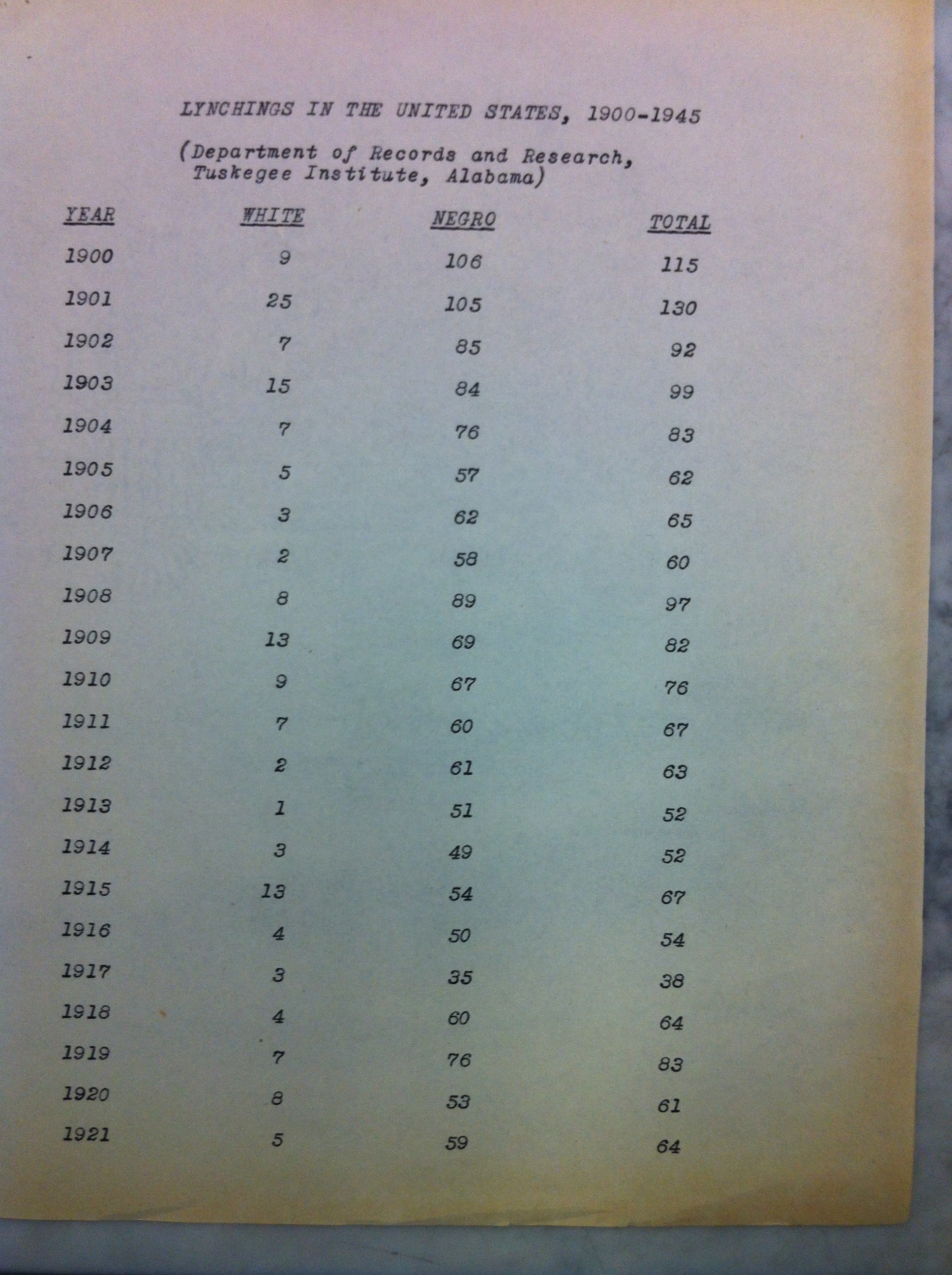
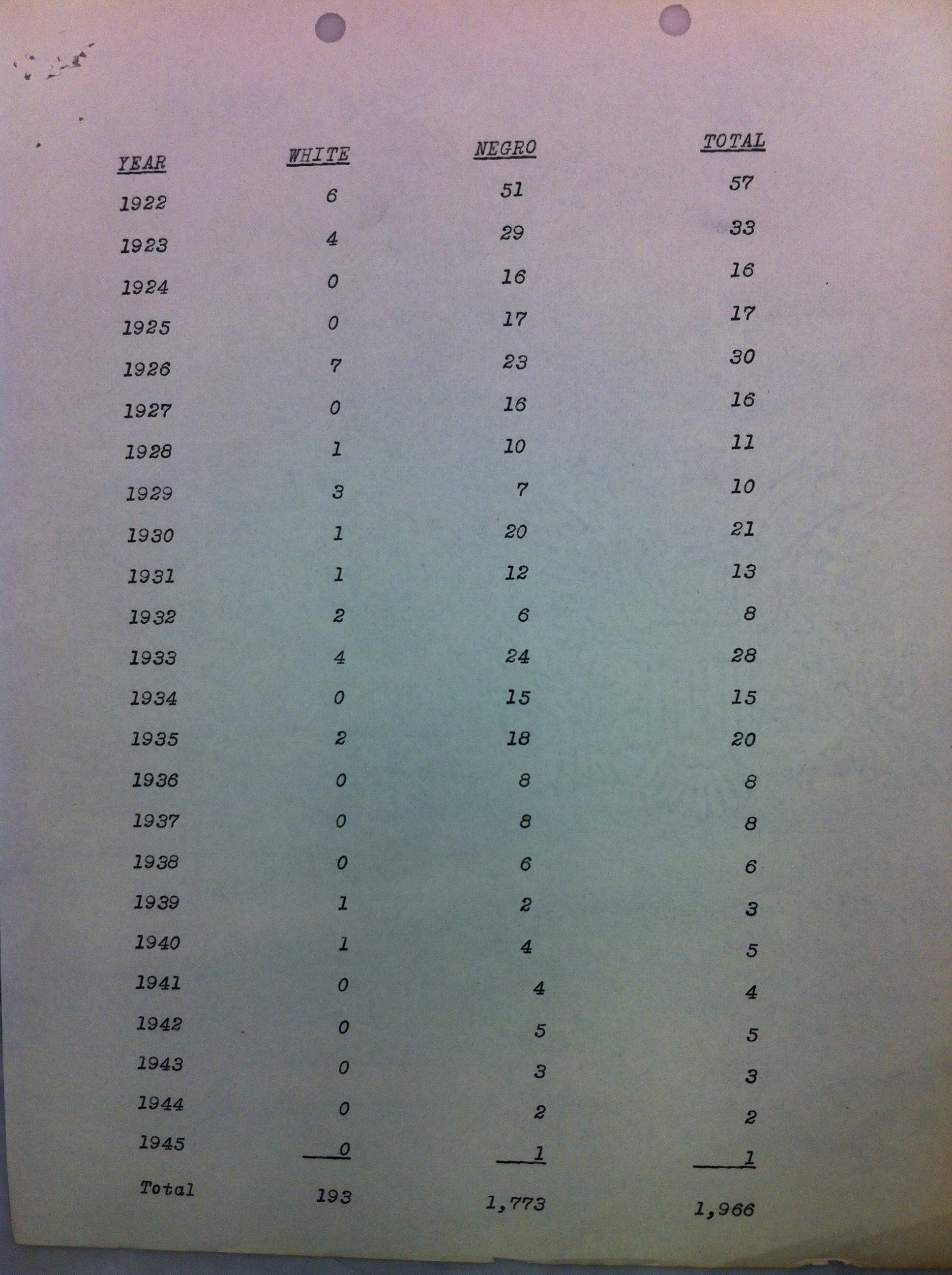
Image of the Day: Lynching Map

lynchingmapfinal.jpg.CROP.article920-large

Learn more about the origins of this lynching map here

Share
Feb 28 2013

Snippet From History #2: The Negro Silent Protest of 1917

Black History Month officially comes to a close today. But as I mentioned in an earlier post, black history is American history so I always talk about it on the blog. Today, I wanted to highlight an important but not well-known historical moment that relates to our current prison nation: “The Negro Silent Protest Parade.”

Silent March Parade, 7/1917

Silent March Parade, 7/1917

“On July 1, 1917, two white policemen were killed in East St. Louis, Illinois, in an altercation caused when marauders attacked black homes. The incident sparked a race riot on July 2, which ended with forty-eight killed, hundreds injured, and thousands of blacks fleeing the city when their homes were burned. The police and state militia did little to prevent the carnage. On July 28, the NAACP protested with a silent march of 10,000 black men, women, and children down New York’s Fifth Avenue. The participants marched behind a row of drummers carrying banners calling for justice and equal rights. The only sound was the beat of muffled drums (source).”

Read more about this in the New York Times.

Negro Silent Protest Parade, July 1917

Negro Silent Protest Parade, July 1917

The march was organized by an ad-hoc group formed at St. Philip’s Church in Harlem. James Weldon Johnson was a key organizer of the “Negro Silent Protest Parade.” As the protesters marched silently down 5th Avenue, Boy scouts distributed fliers describing the NAACP’s struggle against segregation, lynching, discrimination, and other forms of racist oppression. It’s hard to imagine Boy and Girl Scouts in the 21st century participating in a mass protest against racialized mass incarceration…

Men, women, and children carried placards that read: “MOTHER, DO LYNCHERS GO TO HEAVEN?; “GIVE ME A CHANCE TO LIVE”; “TREAT US SO THAT WE MAY LOVE OUR COUNTRY”; “MR. PRESIDENT, WHY NOT MAKE AMERICA SAFE FOR DEMOCRACY?; AND “YOUR HANDS ARE FULL OF BLOOD.”

NAACP literature outlined the objectives and goals of the march:

We march because by the Grace of God and the force of truth, the dangerous, hampering walls of prejudice and inhuman injustices must fall.

We march because we want to make impossible a repetition of Waco, Memphis, and East St. Louis, by arousing the conscience of the country and bringing the murders of our brothers, sisters, and innocent children to justice.

We march because we deem it a crime to be silent in the face of such barbaric acts.

We march because we are thoroughly opposed to Jim-Crow Cars, Segregation, Discrimination, Disfranchisement, Lynching, and the host of evils that are forced on us. It is time that the Spirit of Christ should be manifested in the making and execution of laws.

We march because we want our children to live in a better land and enjoy fairer conditions than have fallen to our lot.

Could we get 10,000 black Chicagoans to march silently down Michigan Avenue to protest racialized mass incarceration today? If so, would anyone care?

Share
Jan 24 2013

Historical Moments of Police Violence: William Milton – A “Good Man” Killed by the NYPD…

Leading up to a series of events that I am organizing during the week of March 18th, I plan to highlight more historical moments of policing, violence, and resistance on this blog…

I saw Daddy drop as the first bullet hit him…”

Before there was Amadou or Sean or Oscar, there was William Milton…

At 31 years old, William Milton, an ordinary family man, was shot several times by two New York City police officers. Milton had the misfortune of being born black and living in America in 1948.

William Milton and his brother Jack went out on an errand one evening. They decided to stop by a bar on the way back home. They encountered two of their neighbors at the bar and so the four drank together. The bartender Charles Kennefick decided that he didn’t want any black folks around that night.

“We each had a beer,” said one of the surviving men to Daily Worker reporter Art Shields. “Then the bartender growled” ‘Drink up and get the hell out,’ when two of us got another drink.”

The men apparently took exception to the bartender’s tone. Words were exchanged. The bartender grabbed an ice churner and a fight broke out. Two police officers arrived on the scene. The 4 black men took off running because they knew that their word was likely to mean nothing next to the testimony of a white man. William Milton and his brother were chased down the street with two police officers shooting at them. 11 year old Leroy Goodwin told reporter Art Shields what he witnessed:

“I saw the tall policeman – that’s Peter Kilcommons – chasing Mr. Milton and his brother. He was shooting as he ran. John O’Neil, the other cop, was running and shooting too. But the bullets didn’t hit Mr. Willie at first. They didn’t get him until he turned into S. First Street and reached his front stoop. The first bullet hit him in the back, just under his right arm pit, as he was turning the knob of his door. Mr. Milton fell to his right knee. Then he got up and fell into the house. The cops kept on shooting through the door.”

Officer Kilcommons murdered William Milton as he crawled up the steps of his home. He was unarmed when he was first in the back and then twice in the chest. Among the many witnesses to this murder were Milton’s wife and his 13 year old son Eugene.

The police later claimed that they were only shooting in the air as they ran after the brothers Milton. If this was true witnesses asked, why then shoot him at close range in the doorway of his home when he was already down?

Interviewed after his death, his wife Irene said of her husband: “William was always talking about keeping Georgia from coming to New York.” Willie Milton was already known to the NYPD before they killed him. He was a community activist who had been vocal about police violence. In February 1946, two years before Milton was murdered, an officer named Romeika lined two brothers up against a wall and shot them when they protested against being kicked out of a restaurant. One of the men who was assassinated was a military veteran. Irene Milton said: “William got into the fight to get the killer punished. He was very angry about the murder and gave a lot of time to help the Committee for Justice in the Freeport Case.” Willie Milton joined the Communist party during the course of his work in the Freeport case. He also led a rent strike in his community protesting the dilapidated condition of a local building.

Milton’s family was left destitute after he was killed. His wife described their situation: “I took the last $121 out of his bank, and got six dollars more in his bloody wallet from the city property clerk.” She had to borrow more money for his funeral expenses.

Irene became a leader in the Committee for Justice in the Milton Case. The Committee was founded by representatives of the Community Party and the Civil Rights Congress. It had four goals:

1. The dismissal and indictment and trial of Patrolmen Peter Kilcommons and John O’Neil who fired the shots that night;
2. Dismissal of Police Commissioner Wallander, whose policy of mussing-up Negroes, led to the murder;
3. Financial indemnities for the widow and orphaned son from the Board of Estimate of the City of New York.
4. Defending Joseph Milton and William Hughes, the other witness, who was arrested nine days after the murder.

Even after a lot of local activism about this case, the two officers faced no charges and were not convicted of murdering Mr. Milton. They kept their jobs. In describing what happened to William Milton, Simon Gerson wrote:

He was lynched, my friends, lynched. What matter is it if a man is lynched by a hempen rope from a Georgia cottonwood tree or lynched by a police revolver in the trigger-happy hands of a Brooklyn cop?

Who would disagree with this characterization of events?

Share
Jan 10 2013

The Night They Almost Lynched Thurgood Marshall in Tennessee…

I just finished a really terrific book titled “Devil in the Grove” by Gilbert King. In it, he recounts a little known incident that took place in Florida in 1949. Four young men were falsely accused of raping a white teenager named Norma Padgett. They came to be known as the Groveland Four. I will write more about this case and the book at a later date.

Today I want to focus on the main protagonist of King’s book. Thurgood Marshall, known as “Mr. Civil Rights,” came to Lake County, Florida to defend the young men from almost certain execution. King paints the most vivid portrait of pre-Supreme Court Justice Marshall that I have ever read. King reveals that Marshall was haunted by images of lynchings throughout his early career as a civil rights lawyer.

One particular image was recurring — it was of a black man hanging from a rope of a tree in Florida. What Marshall could not erase from his mind were the smiling or serene faces of white children who were witness to the torture. Below is the particular image that he could not shake.

Read more »

Share
Jan 03 2013

Those Left Behind: A Lynched Man’s Wife…

I mentioned last week that I am doing some research about lynching in the United States. I am learning a lot that I didn’t know of course. I came across this amazing photograph…

Irwinton, 1949, Wife of the victim by Marion Palfi

Irwinton, 1949, Wife of the victim by Marion Palfi

Read more »

Share
Dec 23 2012

The Anguilla Prison Camp Massacre…

On July 12 1947, an article was published in the New York Times under the headline “Five Convicts Slain in Break in Georgia.” It opened with the following sentence:

Five Negro convicts were shot to death and eight others were wounded, two critically, in an escape attempt at a state highway work camp today, Warden H. G. Worthy said.

Real Photo Postcard (1905) - From My Collection

Real Photo Postcard (1905) – From My Collection

The words are unremarkable on their face. In fact, many prisoners tried to escape from convict camps over the years. Camps were brutal and terrible places for prisoners. However the initial account of what happened at the Anguilla Prison Camp (near Brunswick, Georgia) on July 11, 1947 turned out to be completely fabricated. Warden H. G. Worthy provided his initial version of events which was published in the Times:

A group of new prisoners joined the camp yesterday and were sent out today to work on the Jesup Highway. The new men refused to work and were brought back to the camp about 4 p.m. They would not get out of the trucks when ordered and Warden Worthy called county police.

Chief of Police Russell B. Henderson of Glynn County talked to the prisoners and told them to do what the warden ordered, “cut out that foolishness.”

The men left the trucks and were lined up in the prison enclosure. When the police chief finished talking to them they broke, ran to the barracks and dove under the building, which is about two feet off the ground. The prisoners crawled on under the building and ran toward the fence enclosure on the other side.

Officers then opened fire with shotguns and rifles. Five were killed and eight were wounded. Fourteen prisoners came back and surrendered.

Read more »

Share
Nov 28 2012

Richard Wright on White Supremacy

Silhouette by Jabob Lawrence (1948)

I’ve previously referenced Richard Wright’s brilliant photo essay12 Million Black Voices” on this blog. The essay includes Depression-era photographs from the Farm Security Administration, selected by Edwin Rosskam. They are haunting, moving and beautiful.

Richard Wright is one of my favorite writers. I admire his gorgeous prose, his ability to distill complicated ideas, and his uncompromising politics. In “12 Million Black Voices,” he does a good job describing how white supremacy plays out in the lives of African Americans. I am currently in the beginning stages of a project about lynching and so I am re-reading some of Wright’s work.

Read more »

Share
Nov 16 2012

Poem of the Day: Nice Day For A Lynching

Nice Day For A Lynching
by Kenneth Patchen

The bloodhounds look like sad old judges
In a strange court. They point their noses
At the Negro jerking in the right noose;
His feet spread crow-like above these
Honorable men who laugh as he chokes.

I don’t know this man.
I don’t know these white men.

But I know that one of my hands
Is black, and one white. I know that
One part of me is being strangled.
While another part horribly laughs.

Until it changes,
I shall be forever killing; and be killed.

Share
Sep 30 2012

The Origins of the KKK

I have always been fascinated by the Ku Klux Klan (KKK) and several years ago I started collecting artifacts here and there. I first became aware of the KKK when I was around 11 years old and watched a documentary about the organization on TV.

There are a number of myths about the origins of the KKK. Some people believe that it was launched by Confederate prisoners during the Civil War. Others think that it was a secret order of Chinese opium smugglers. In reality, the Klan began when a group of six former Confederate soldiers decided to start a social club in December 1865 in Pulaski, Tennessee. They decided that it would be a secret society and established titles for the various officers. They chose names that were purposely ridiculous, for example calling the head of the group the Grand Cyclops and his assistant, the Grand Magi. The members would be called Ghouls. Even the name of the social club, Ku Klux Klan was meant to be intentionally unusual and somewhat mysterious.

The club was actually originally founded out of boredom. Historians disagree about the motivations of the founders. Their first stunts involved disguising themselves in sheets and riding around on their horses in the streets of Pulaski showing off. They added masks and tall pointed hats to their costumes.

Read more »

Share
Aug 11 2012

National Afro-American Council: A Day of Fasting to Protest Lynching, 1899

I like to remind the young people who I work with that oppressed people have ALWAYS resisted their oppression. I think that this cannot be stressed enough because it helps to counteract cynicism and hopelessness.

The following is an appeal from the National Afro-American Council to set aside a day of fasting as a protest against lynching. It was published in the New York Tribune, May 4, 1899.

The National Afro-American Council of the United States has issued a proclamation calling upon the colored people of this country to set apart Frihttp://www.usprisonculture.com/blog/wp-admin/post.php?post=9955&action=editday, June 2, as a day of fasting and prayer, and has called upon all colored ministers to devote the sunrise hour of that following Sunday, June 4, to special exercises in order that “God, the Father of Mercies, may take our deplorable case in His own hands, and that if vengeance is to be meted out let God himself repay.” It sets forth the “indescribable barbarous treatment” of the Negro — refers to role in wars, denounces lynchings “in the most strenuous language.” It says, in part:

Read more »

Share