Image(s) of the Day
The wonderfully generous and talented artist Ariel Springfield contributed three pieces of art work to our Black and Blue: Art on Policing, Violence & Resistance exhibition. I share her contributions below:
I was perusing a used book store in Evanston last month and came across a first edition copy of Bayard Rustin’s collected writings. I am re-reading them now. I often wish that his contributions were better known. Those who do know something about him probably know that he was an ally to Dr. King and perhaps also that he was an openly gay man (at a time when that was perhaps even more dangerous). Since we have spent the better part of this week discussing civil rights and the LGBT community, I thought that it would be fitting to revisit Rustin’s contributions since he isn’t a household name among the icons of the black freedom movement in the U.S. For me however, Bayard Rustin is/was a giant. In reading about the black freedom movement, I gravitated to him, Septima Clark, Fannie Lou Hamer and later Ella Baker as organizers of understated but unparalleled skill.
Rustin was a Quaker and a pacifist. In 1944, he was drafted & as a conscientious objector (CO) he refused to serve. For this, he was sentenced to prison:
On February 17, 1944, a court found Rustin guilty of resisting the draft and sentenced him to three years (most COs received one year and a day) in the federal prison in Ashland, Kentucky, a segregated prison in a segregated state. On one visit to white COs, Rustin was beaten by a white prisoner who only stopped when he realized that neither Rustin nor the other COs were fighting back. Rustin’s protests against racial segregation, and his open homosexuality, were a source of growing tension. So in August 1945, he was transferred to the higher-security penitentiary in Lewisburg, Pennsylvania, where he served out the remainder of his time.
I am incredibly lucky to be in community with some of the most brilliant people anywhere. One of those is my colleague and friend Owen Daniel-McCarter who is one of the founders of the Transformative Justice Law Project of Illinois. Owen recently published an excellent article and I want to share it with the readers of this blog. The article titled “Us vs. Them! Gays and the Criminalization of Queer Youth of Color in Chicago” is timely and will be particularly relevant to those who are interested in racism, classism, heterosexism, homophobia, and the criminalization of youth. I am only sharing a few excerpts from the article but you should really read it in its entirety HERE (PDF).
Owen offers some background for understanding the emergence of the “Take Back Boystown” phenomenon in Chicago:
After several publicly violent incidents in “Boystown” directly preceding and following the 2011 Chicago Pride Parade, residents of “Boystown” responded with calls for more policing, tougher enforcement of criminal laws, and resurrection of gang injunction ordinances. They even demanded that Chicago’s LGBT community center, the Center on Halsted, and a shelter for LGBT Youth known as the “Crib” be shut down for “attracting” violent outsiders into the “Boystown” community.” While “Boystown” residents’ fear of outside “invaders” seems to happen annually following the Pride Parade, this year was particularly hyper vigilant. Residents of “Boystown” created a facebook page called “Take Back Boystown” which touts to be “a venue for suggestions, ideas and thoughts on how we can preserve what we have and go back to the safe fun neighborhood Boystown is known for.” The site has provided a venue most notably for free-flowing rants from residents of “Boystown” about young people who are not residents of the neighborhood, referring to them in racialized code words such as “gangs,” “thugs,” and “hoodlums.” Local gay media immediately made the connection between public violence, youth, and race by reporting that “criminal activity” in “Boystown” could be due to the “presence of South and West Side youth.” As any resident of Chicago knows, “South and West Side youth” is code for Black and Latin@ youth.
So this image has been making the rounds on social media over the past couple of weeks…
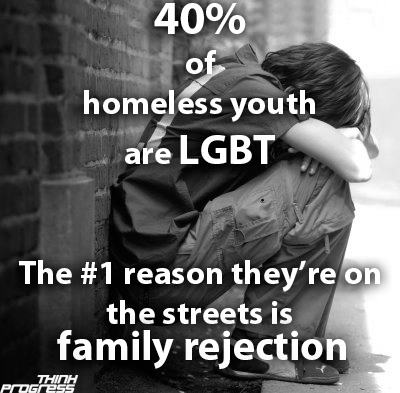
The photograph and words elicit an immediate emotional reaction from the audience. “How sad,” one might think. “What’s wrong with these horrible families?” another might ask. “We need to change our culture to make it more tolerant,” someone else might prescribe.
Next Monday, I will be releasing to the public a set of resources about policing, violence, and resistance that me and my friends have been working on for over a year. Regular readers of Prison Culture are aware of this work since I have been previewing some of what I have learned about the history and current manifestations of oppressive policing here.
Today (as a preview of coming attractions), I am excited to share a new zine by my friend Rachel Marie-Crane Williams titled “Blue & Black: Stories of Policing and Violence.”I’ve waxed poetic about Rachel at length here so I won’t embarrass her by gushing any further. I have already expressed my gratitude to her and she knows that I am in awe of her talent. So thank you, Rachel.
I hope that everyone reading this post will take the time to share the zine with someone else who you think should read it. For those who are in the Chicago area, we will be unveiling the zine and many other resources on Saturday May 5th at the University of Illinois at Chicago. Details of the event are here and we will have a few printed copies of the zine on hand.
I am swamped this week with work and several other projects so I will only post if there is any breaking news or if I feel an urge to rant. I hope to be back to regular posting next week.
Years ago, I served on the board of an organization that I still love called the Young Women's Empowerment Project (YWEP). YWEP is not to be confused with the Rogers Park Young Women's Action Team (YWAT), a youth-led group that I co-founded and have written about before.
Regular readers of this blog know that I am a prison abolitionist. I have written often about my ideas and thoughts about abolition here. I am often asked about what would happen to all of the “bad” people if there were no prisons. There are tons of people who others would consider “bad” who aren’t locked in cages. So those questions do not concern me. I do however worry about one thing: the fact that many of the institutions that we would need to rely on in order for abolition to be fully realized are so oppressive and fundamentally broken.
Case in point, yesterday the Chicago Tribune reported that Hartgrove pyschiatric hospital on the Westside of Chicago is basically a hell-hole for young people. Citing a new report from the University of Illinois at Chicago, the Tribune writes:
Among the chilling details in the UIC report on Hartgrove were descriptions of some hospital employees who appeared to be indifferent or too poorly trained to treat seriously mentally ill youth.
One case involved a 16-year-old girl with severe sickle cell anemia who was forced to cope with intense pain for long periods of time. When she became overwhelmed and had emotional outbursts as a result, staff blamed her for not being able to control herself.
A psychiatrist at the facility labeled her behavior as “med-seeking,” according to records.
In another case, employees in May reportedly fractured the arm of a 16-year-old boy, who was not a state ward, apparently because they were not properly trained in restraint techniques.
The Tribune also reports that “[a]bout 100 violent incidents were documented between December 2010 and mid-June 2011, which included physical attacks, uncontrolled threatening behavior and sexual assaults.” I feel sick to my stomach in reading this because I have referred several young people to Hartgrove over the years. I never heard that they were mistreated at the hospital but I have to admit to having followed up with less than half of the youth who I referred there. Once released, they would usually be referred to services closer to where they live. The sickening part of this for me is that I assumed that they would get the help that they needed from the hospital. I know better but I just want to believe that the institutions that are supposed to serve vulnerable youth will not actually harm them. How can I be both so jaded and so trusting at the same time?
I do know better. The young women of YWEP have created a bad encounter line that I have written about previously here. YWEP explains the history and purpose of the bad encounter line:
In 2009, YWEP completed a youth led research study on ways girls and transgender girls in the sex trade & street economy are resistant and resilient to violence. In this research we looked at two categories of violence, individual and institutional. Although both categories had surprising results, we were most surprised at the amount of girls and transgender girls facing violence from institutions- like police, hospitals, social services and even Department Children and Family Service.
We wanted to tackle this problem from a community organizing approach from this idea the Bad Encounter Line (BEL) was born. The BEL is a way to report bad experiences you have had with institutions and tracks the neighborhood, gender and time of day so YWEP can learn more about how we are being harmed.
The Bad Encounter Line is an excellent example of how marginalized young people of color resist institutional violence. It also illustrates the young people’s resilience. I am angry that it has to come to this. However I feel so proud that the youth are mobilizing to bring this violence to light. This is a form of violence in the lives of youth that does not garner media attention or award winning documentaries. Yet it is real and can often be debilitating for young people. YWEP also started a task force called “Street Youth in Motion” which is organizing a community march tomorrow. If you are in Chicago tomorrow, you are invited to support the young people at their demonstration.
The Taskforce wrote a Street Youth Bill of Rights (PDF) that they want all non-profits to sign “to [in their words] make them accountable to us and can’t get away with denying us help!”
Ultimately, I guess that this is what should give me hope. Young people are organizing and demanding accountability from the institutions that should be there to help them. This is another example of transformative justice. So perhaps I don’t have to worry about the promise of abolition after all…
A few weeks ago, I shared the work of a terrific group of young people at a Chicago-based organization called Gender Just in a post titled “For Many Marginalized Youth It Does Not Get Better.” This was written in response to Dan Savage’s laudable “It Gets Better” campaign to highlight the fact that LGBTQ youth are confronted by an inordinate amount of systemic violence.
A few days ago a friend shared this terrific video with me which extends the points made by the youth at Gender Just. I think that it is so important that we hear the voices of LGBTQ youth in our communities. They are disproportionately represented in juvenile detention and on the streets. I am thrilled to see that this particular campaign is underway.
Reteaching Gender and Sexuality from PUT THIS ON THE MAP on Vimeo.
Just today, a new study suggests that:
Gay and lesbian teens in the United States are about 40 percent more likely than their straight peers to be punished by schools, police and the courts, according to a study published Monday, which finds that girls are especially at risk for unequal treatment.
The research, described as the first national look at sexual orientation and teen punishment, comes as a spate of high-profile bullying and suicide cases across the country have focused attention on the sometimes hidden cruelties of teen life.
The study, from Yale University, adds another layer, finding substantial disparities between gay and straight teens in school expulsions, arrests, convictions and police stops. The harsher approach is not explained by differences in misconduct, the study says.
“The most striking difference was for lesbian and bisexual girls, and they were two to three times as likely as girls with similar behavior to be punished,” said Kathryn Himmelstein, lead author of the study, published in the journal Pediatrics.
I have said this before but it is critical that we gain a much better understanding of the mechanisms that push youth from the cradle to prisons. This type of study adds another important layer of understanding to this process. LGBTQ young people are disproportionately impacted by the school to prison pipeline and now we have some empirical data to support this anecdotal reality.
For more information about the study, click here.
I had to interrupt my hiatus to write about this issue which has really been gnawing at me.
(Crossposted at Daily Kos)
Let me start by saying that I am always in favor finding ways to support young people; particularly young people who are targeted by oppression and bullying. Dan Savage’s “It Gets Better Project” seems to be a well-intentioned effort. I do, however, want to register another perspective about this effort. I believe that it actually obscures structural and institutional oppression and this is very problematic.
The truth is that for many marginalized youth (especially queer youth of color), “it” will not get better without a massive social movement that transforms current social inequality and oppression. The fact that the “it” is unnamed is a serious flaw in the effort.
Just yesterday, I read a staggering article about the plight of African American youth with respect to unemployment.
The article explained:
It’s possible that I just didn’t see it but one of the most significant and alarming statistic in the nation’s September employment report seems to have gone mostly unnoticed. So here it is. The unemployment rate for each of the major demographic groups remained about the same last month, some even declined a tad. However, the seasonally adjusted unemployment rate for African Americans between the ages of 16 and 19 reached 49 percent, up from 45.4 percent in August and 41.7 percent for the same period last year.
So 50% of black youth were unemployed in September. This is a recipe for social disaster. How exactly is it going to “get better” for these young people? By individualizing the message of his campaign, Dan Savage actually makes it palatable to the powers that be. The message of the campaign is non-threatening and provides an outlet for even Hillary Clinton and Barack Obama to film videos to post on youtube. I want to be clear that there is nothing wrong with putting out such videos. What I worry about is that they are not being accompanied by a broader interrogation of the root causes of the violence that young people are experiencing.
Where are the structural critiques about the everyday violence that young people of color are facing across the U.S.? And more importantly, where are the calls for large scale social mobilization for addressing the root causes of this violence? Pairing the individual testimonials with an actual analysis and call to mass mobilization would be more conducive to actual social transformation.
A group of queer youth in Chicago put out a statement late last week about the recent coverage about LGBTQGNC suicides across the country. I am going to share the entire statement because these young people make the case much better than I ever could.
Over the past few weeks, there has been increased reporting on violence directed towards queer youth. As an organization of queer and transgender youth of color, working specifically to make Chicago schools safe and affirming for all students, Gender JUST has drafted the below response to the current discourse around bullying, school violence, and LGBT youth.
First off, we would like to note that what we have seen of late is an increase in the reporting and discussion of school violence – not an increase in the violence itself. Young people of color face violence consistently. As queer and transgender youth of color in public schools, violence is a reality we live daily in our schools, on our streets, in our communities, and in our lives. Whether the violence is self-inflicted, gang-based, based on pure hate and ignorance, or the systemic violence perpetrated by the state and our institutions such as our schools, police, welfare system, non-profits, and hospitals, we need to have an ongoing analysis of violence that lasts longer than our brief memory of the deaths of a select grouping of queer youth.
It is critical to remember that we face violence as youth, as people of color, as people living in poverty, as queers, as trans and gender non conforming young people. We can’t separate our identities and any approach to preventing violence must be holistic and incorporate our whole selves. We have seen an overly simplistic and unneuanced reaction to the recent violence; from Dan Savage telling young people to wait it out until “it gets better” and from Kathy Griffin declaring that passing Gay Marriage and overturning Don’t Ask Don’t Tell would somehow stop the violence in our lives, we have found this response to be as misguided, irrelevant, and offensive as the conservative LGBT Movement itself.
While youth violence is a very serious issue, the real bullies we face in our schools take the form of systemic violence perpetrated by the school system itself: sex education that ignores queer youth and a curriculum that denies our history, a militarized school district with cops in our schools, a process of privatization which displaces us, increasing class sizes which undermine our education and safety. The national calls to end the violence against queer youth completely ignore the most violent nature of our educational experience.
Our greatest concern is that there is a resounding demand for increased violence as a reaction, in the form of Hate Crime penalties which bolster the Prison-Industrial-Complex and Anti-bullying measures which open the door to zero-tolerance polices and reinforce the school-to-prison pipeline. At Gender JUST, we call for a transformative and restorative response that seeks solutions to the underlying issues, takes into account the circumstances surrounding violence, and works to change the very culture of our schools and communities.
Gender JUST had a momentous victory towards this end in early 2010. Through grassroots youth-led organizing, Gender JUST developed a Grievance Procedure based on the principles of Restorative Justice for Chicago Public Schools. But there is still significant work to be done. You can help reduce violence against queer youth by supporting Gender JUST’s work to develop leadership and build power among queer youth of color!
For more information about Gender JUST and to find out how you can support our work, contact info@genderjust.org.
I’d like to see the Gender Just statement getting just as much coverage as the “It Gets Better Project” but somehow I doubt that this will be the case. What the youth from Gender Just are articulating is a critique of structural and institutional violence that has a much bigger impact on many more young people than the actions of individual bullies. This is the conversation that should be being engaged across this country. The rest is just cosmetic.
Watch Gender Just organizer Benjamin Perry talking about school pushout and their work to address this. Benjamin participated on the youth activist panel that I organized a couple of weeks ago.
As part of my continuing series of featuring artists who have been kind enough to donate their work to our upcoming show and fundraiser Art Against Incarceration, I am featuring this work from Tyrone Boucher called “No New Jails.” Thank you Tyrone for sharing this with us, allowing us to show your work and to auction it off to support our programming!
The Center on American Progress issued a new report about homelessness among gay and transgender youth. The statistics are staggering. However one particular piece of information jumped out at me related to the PIC:
$53,665: The estimated cost to maintain a youth in the criminal justice system for one year, while it only costs $5,887 to permanently move a homeless youth off the streets and prevent them from reentering the criminal justice system.
Again, will sanity and common sense start to prevail in America?